Latest posts
-
Can Red Light Therapy Help Cartilage Repair? 2026 Study Breakdown
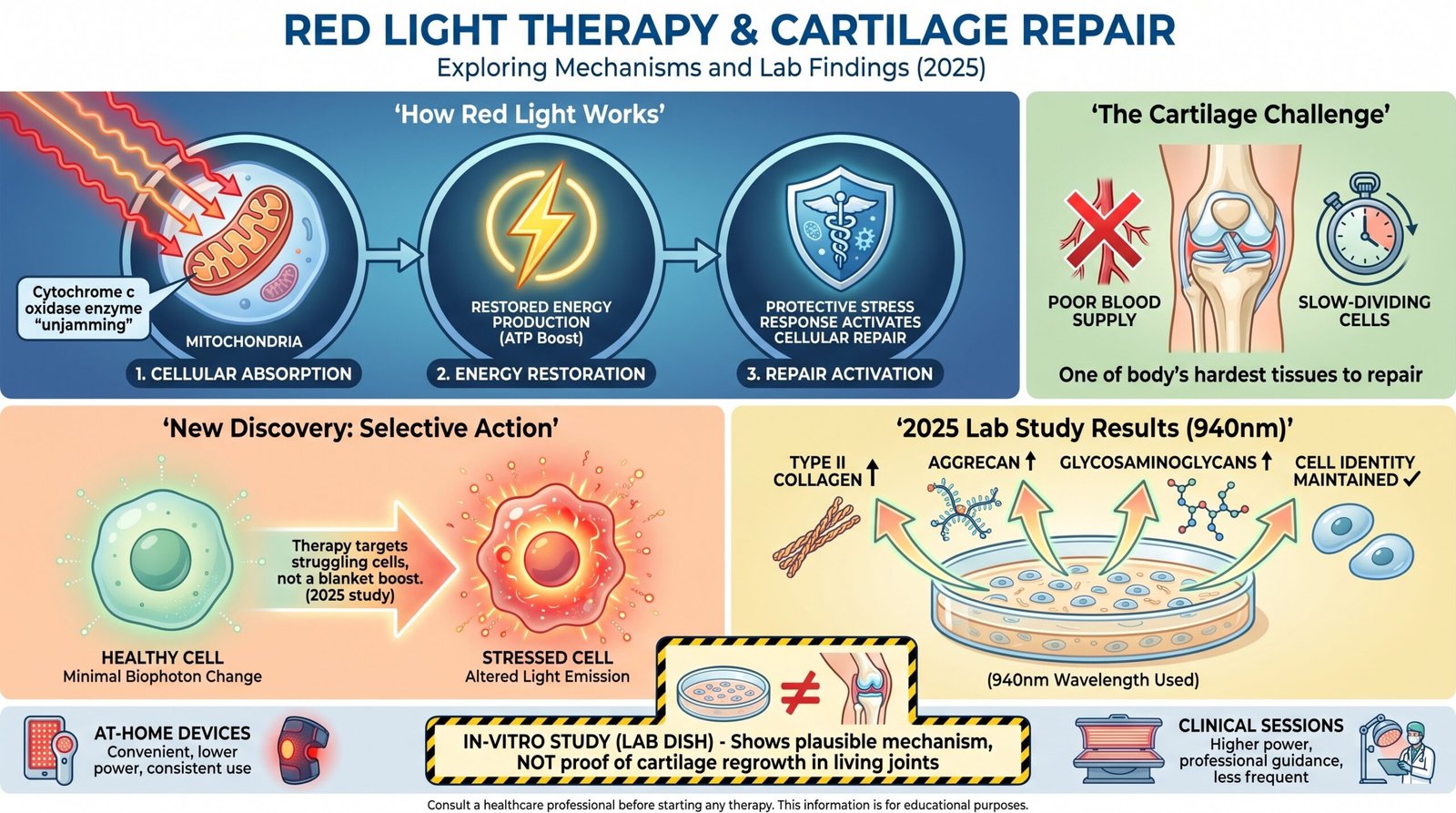
Key Takeaways Red light therapy’s basic mechanism is well-established: red/near-infrared light frees up a jammed enzyme (cytochrome c oxidase) in mitochondria, restoring energy production, while also triggering a small protective stress response that switches on cellular repair. Newer, more speculative research suggests cells may also emit faint light (“biophotons”) as a form of internal signaling
-
Red Light Therapy for Cancer Patients: Safety, Risks, and What to Ask Your Oncologist
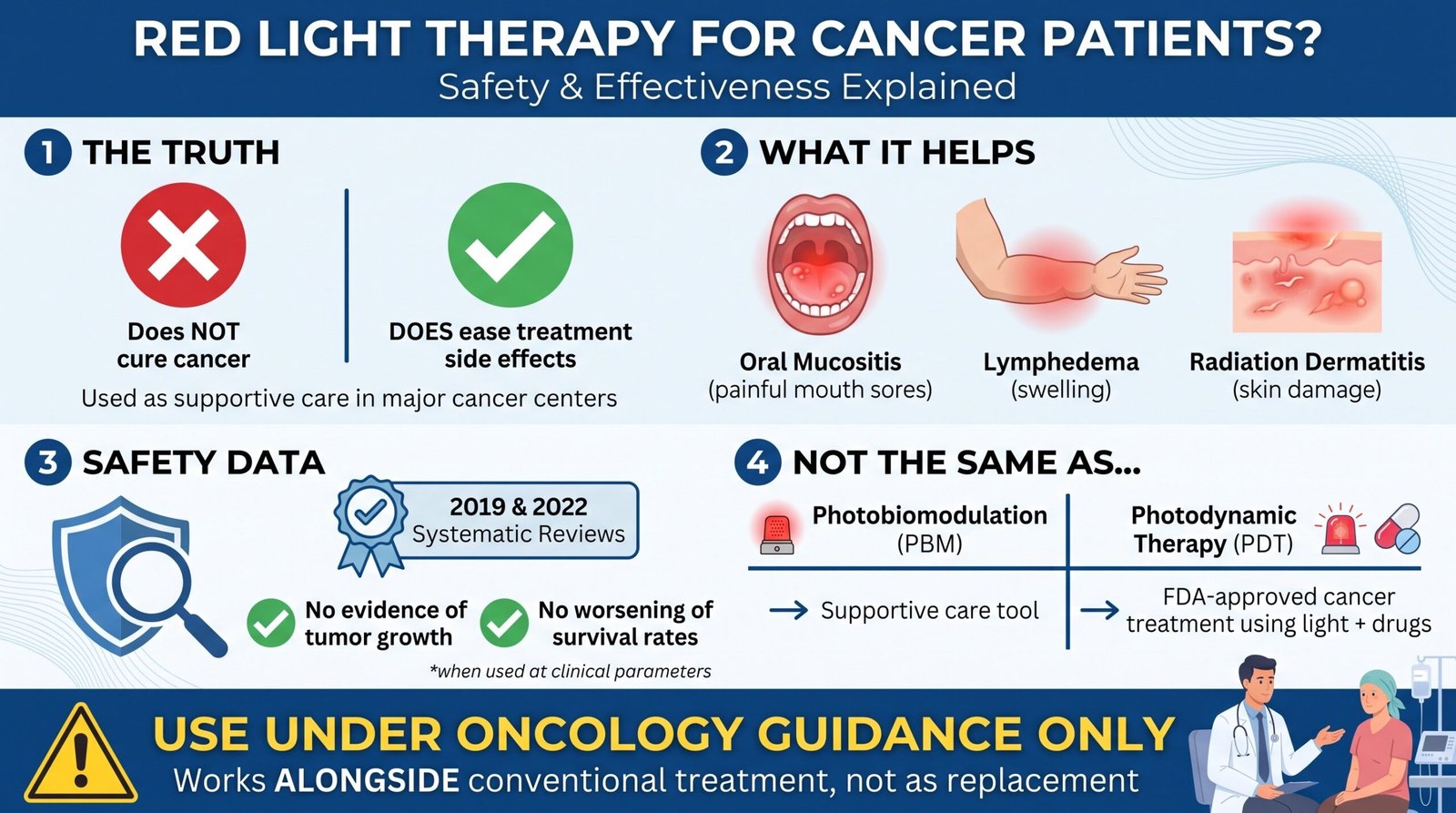
Key Takeaways This article examines whether red light therapy can directly target cancer cells, rather than ease treatment side effects. Preclinical studies show promise; high-dose red LED light has slowed tumor growth and triggered cancer cell death in lab models, but results are highly dependent on wavelength, dose, and cancer type, and aren’t ready for
-
Is Red Light Therapy Safe During Cancer Treatment? A Science-Based Guide
Key Takeaways Red light therapy (photobiomodulation) doesn’t cure cancer, but it’s increasingly used in major cancer centers to ease treatment side effects, especially oral mucositis, lymphedema, and radiation dermatitis. Multiple systematic reviews (2019, 2022) found no evidence it fuels tumor growth or worsens survival when used at clinical parameters. That’s distinct from photodynamic therapy (PDT),
-
Does Red Light Therapy for Pets Work? Benefits, Safety and the Research
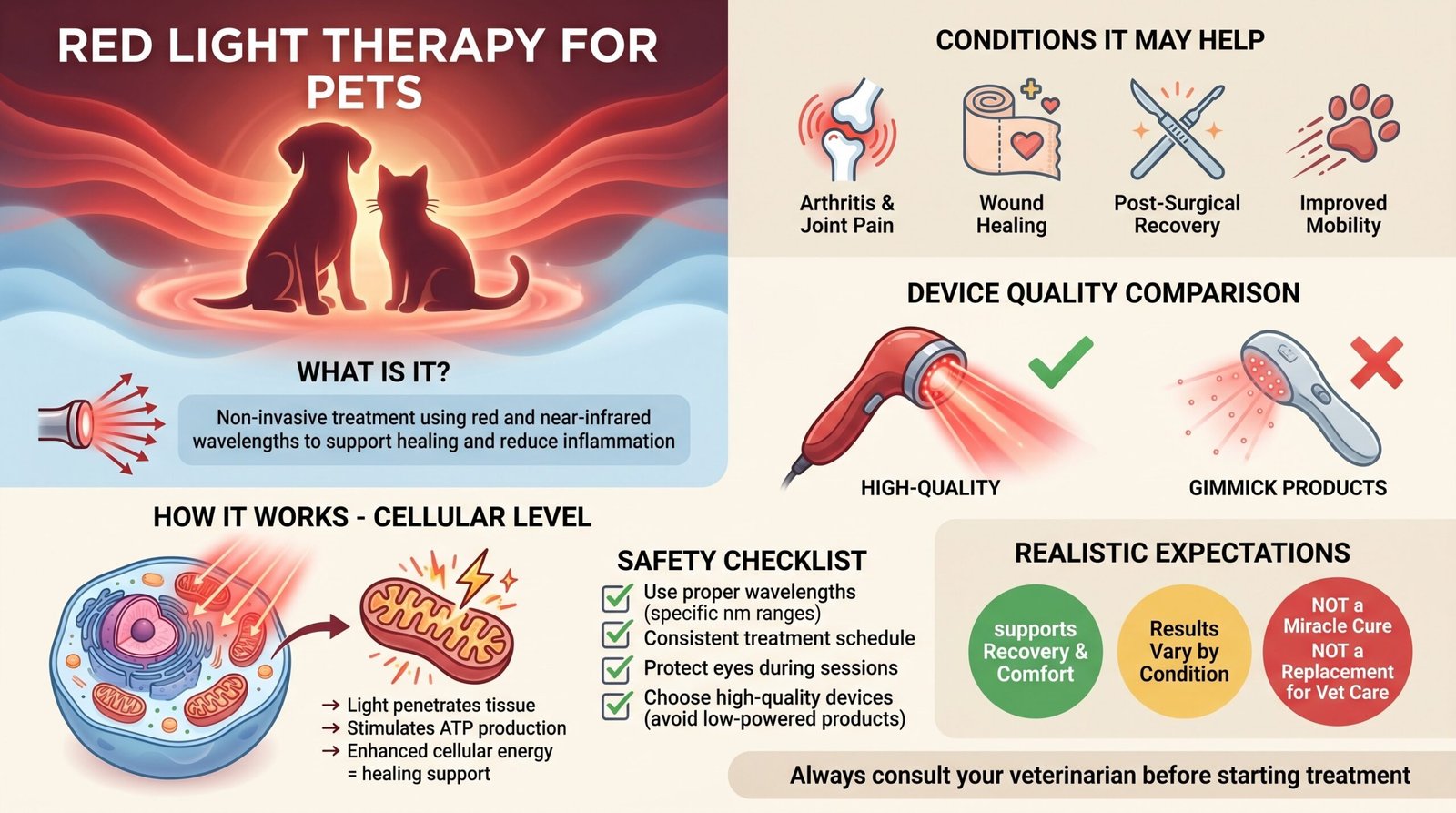
📌 Quick Summary Red light therapy for pets is a non-invasive treatment that uses red and near-infrared light to support healing, reduce inflammation, and improve mobility in dogs, cats, and other animals. Photobiomodulation works at the cellular level by stimulating ATP production, which may help with arthritis, joint pain, wound healing, and post-surgical recovery. I
-
Does Red Light Therapy Work for Cats? What Every Owner Should Know in 2026
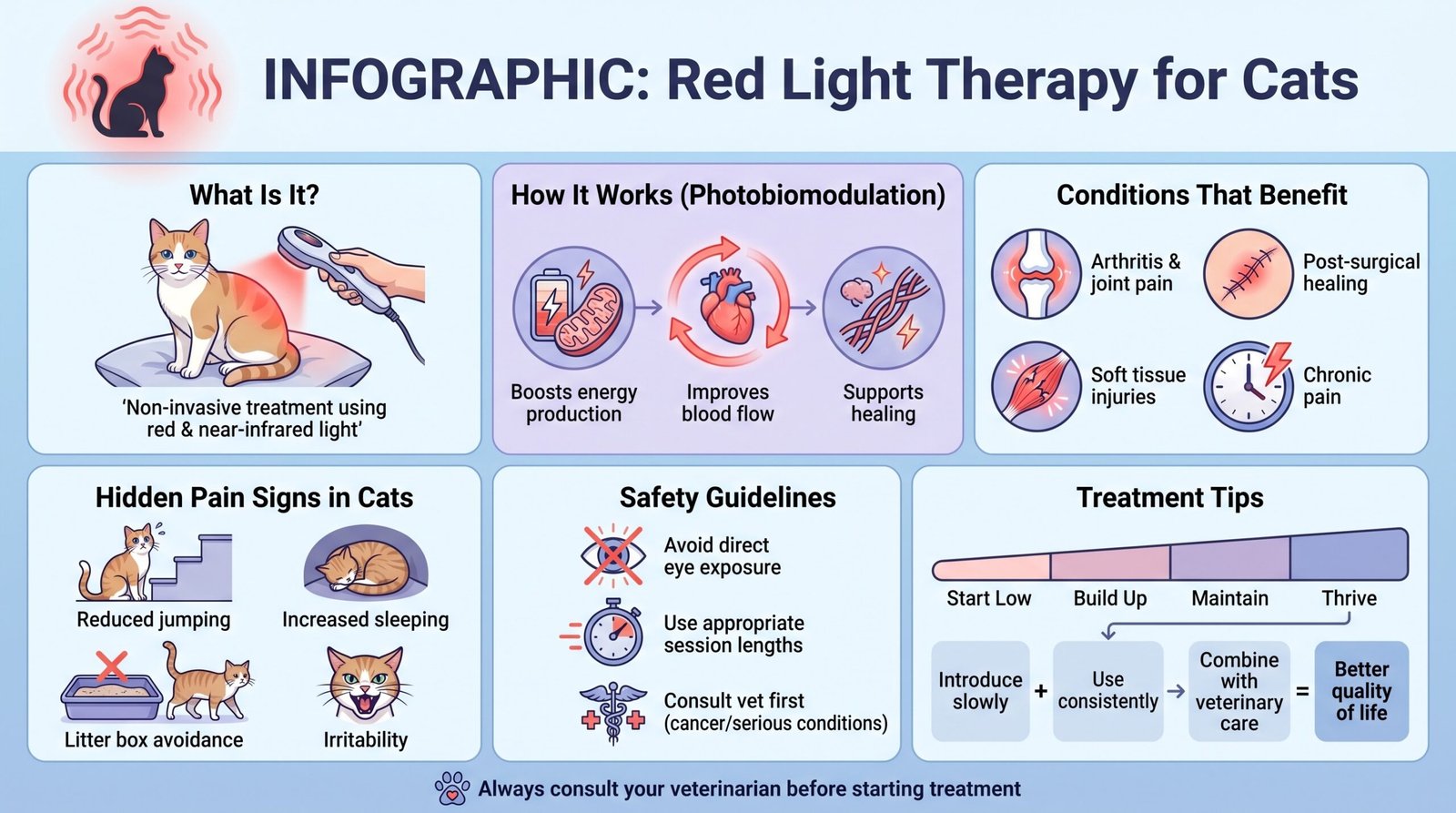
📌 Quick Summary Red light therapy for cats is a non-invasive treatment that uses red and near-infrared light to help reduce pain, inflammation, stiffness, and mobility issues—especially in older cats with arthritis or joint problems. Photobiomodulation works at the cellular level by boosting energy production, improving circulation, and supporting tissue repair. There are common feline
-
Does Red Light Therapy Work for Stretch Marks? Benefits, Results and Before and After Expectations
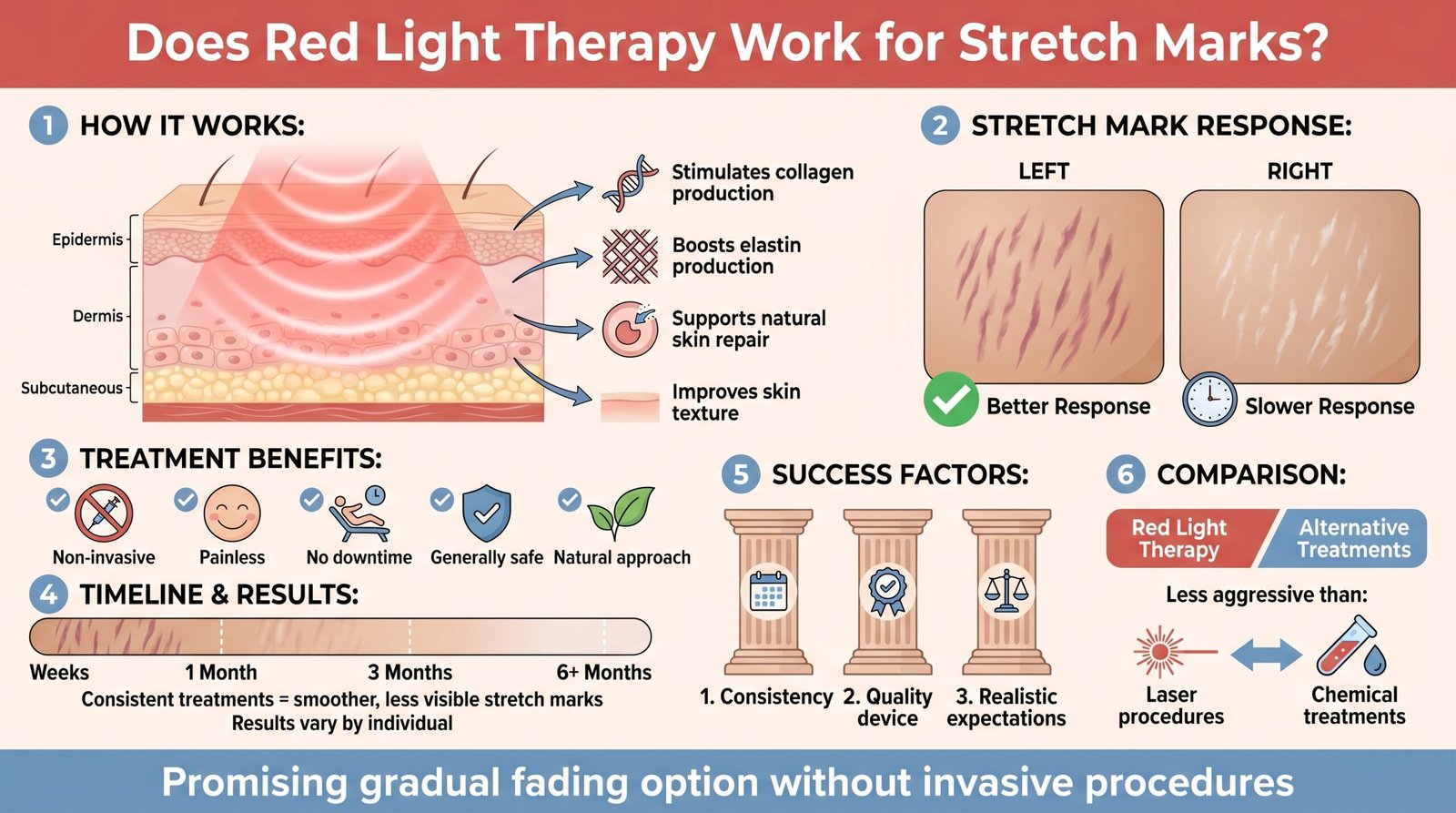
📌 Quick Summary Red light therapy may help reduce the appearance of stretch marks by stimulating collagen and elastin production, improving skin texture, and supporting natural skin repair. While results vary, many users notice smoother, less visible stretch marks after consistent treatments over several weeks or months. Newer red or purple stretch marks tend to
-
Red Light Therapy for Dogs: Benefits, Safety, and What Actually Works (2026 Guide)
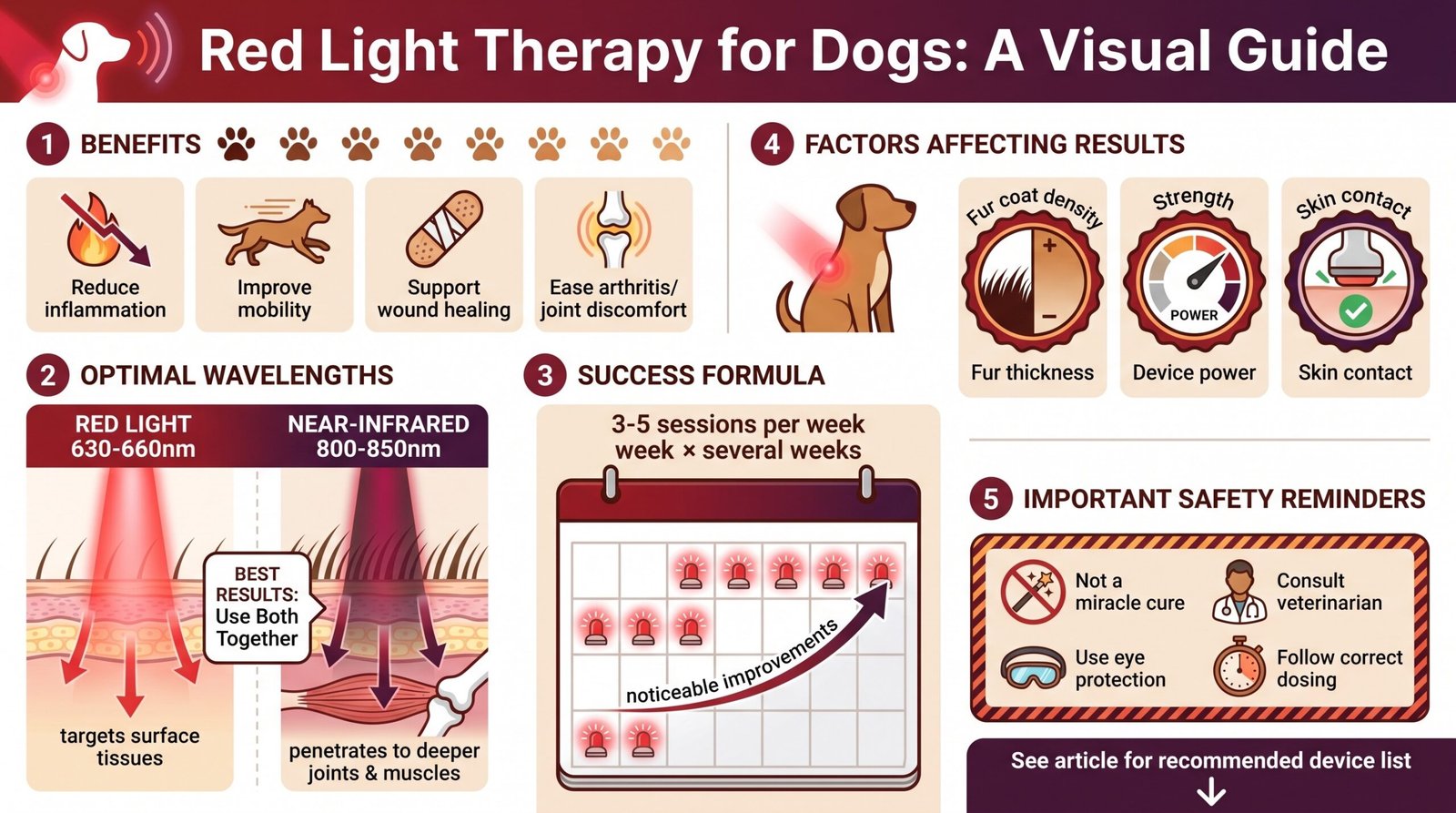
📌 Quick Summary Red light therapy for dogs may help reduce inflammation, improve mobility, support wound healing, and ease arthritis or joint discomfort when used consistently with the right wavelengths and device setup. Most effective devices use a combination of red light (630–660nm) and near-infrared light (800–850nm), which work together to target both surface tissues
-
Best Red Light Therapy for Dogs at Home (2026 Guide: Safe and Effective Devices)
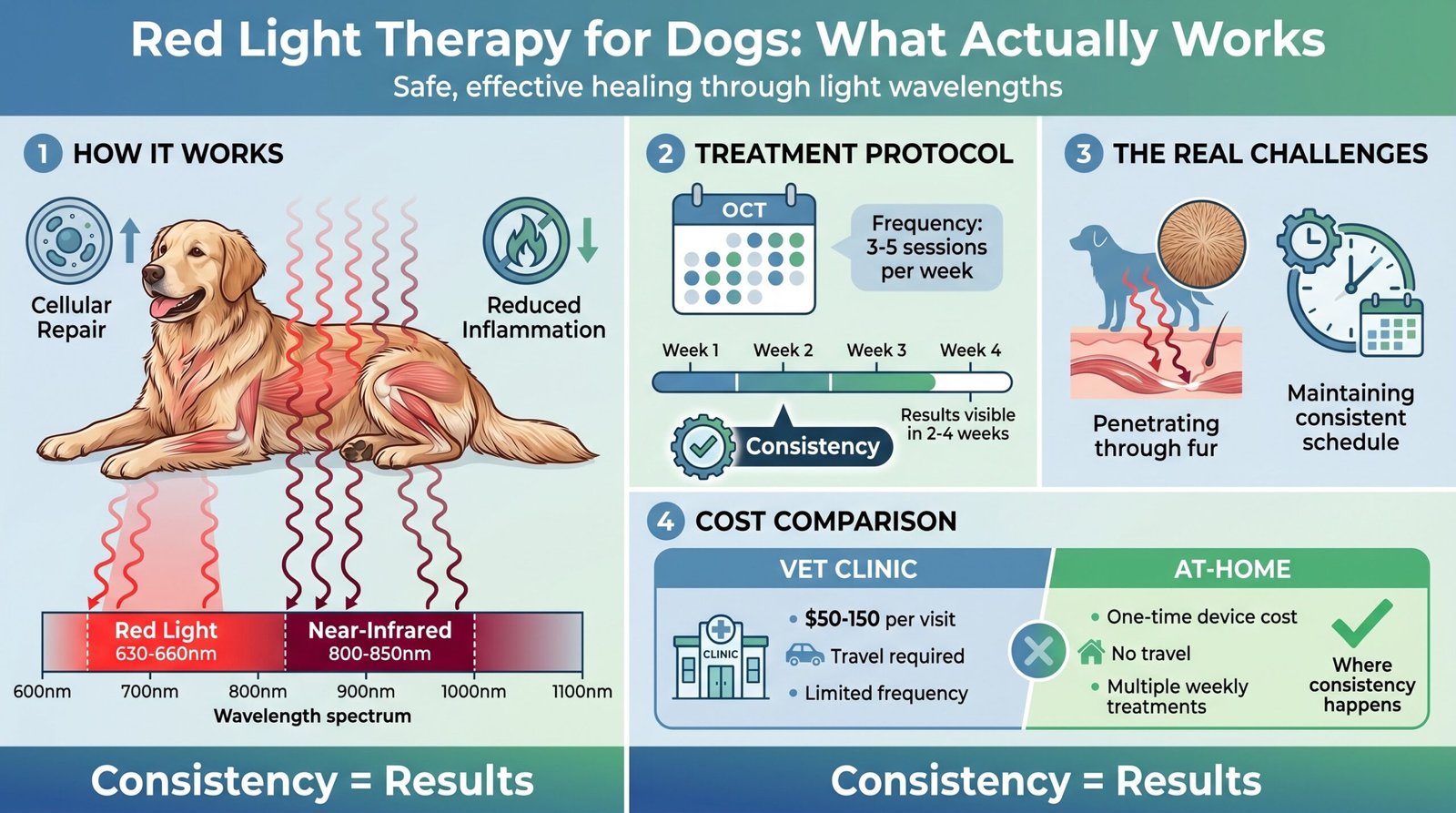
📌 Quick Summary Red light therapy uses specific light wavelengths (somewhere between 630-1000nm) to help with cellular repair and bring down inflammation in dogs. The devices that actually work mix red light (630-660nm) with near-infrared (800-850nm) wavelengths, deliver decent power at the skin surface, and get used consistently- we’re talking 3-5 sessions per week before
-
Red Light Therapy Hats for Hair Growth: What 51% More Hair Actually Looks Like
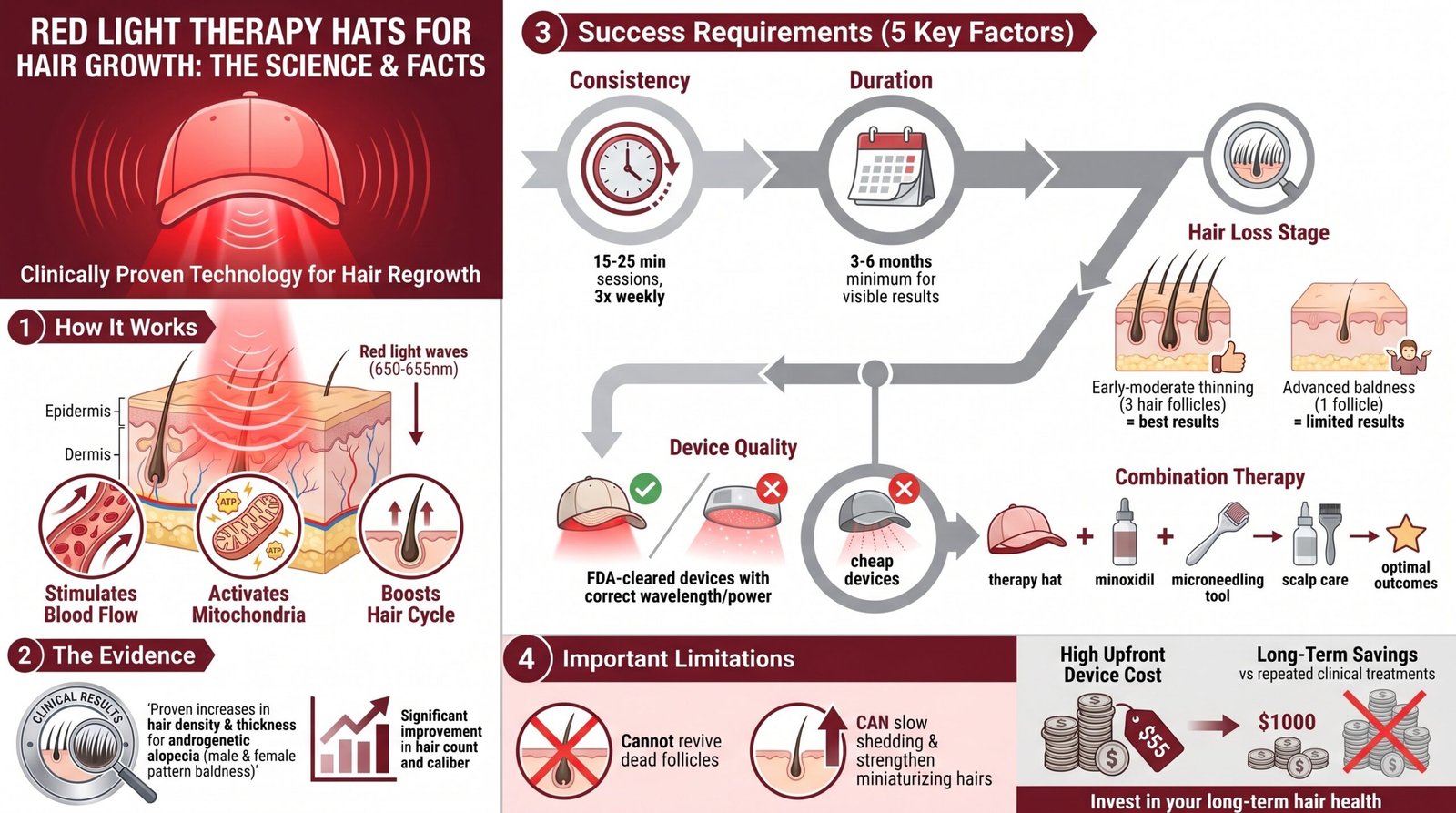
📌 Quick Summary Red light therapy hats for hair growth are not just another internet trend — there is legitimate clinical evidence showing they can help improve hair density, thickness, and follicle activity when used consistently over time. The technology works through low-level light therapy (LLLT), typically using wavelengths around 650–655nm to stimulate blood flow,
-
Do Red Light Therapy Masks Really Work or Just Hype?
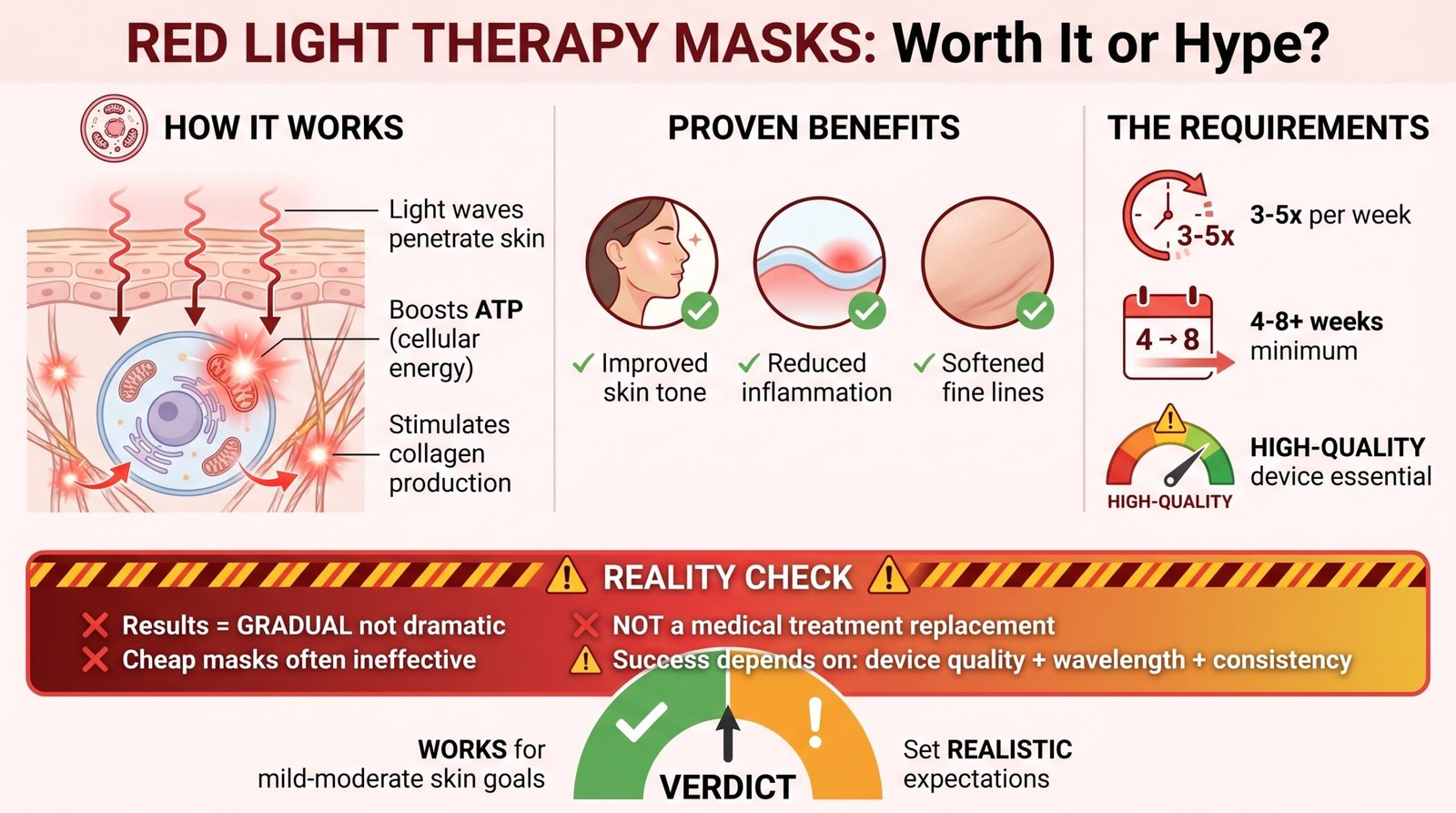
📌 Quick Summary Red light therapy masks can improve skin tone, reduce inflammation, and soften fine lines by boosting cellular energy (ATP) and collagen production—but only if you use a high-quality device consistently (3–5x/week for 4–8+ weeks). However: Bottom line: They work for mild-to-moderate skin goals—but expectations need to be realistic. 🧾 Table of Contents