Latest posts
-
Can Red Light Therapy Clear Acne? Yes. Here’s the 76% Clinical Result
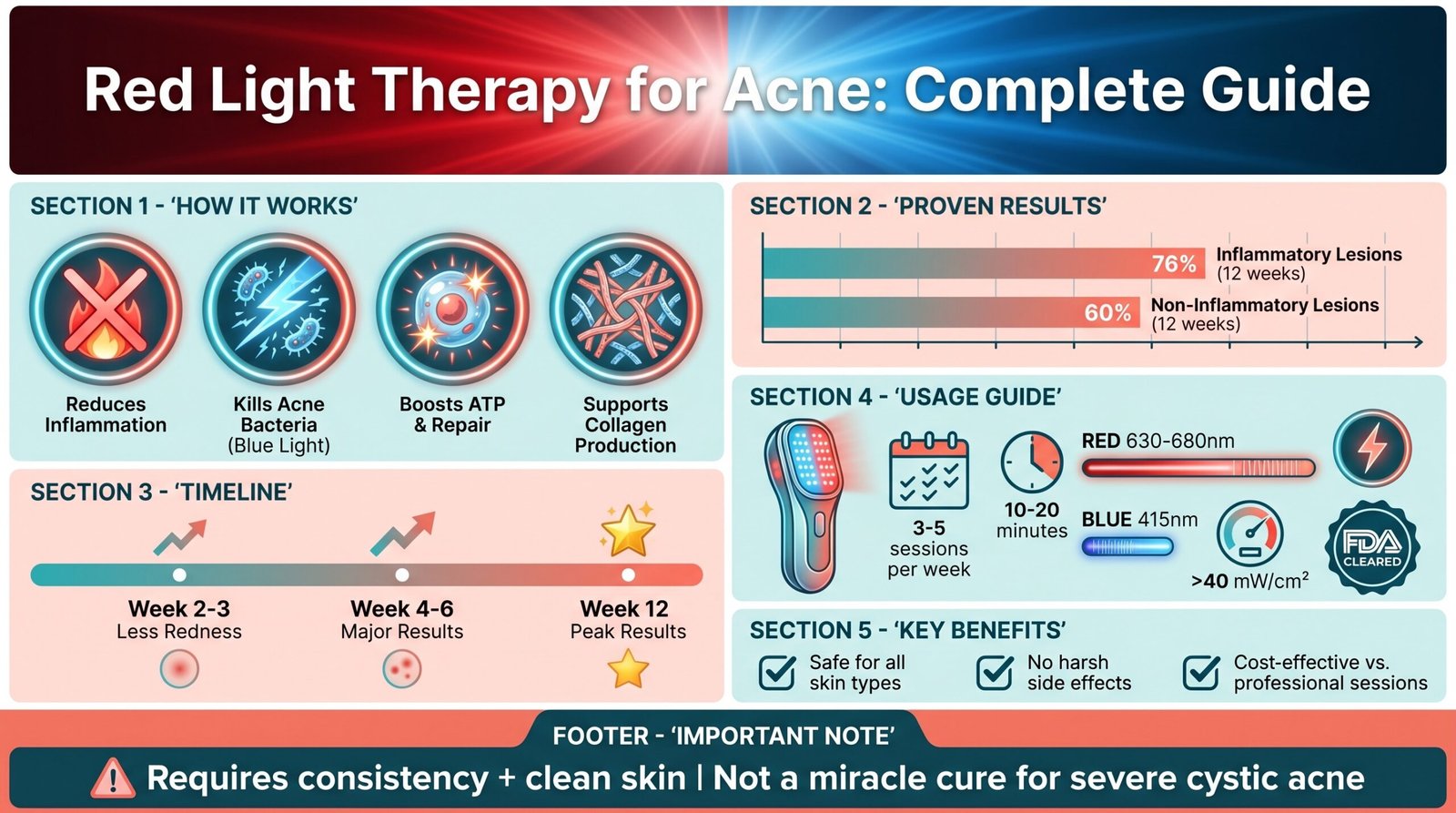
📌 Quick Summary Red light therapy (often combined with blue light) can significantly help clear inflammatory acne by reducing inflammation, killing acne-causing bacteria (via blue light), boosting cellular repair through mitochondrial ATP production, and supporting collagen without the harsh side effects of traditional treatments like retinoids or benzoyl peroxide. Clinical studies show up to 76%
-
Red Light Therapy for Rosacea: Does It Actually Work or Just Hype?
📌 Quick Summary Red light therapy (specifically 630-660nm red + 850nm near-infrared wavelengths) shows real potential for managing rosacea by boosting cellular ATP, reducing inflammation, calming immune overactivity, improving vascular function, and strengthening the skin barrier—leading to less redness, flushing, and flare-ups. It’s not hype when used correctly, but results require: Key caveats: Bottom line:
-
Red Light Therapy for Back Pain: Benefits, Science and What Actually Works
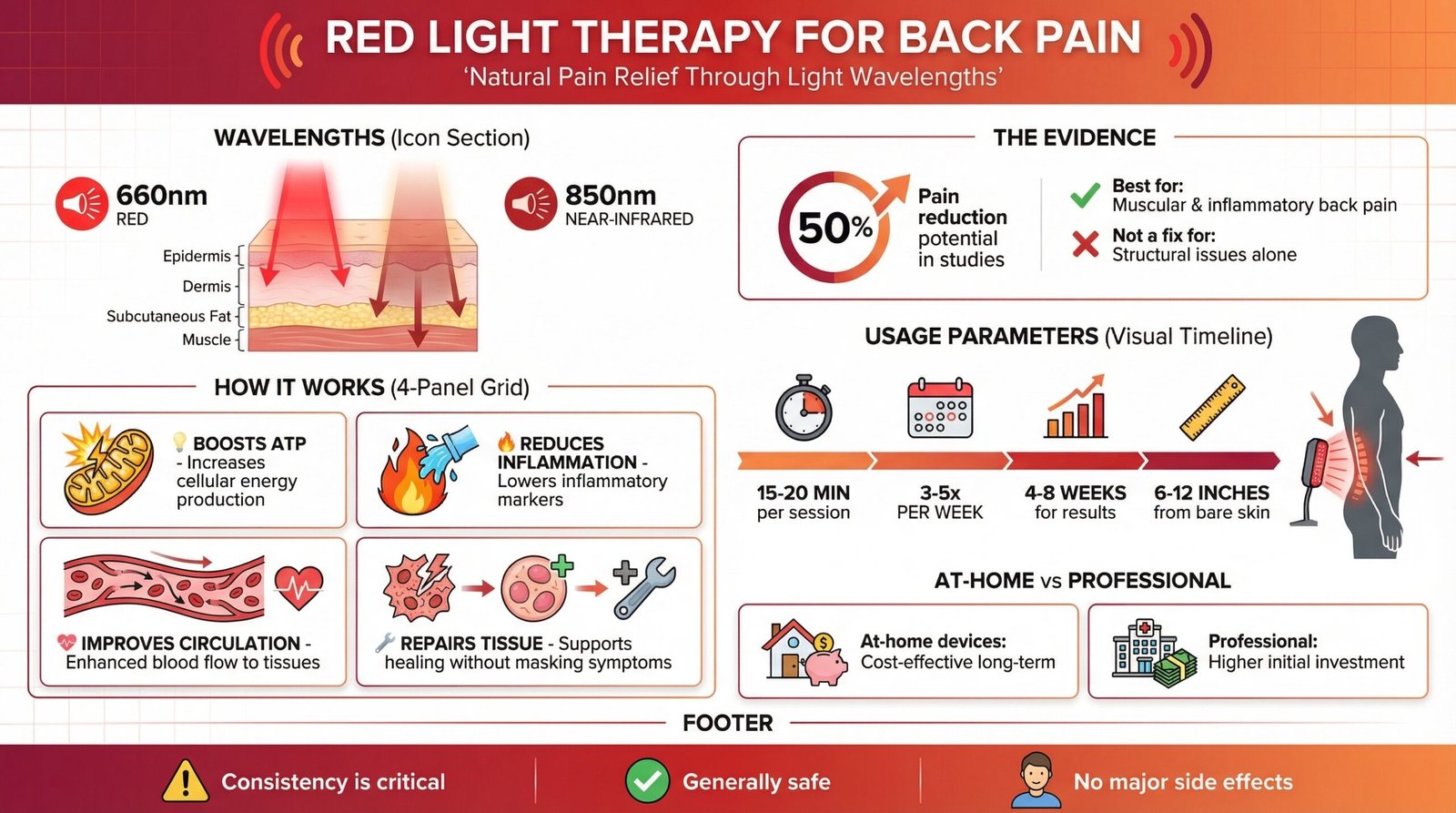
📌 Quick Summary Red light therapy (using 660nm red and 850nm near-infrared wavelengths) can help reduce back pain by boosting cellular energy (ATP) in mitochondria, lowering inflammation, improving circulation, and supporting tissue repair, without just masking symptoms. Evidence shows potential for meaningful pain reduction (up to 50% in some studies), especially for inflammatory or muscular
-
Does Red Light Therapy Help Shoulder Pain? What the Science Really Says
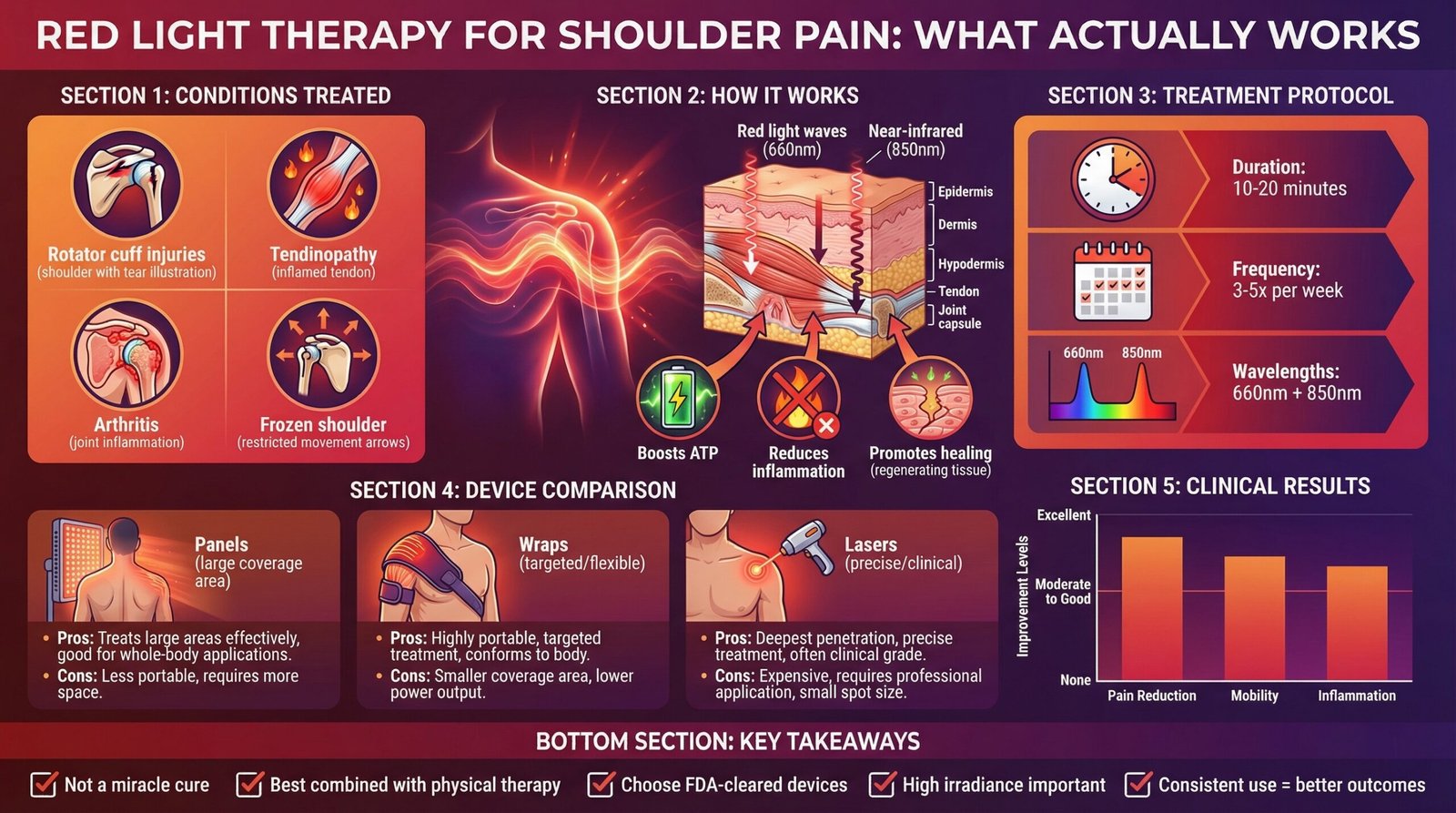
📌 Quick Summary Red light therapy (RLT) and near-infrared light therapy show promising evidence for reducing shoulder pain, inflammation, and improving mobility, particularly for conditions like rotator cuff injuries, tendinopathy, arthritis, and frozen shoulder. It works by penetrating tissues to boost cellular energy (ATP), reduce oxidative stress, and promote healing. Clinical studies show moderate to
-
Red Light Therapy for Psoriasis: 60–100% Clearance?
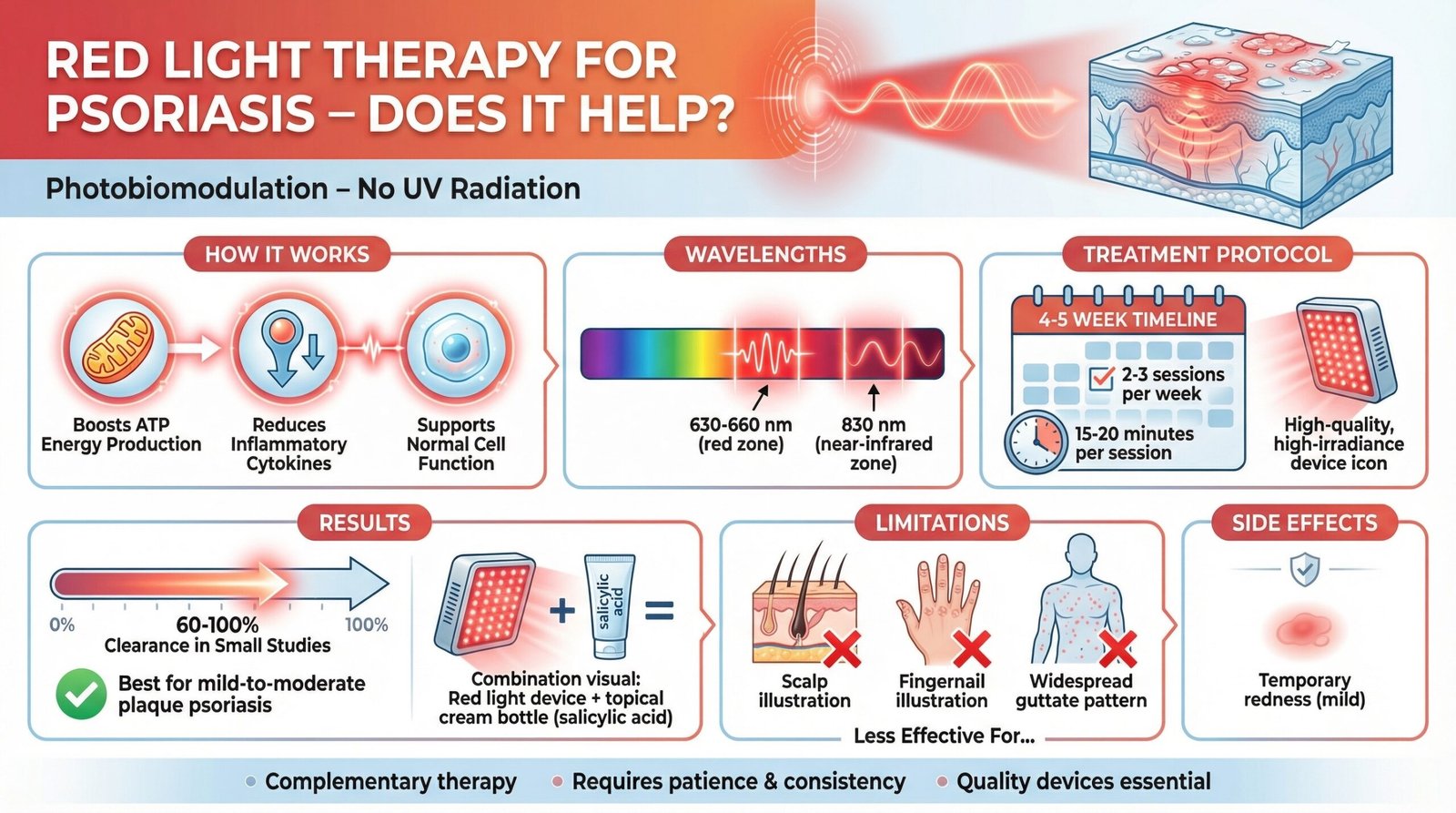
📌 Quick Summary Red light therapy (using 630–660 nm wavelengths, often combined with 830 nm near-infrared) is a safe, non-UV home treatment for psoriasis that works through photobiomodulation: it boosts mitochondrial ATP production, reduces inflammation by modulating cytokines, and supports healthier skin cell function without the cancer risks or immune suppression of traditional therapies. Red
-
Red Light Therapy for Hair Loss: 35-51% Results, Real Data
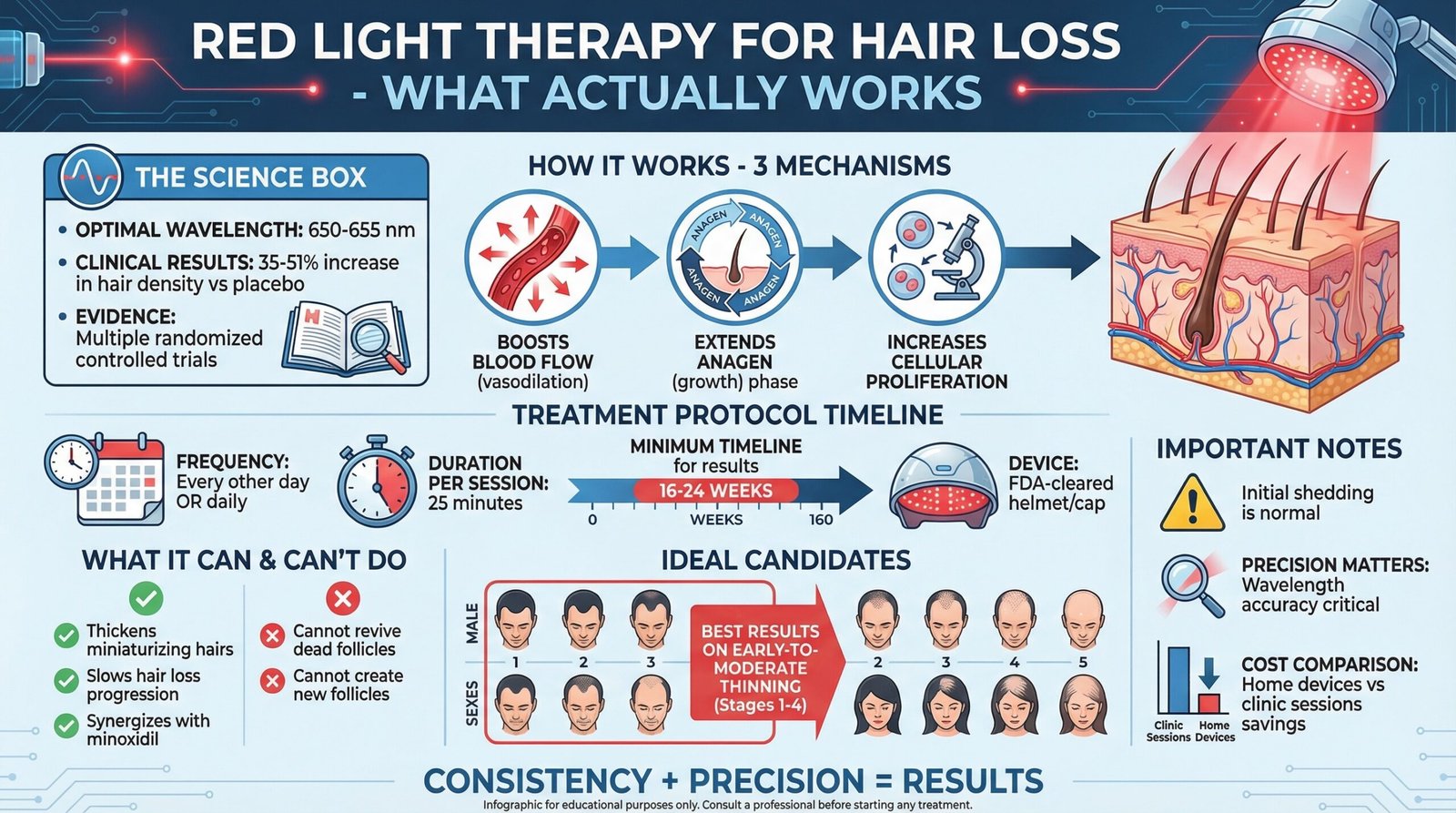
📌Quick Summary Red light therapy (RLT) at precise wavelengths (especially 650-655 nm) is backed by multiple randomized controlled trials showing 35-51% increases in hair density and counts versus placebo for androgenetic alopecia. It works via photobiomodulation: boosting blood flow (vasodilation), extending the anagen (growth) phase of hair follicles, and increasing cellular proliferation. Best results occur
-
How to Use Red Light Therapy for Hearing Loss (at Home)
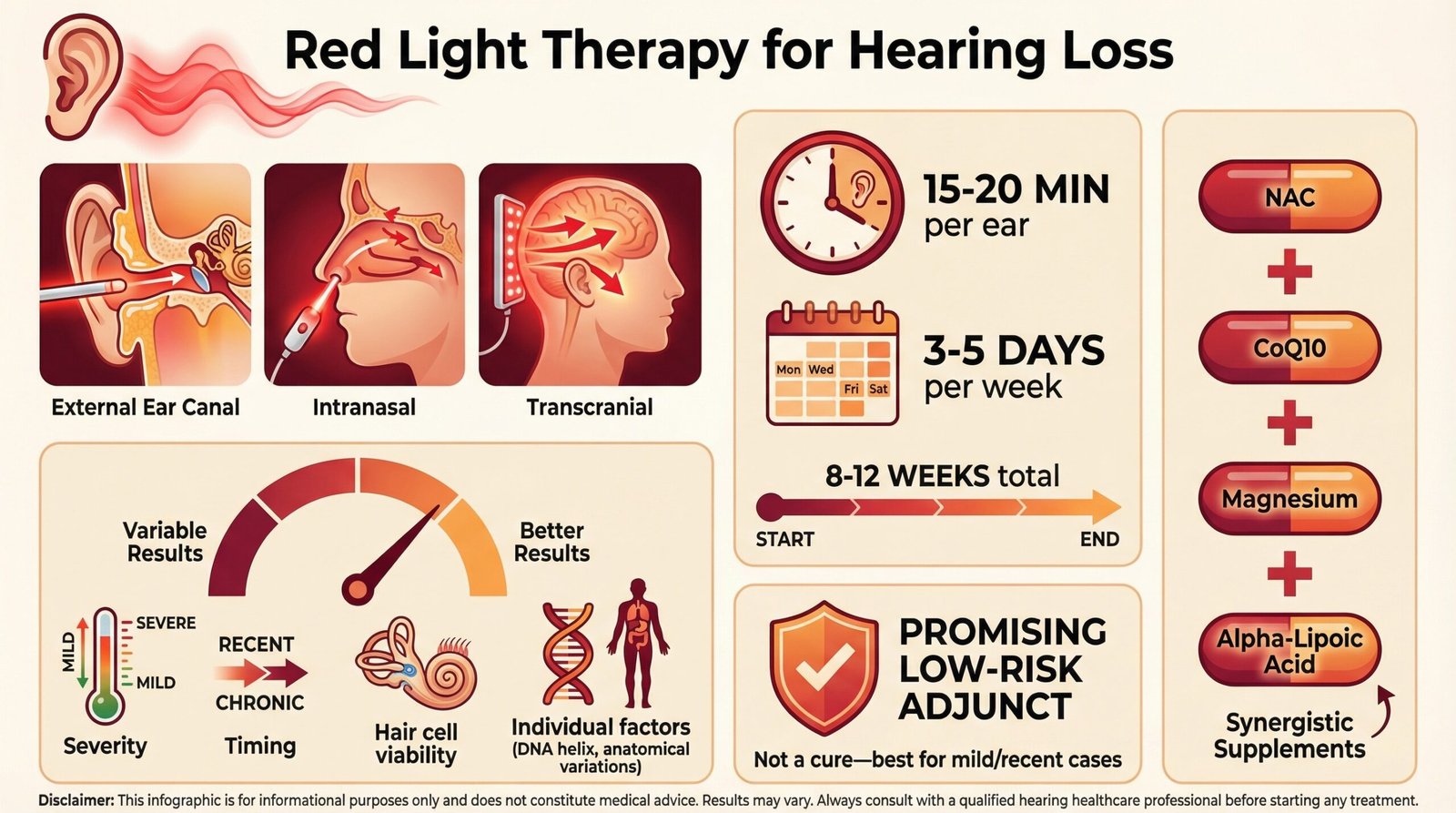
📌Quick Summary: Fast Facts Different red light application methods (external ear canal, intranasal, transcranial), optimal session durations and frequencies (typically 15–20 minutes per ear, 3–5 times per week for 8–12 weeks), device recommendations, synergistic use with supplements like NAC, CoQ10, magnesium, and alpha-lipoic acid, are necessary for adequate results There is significant individual variability in
-
Red Light Therapy for Hearing Loss and Tinnitus: What the Research Shows
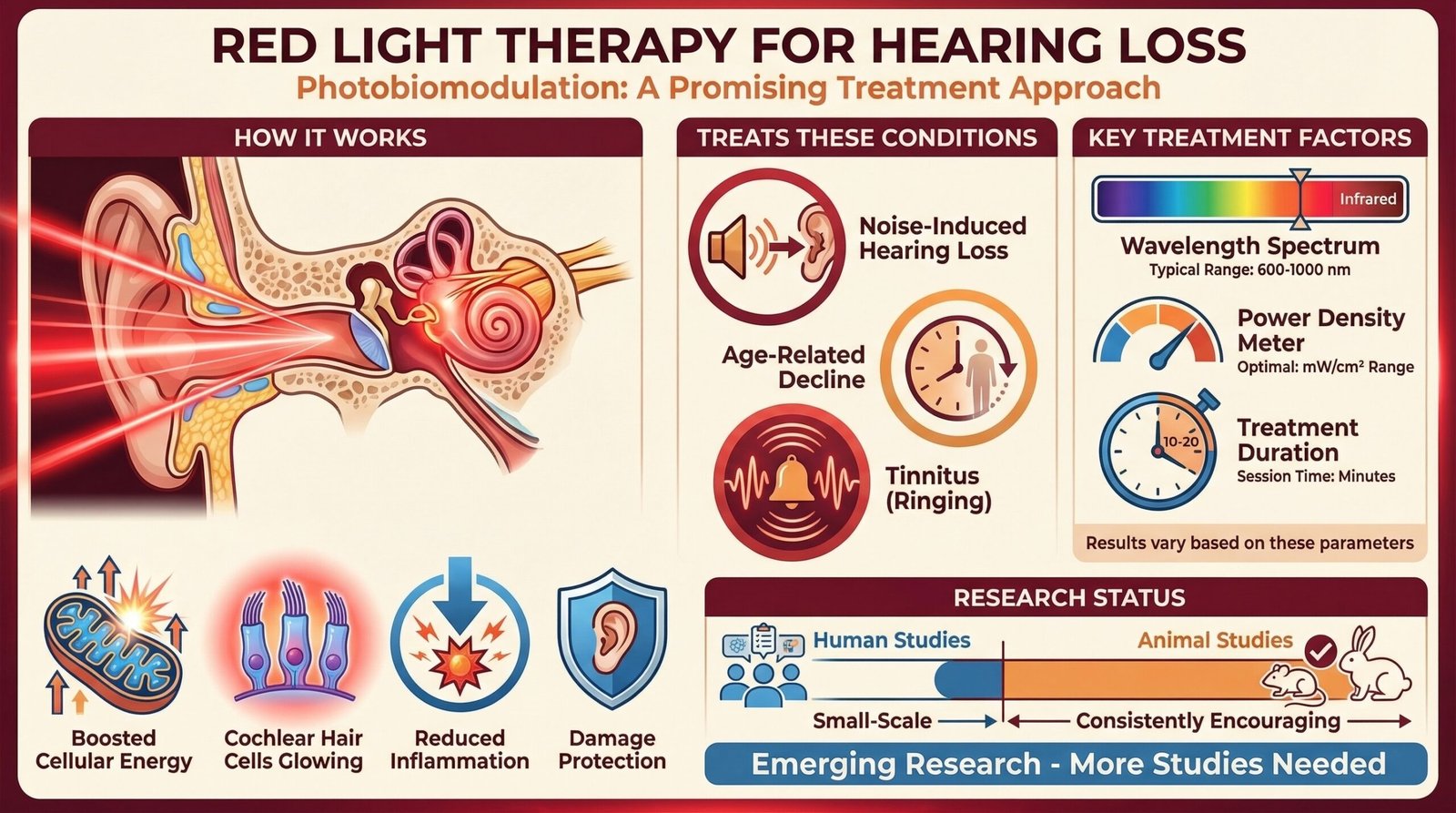
📌Quick Summary: Fast Facts 🧾 Table of Contents · Introduction · Understanding Photobiomodulation in the Auditory System · The Evidence for Different Types of Hearing Loss · Treatment Protocols and Technical Considerations · People Also Asked Introduction I’ll admit that when I first encountered the idea of shining light into ears to improve hearing, I
-
The Dark Side of Red Light Therapy: What Nobody Tells You
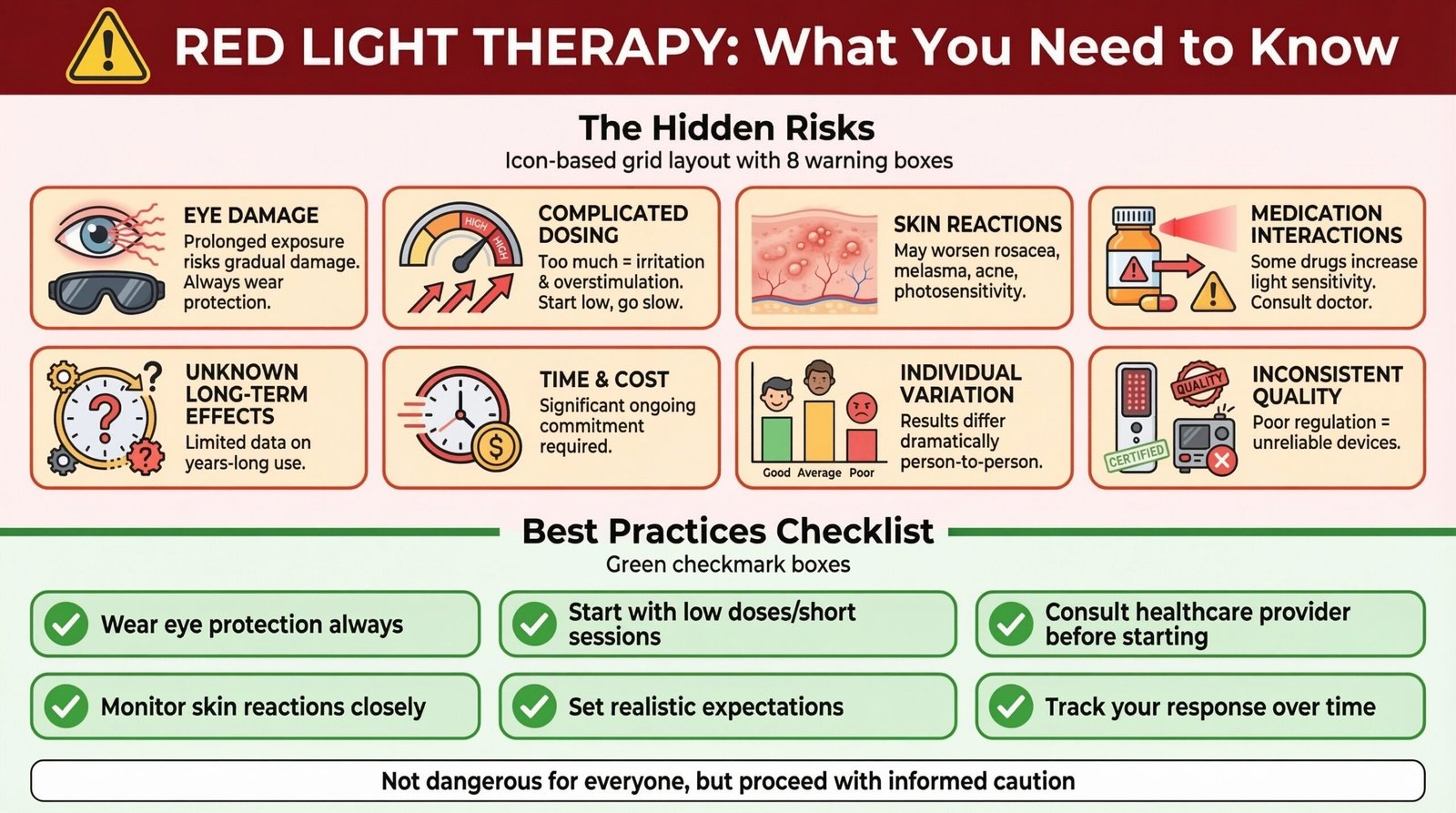
Quick Summary Some possible downsides to red light therapy are: potential eye damage from prolonged exposure without protection, complicated dosing that can lead to irritation or overstimulation if overdone, skin reactions (worsening rosacea, melasma, acne, or photosensitivity), medication interactions increasing sensitivity, missing long-term safety data after years of use, significant time and cost commitments, huge
-
What to Apply After Red Light Therapy: And How to Time Your Skincare Routine
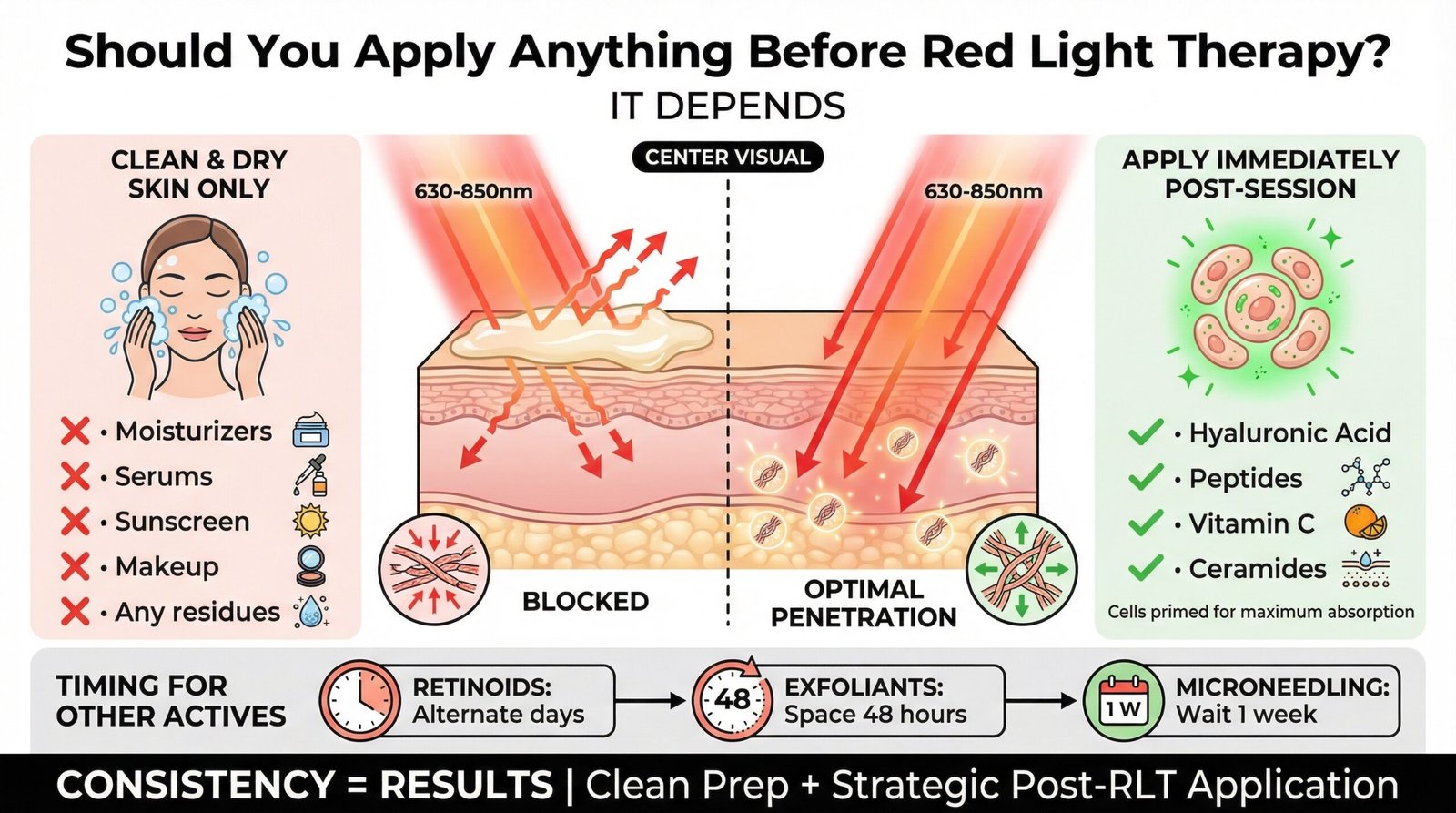
Quick Summary For red light therapy (RLT) to be most effective, your skin should be completely clean and dry before each session. Apply nothing (no moisturizers, serums, sunscreens, makeup, or residues) in most cases, as these create barriers that scatter, reflect, or absorb the therapeutic wavelengths (630–850 nm), reducing light penetration to target cells for