Latest posts
-
What to Put on Your Skin Before Red Light Therapy (Most People Get This Wrong)
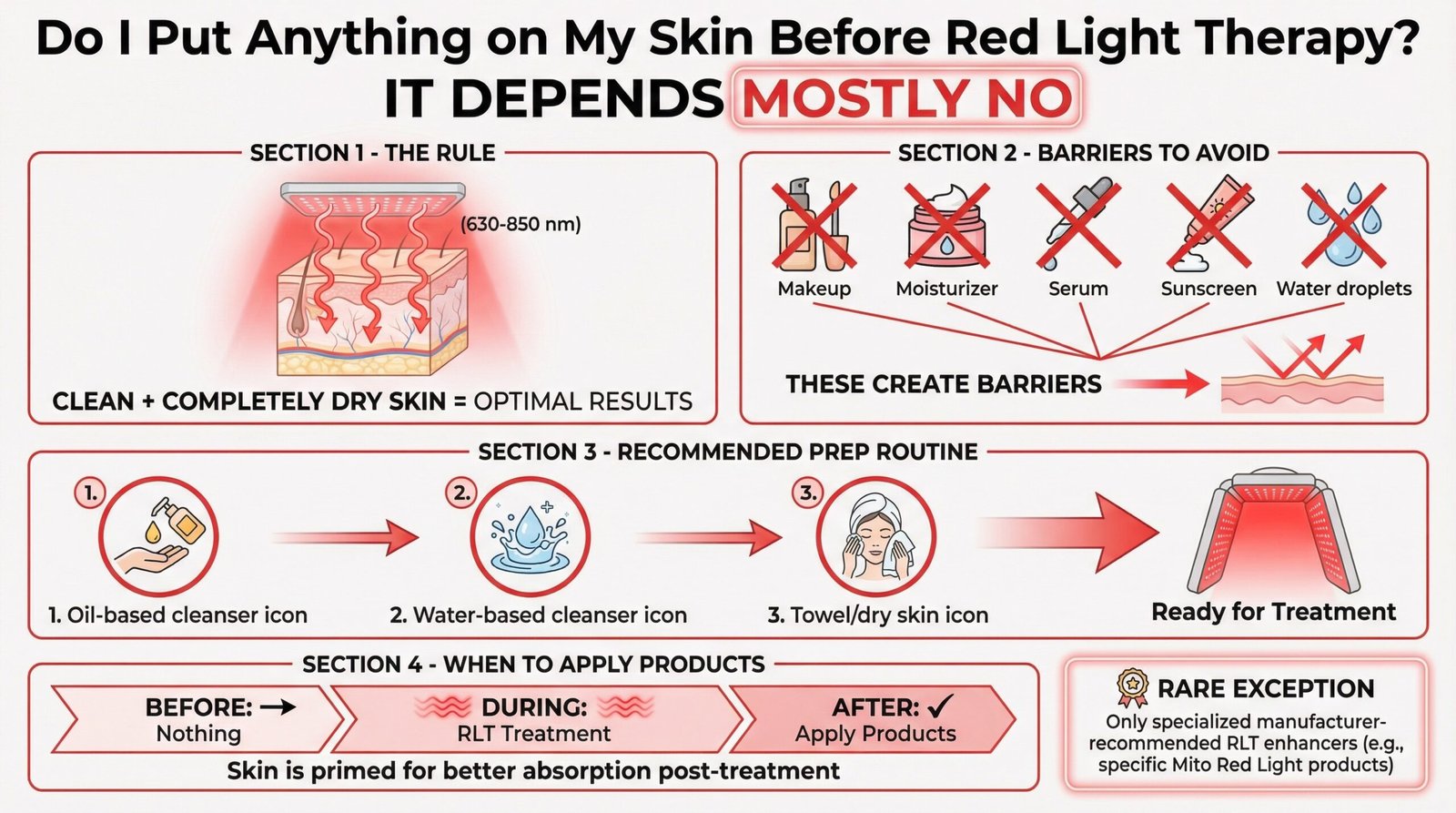
Quick Summary For red light therapy (RLT) to work effectively, apply nothing to your skin beforehand in most cases. Clean, completely dry skin is ideal to ensure therapeutic wavelengths (630-850 nm) penetrate deeply without scattering, absorption, or reflection caused by products. Makeup, moisturizers, serums, sunscreens (especially mineral), and even moisture films create barriers that reduce
-
Red Light Therapy Not Working Anymore? How to Track Progress and Adjust Your Protocol
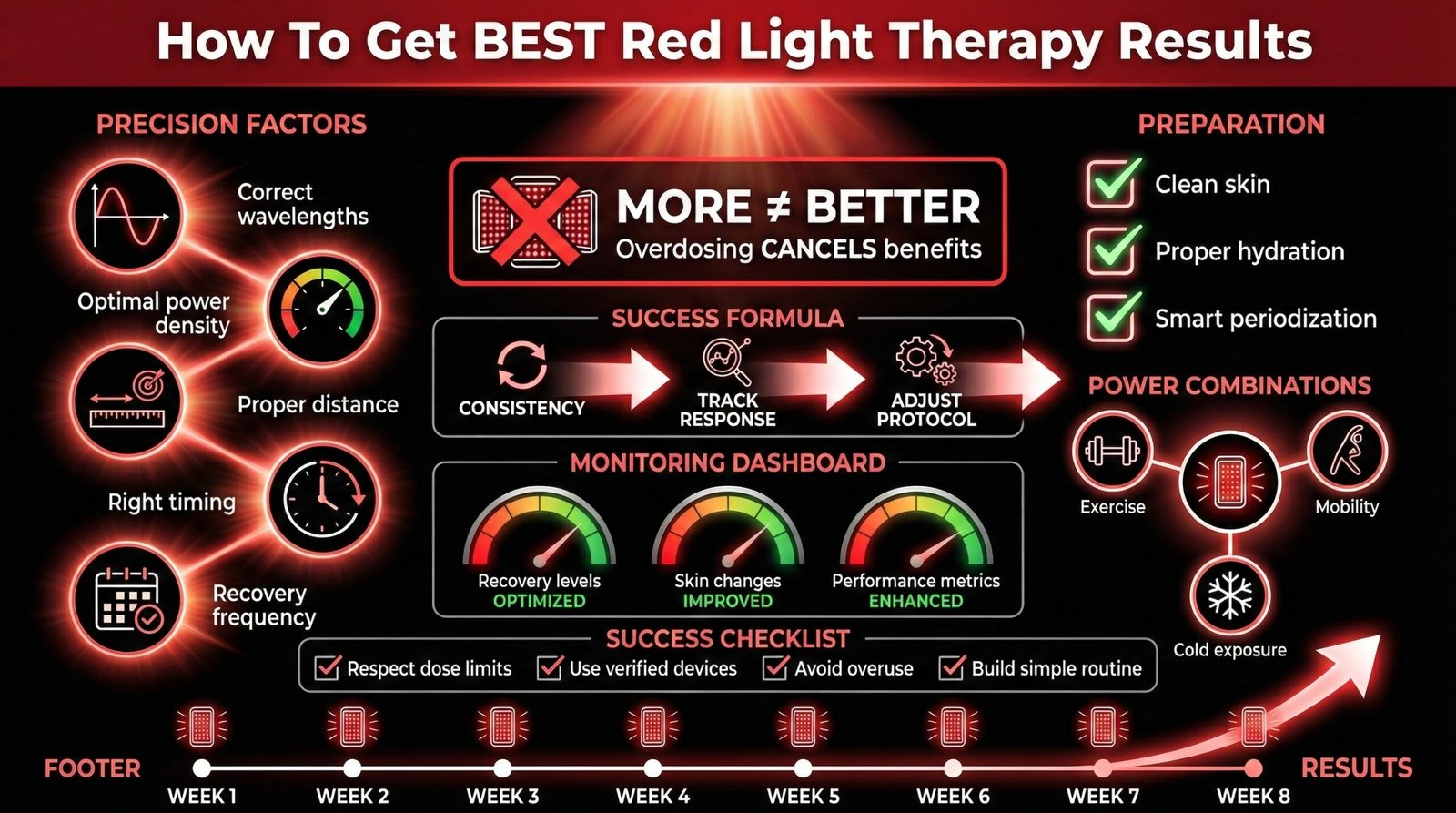
Quick Summary The best red light therapy results come from consistency, tracking response, and adjusting protocols over time. Personal variation matters, so monitoring recovery, skin changes, and performance is essential. Combining RLT with exercise, mobility work, or cold exposure enhances results. Success depends on respecting dose limits, choosing verified devices, avoiding common overuse mistakes, and
-
How to Get the Best Results with Red Light Therapy (Most People Get This Wrong)
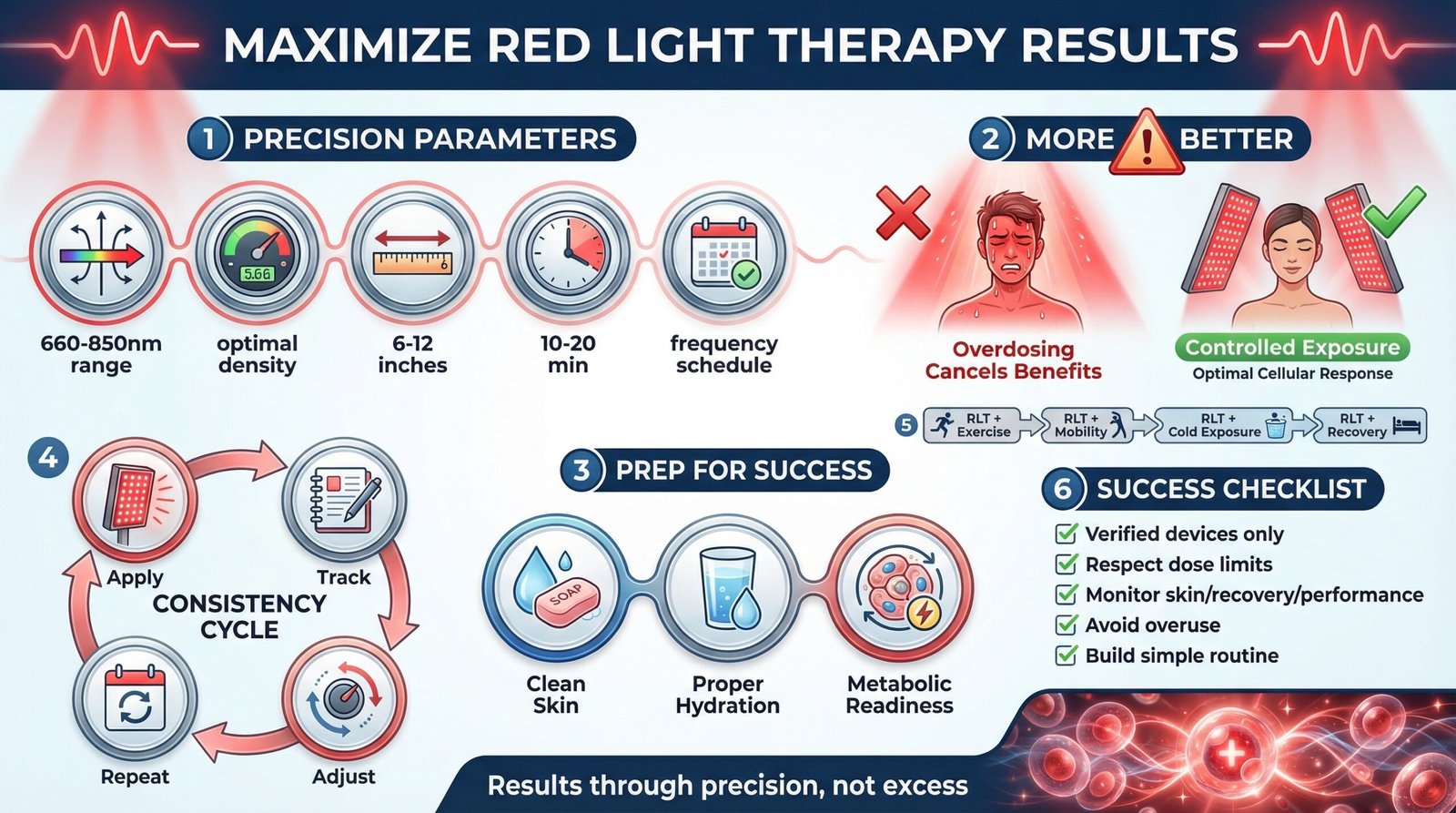
Key Takeaways Red light therapy works only when applied with precision. Results depend on hitting the right wavelengths, power density, distance, timing, and recovery frequency, while your cells are metabolically ready to respond. More exposure isn’t better; overdosing cancels benefits. Clean skin, proper hydration, and smart session periodization dramatically improve outcomes. Table of Contents Introduction:
-
Does Red Light Therapy Work for Tendonitis? (Here’s What Studies Show)
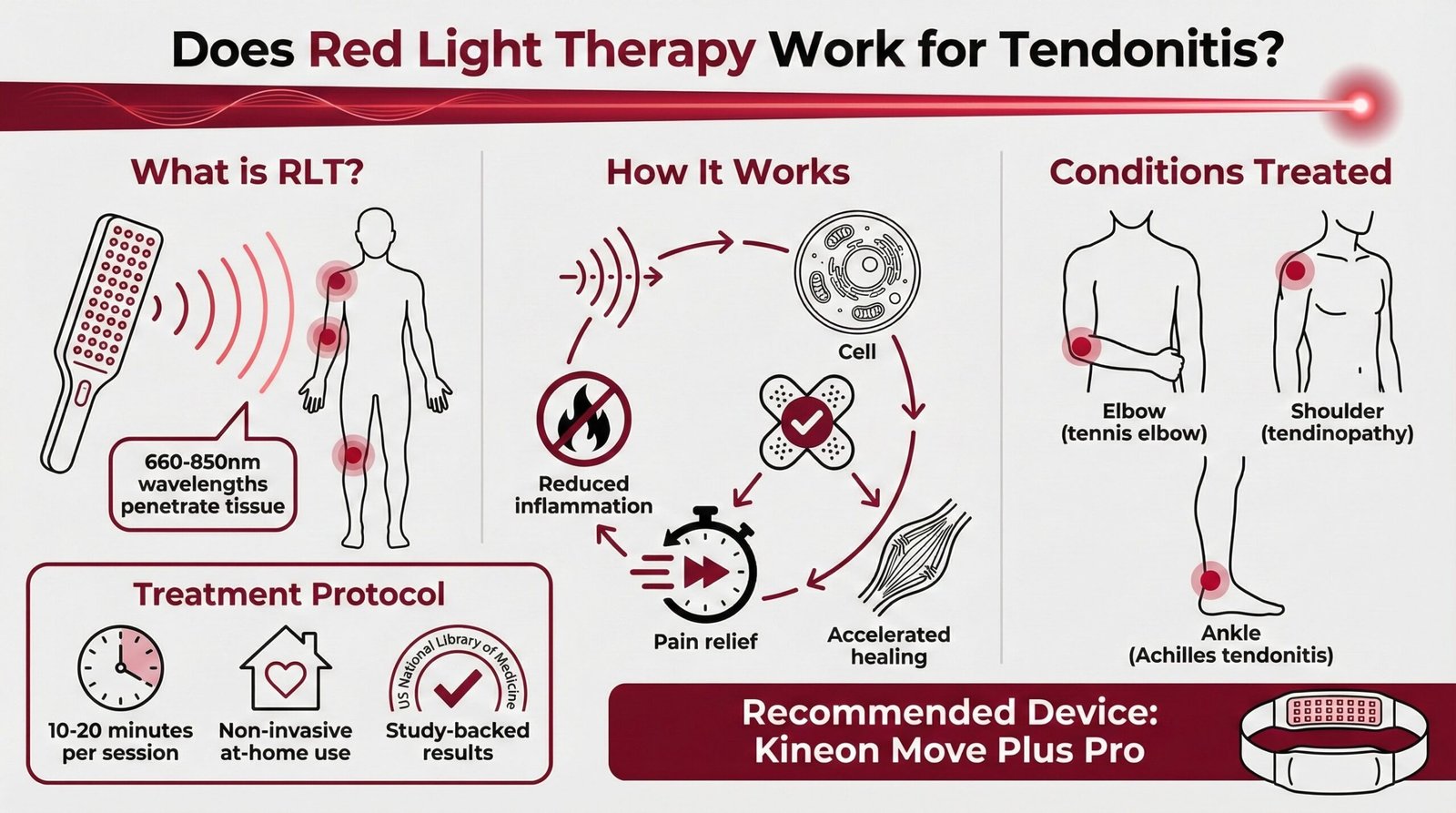
Quick Takeaway Red light therapy (photobiomodulation) can help with tendonitis as part of a consistent rehab plan. Research suggests it may: It’s most effective when used: Bottom line:👉 Red light therapy can speed up healing and improve symptoms, but results depend on consistency, correct usage, and whether your condition is acute or chronic. Discover if
-
How to Use Red Light Therapy for Knee Pain and Cut Pain by 50% in Weeks
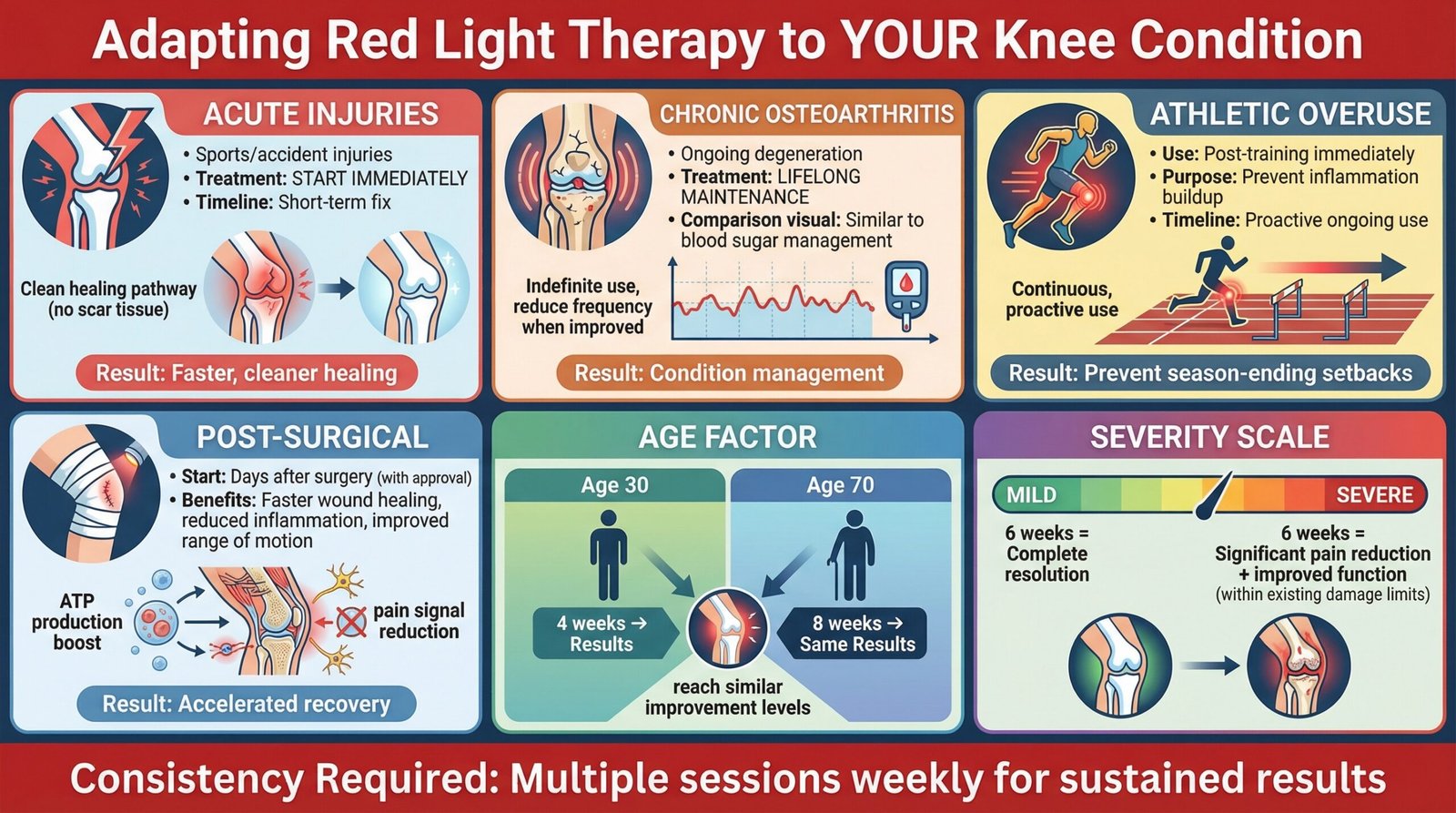
Quick Summary Red light therapy (RLT) helps relieve knee pain through non-invasive mechanisms: specific wavelengths (red ~660 nm for surface + near-infrared 808–850 nm for deep penetration) boost mitochondrial ATP production for cellular repair, reduce inflammation (lower cytokines, increase nitric oxide/blood flow), and modulate pain signals (endorphin release, nerve effects). It’s effective for osteoarthritis, acute
-
Does Red Light Therapy Help Eczema? Zero Side Effects, Real Results in Clinical Trials
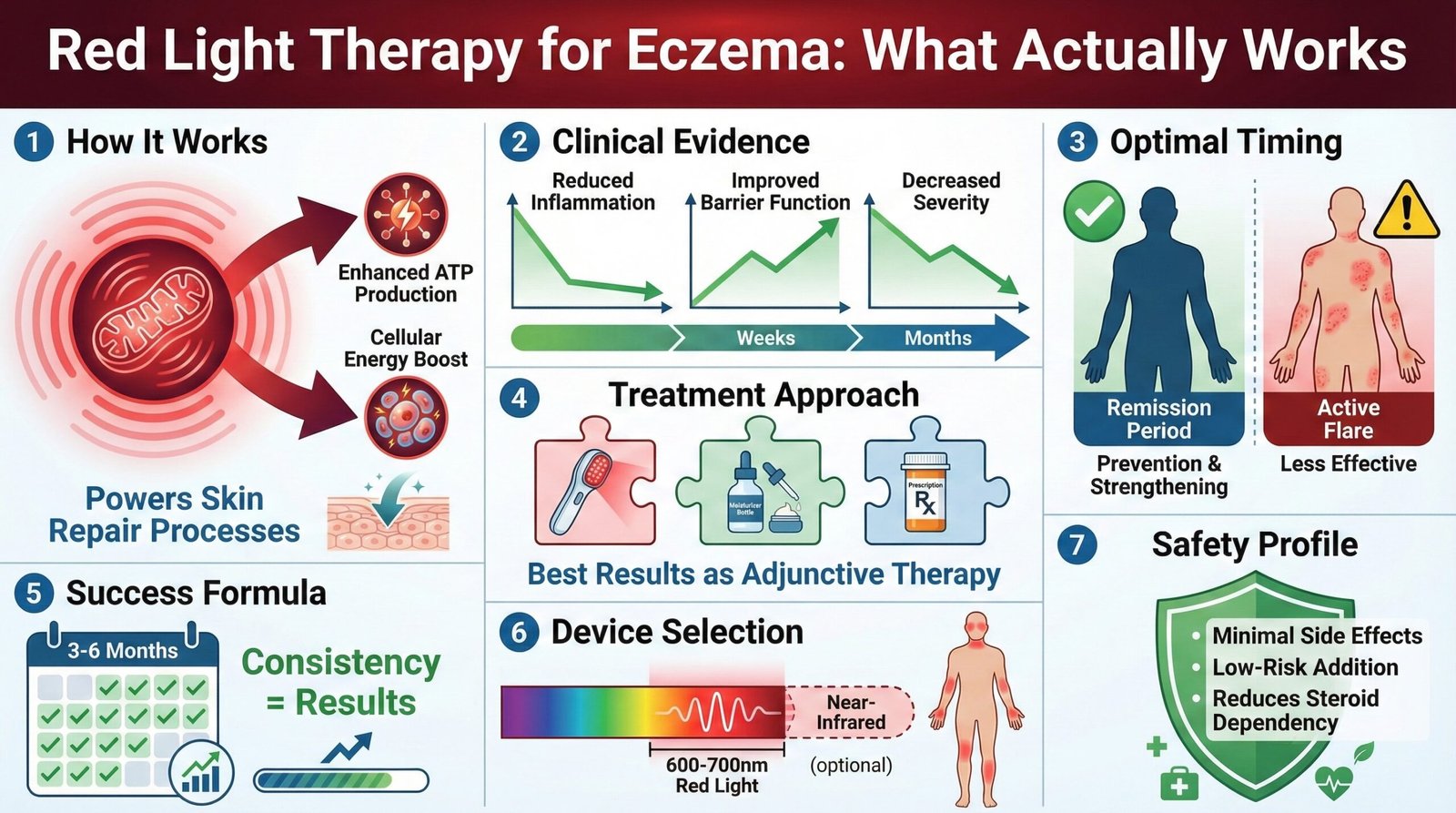
Quick Summary Red light therapy (primarily 600–700 nm) can help manage eczema as a safe, complementary treatment by boosting cellular energy (ATP), reducing inflammation, modulating cytokines, and strengthening the skin barrier. Clinical studies show 30–40% reductions in eczema severity scores (SCORAD), better barrier function, and symptom improvements with consistent use over weeks to months. Best
-
Is Red Light Therapy Safe During Pregnancy? A Trimester-by-Trimester Guide

Quick Summary If you are wondering if red light therapy is safe during pregnancy. Yes, it is. Red light therapy (using 630–850 nm wavelengths) is generally considered safe during pregnancy, as it is non-ionizing, boosts cellular energy (ATP), reduces inflammation, and helps with common issues like pain and swelling, without evidence of harm to the
-
Red Light Therapy Side Effects: What Actually Happens When Things Go Wrong
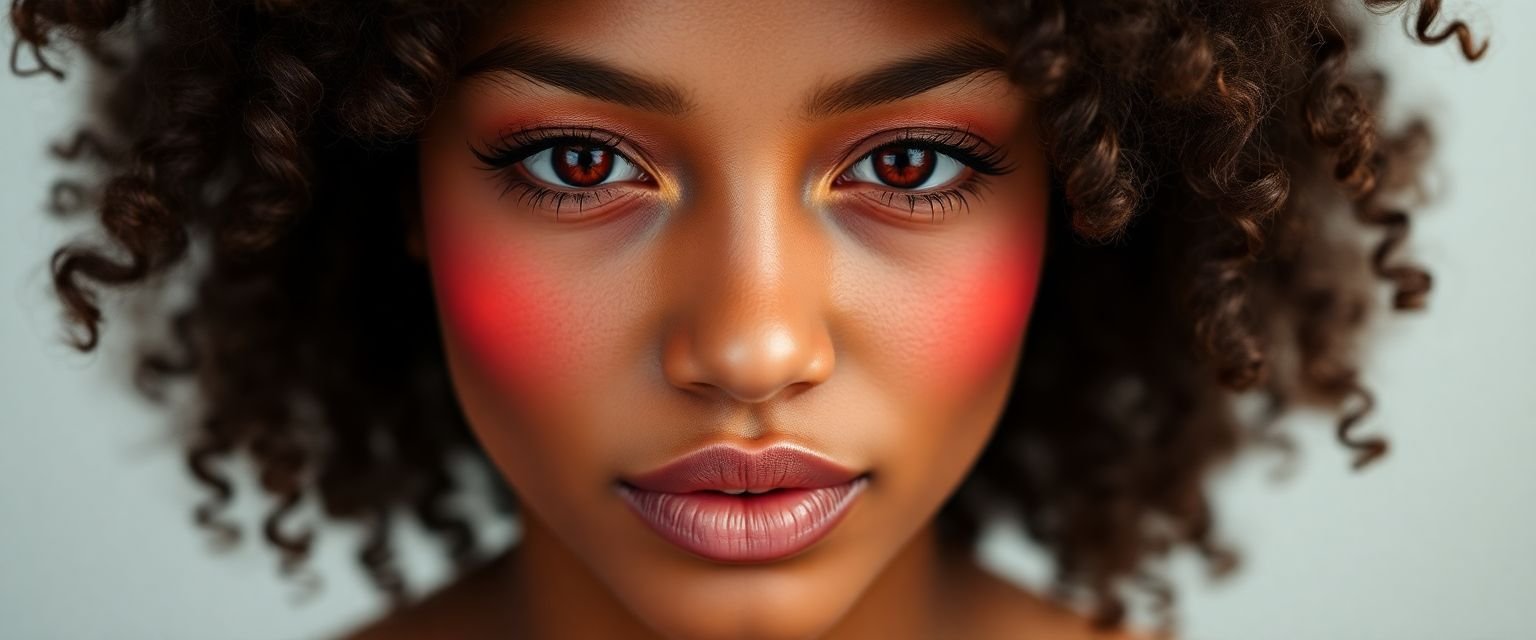
Quick Summary While serious red light therapy side effects are rare, they typically stem from overexposure, poor-quality devices, or pre-existing light sensitivity. The most common red light therapy side effects include temporary skin redness, eye strain, and headaches. Red light therapy (RLT) is widely regarded as safe and non-invasive, but “doing it wrong” can lead
-
What Does the Mayo Clinic Say About Red Light Therapy? The Surprising Verdict
Quick Summary You have enthusiastic biohackers on one side, swearing by their red light panels, claiming transformed skin and superhuman recovery. On the other side, you have the white coats at prestigious medical institutions carefully examining evidence through their research-grade microscopes. So what does the Mayo Clinic say about red light therapy? The Mayo Clinic
-
What Does Red Light Therapy Do for Your Face? Benefits, Timeline and Side Effects
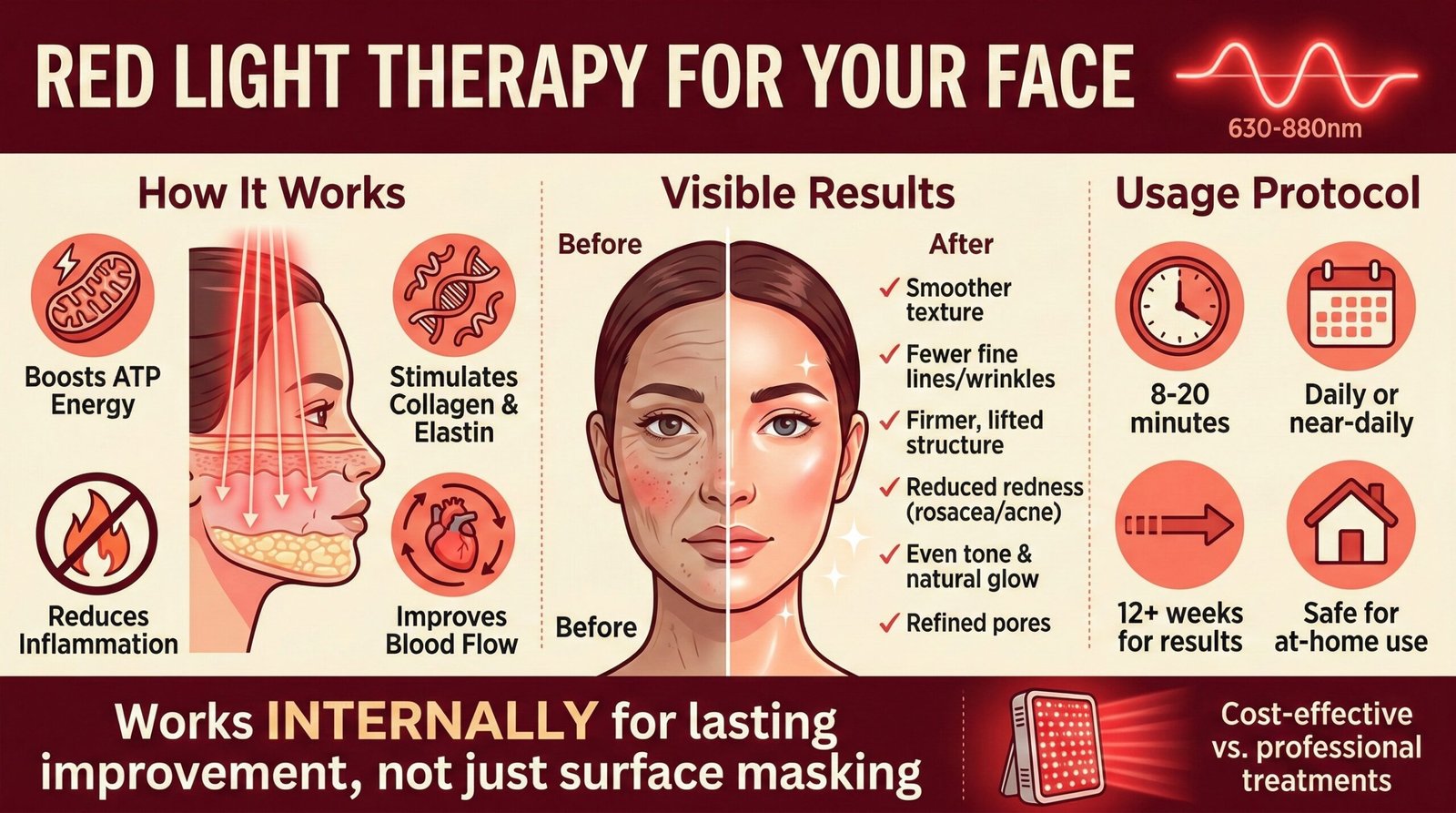
Quick Summary Red light therapy (using 630-880 nm wavelengths) supercharges facial skin cells by boosting mitochondrial ATP production, stimulating collagen/elastin synthesis, reducing inflammation, and improving circulation. This leads to smoother texture, fewer fine lines/wrinkles, firmer structure, reduced redness (helpful for rosacea/acne), better tone/glow, and refined pores over time. It’s safe for consistent at-home use (8-20