📌 Quick Summary
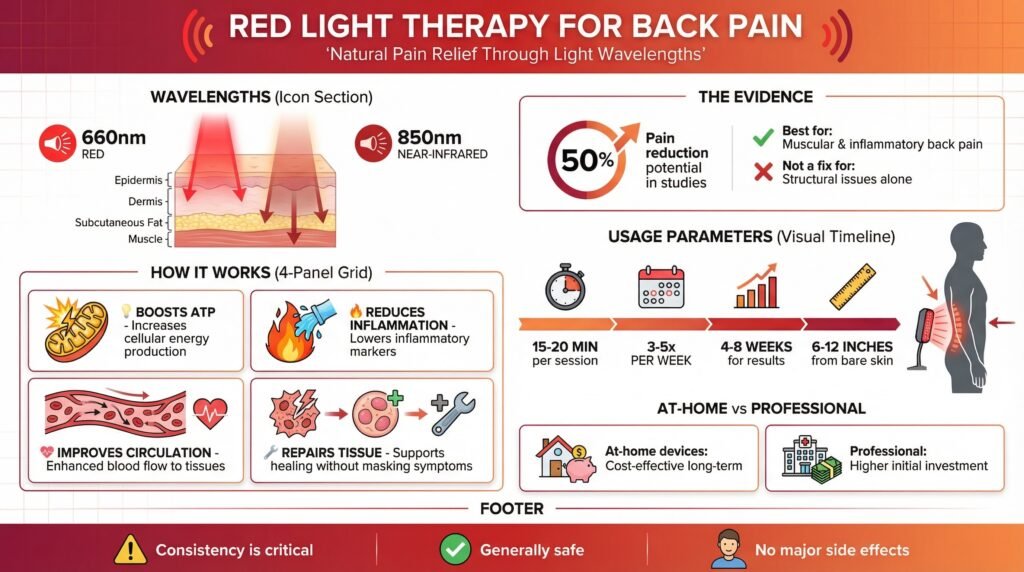
Red light therapy (using 660nm red and 850nm near-infrared wavelengths) can help reduce back pain by boosting cellular energy (ATP) in mitochondria, lowering inflammation, improving circulation, and supporting tissue repair, without just masking symptoms. Evidence shows potential for meaningful pain reduction (up to 50% in some studies), especially for inflammatory or muscular back pain, when used consistently with proper parameters (15–20 min sessions, 3–5x/week for 4–8 weeks, applied directly to bare skin at 6–12 inches).
It works best as a complementary tool alongside movement and posture correction, not as a standalone fix for structural issues. At-home devices are cost-effective long-term compared to professional sessions, but results vary, consistency is critical, and it’s generally safe with no major side effects.
🧾 Table of Contents
- Introduction
- The Science Behind Light and Pain Relief
- Why Wavelength Selection Matters
- Understanding Treatment Parameters
- Setting Up Your Treatment Protocol
- Combining Red Light with Movement
- Common Implementation Mistakes
- Red Light Therapy Cost Savings Calculator
- Adapting to Different Back Pain Scenarios
- The Evidence Landscape
- Key Takeaways
- Frequently Asked Questions (FAQs)
- Does red light therapy actually work for back pain?
- How long does it take for red light therapy to work on back pain?
- What wavelength is best for lower back pain?
- Can red light therapy help with sciatica?
- How often should I use red light therapy for back pain?
- Should I use red light therapy before or after exercise?
- Can I use red light therapy through clothing?
Introduction
Back pain is one of those universal experiences that manages to be both incredibly common and uniquely frustrating. Whether you’re dealing with chronic lower back issues from years at a desk, acute pain from an injury, or that nagging mid-back tension that just won’t quit, the search for effective relief can feel endless.
Over-the-counter medications offer temporary respite but don’t address underlying issues. Physical therapy helps, but it needs a significant time investment.
Surgery feels like too drastic a step for many situations.
This is where red light therapy enters the conversation.
Red light therapy won’t replace proper movement or address structural problems. But for inflammation-driven pain, muscle tension, and tissue healing, the wavelengths between 630-850nm can penetrate deep enough to reach the structures that matter and stimulate cellular processes that support recovery.
The Science Behind Light and Pain Relief
When I first encountered red light therapy, my skepticism ran high. The idea that shining specific colors of light on your back could reduce pain sounded like pseudoscience.
But the mechanism is actually remarkably straightforward and grounded in well-established cellular biology.
Your cells contain mitochondria, those little powerhouses you probably learned about in high school biology. These organelles produce adenosine triphosphate, or ATP, which serves as the basic energy currency for virtually every cellular process.
When tissues are injured or inflamed, mitochondrial function becomes impaired. The cells in that painful area of your back literally cannot produce energy efficiently.
This energy deficit creates a cascade of problems. Without adequate ATP, cells struggle to perform basic maintenance, repair damaged structures, or regulate inflammation properly.
The result is persistent pain signaling, ongoing inflammation, and sluggish healing that can extend for weeks or months beyond the initial injury.
Red and near-infrared wavelengths interact with chromophores in your mitochondria, particularly an enzyme called cytochrome c oxidase. This interaction enhances the electron transport chain, directly boosting ATP production.
You’re giving damaged cells the energy boosts they need to get back to normal function.
The beauty of this mechanism is that you’re not suppressing symptoms like anti-inflammatory medications do. Instead, you’re supporting the actual cellular processes that drive healing.
Your body already knows how to repair tissues.
Red light therapy just provides the energetic resources to do it more efficiently.
Why Wavelength Selection Matters
Not all red light is created equal, and this is where many consumer devices fall short. The wavelength decides how deeply light penetrates into tissue, and back pain often involves structures several centimeters below the skin surface.
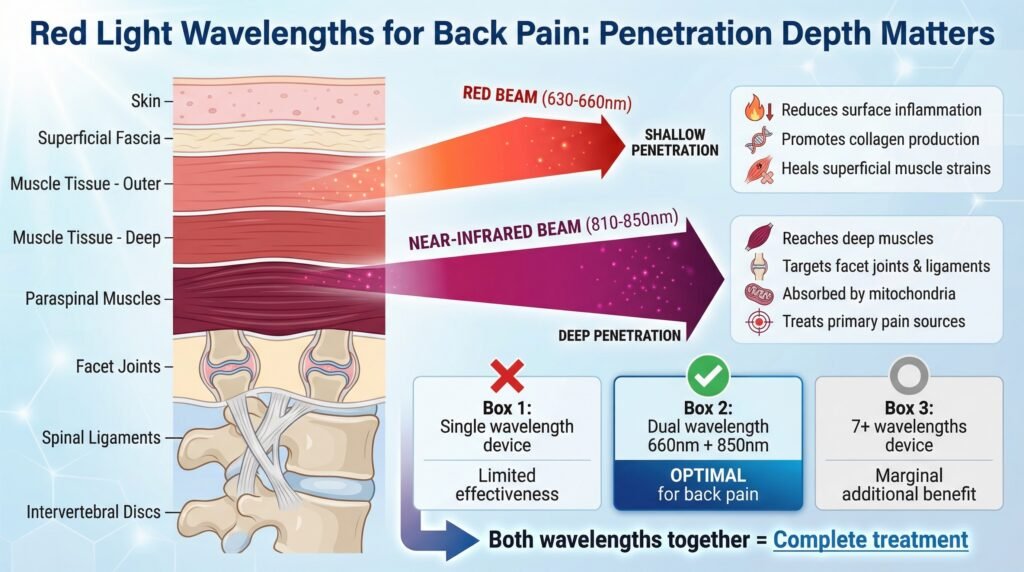
Red light at 630-660nm penetrates relatively superficially, reaching skin, superficial fascia, and the outer layers of muscle tissue. This wavelength is particularly effective at reducing inflammation in soft tissues and promoting collagen production in connective tissue.
For surface-level muscle strains or fascial restrictions, 660nm can be quite effective.
Near-infrared light at 810-850nm is where things get really interesting for back pain.
This wavelength can penetrate several centimeters deep, reaching paraspinal muscles, facet joints, spinal ligaments, and potentially even the outer layers of intervertebral discs. The 850nm wavelength is especially well-absorbed by mitochondria in deep muscle tissue.
For most back pain scenarios, you want both wavelengths working together. The red light addresses surface inflammation and connective tissue healing, while the near-infrared reaches the deeper structures that are often the primary pain generators.
Devices that emit only a single wavelength are inherently limited in their effectiveness for back pain.
Some premium devices now offer seven or more wavelengths spanning from 480nm up to 1064nm. While this sounds impressive from a marketing perspective, the core therapeutic action for back pain still relies primarily on that 660nm and 850nm combination.
Additional wavelengths may provide marginal benefits for specific conditions, but they’re not essential for most people.
Understanding Treatment Parameters
Wavelength is just one variable in the equation. The actual energy delivered to your tissues depends on several factors that work together to decide therapeutic effectiveness.
Irradiance, measured in milliwatts per square centimeter, tells you how much power the device delivers at a specific distance. A device might produce impressive irradiance at the panel surface, but if you’re treating from 12 inches away (a common and comfortable distance), that number drops significantly.
Reputable manufacturers provide independently verified irradiance measurements at many distances.
Treatment duration and frequency interact in ways that matter more than most people realize. A single 30-minute session once per week delivers less benefit than three 15-minute sessions spread across that same week.
Cellular responses to photobiomodulation involve temporary changes in mitochondrial function, inflammation markers, and circulation.
Frequent exposure maintains these useful changes, while sporadic treatment allows tissues to return to their baseline dysfunctional state between sessions.
The research that shows positive outcomes typically uses protocols involving 10-20 minute sessions performed 3-5 times per week for at least 3-4 weeks. Some studies demonstrating significant pain reduction used daily treatments for 6-7 weeks.
This consistency requirement is honestly one of the biggest barriers to success.
Life gets busy, motivation wanes, and that expensive red light panel starts gathering dust in the corner.
The distance from the device to your skin dramatically affects the energy absorbed by tissues. Light follows an inverse square law, meaning if you double the distance, you receive one-quarter of the irradiance.
Treating from 6 inches delivers substantially more energy than treating from 12 inches.
However, closer doesn’t always work better. Excessively close positioning with high-powered devices can cause heating effects that aren’t necessarily therapeutic and may even be counterproductive for acute inflammation.
The 6-12 inch range works well for most consumer devices and back pain applications.
This distance provides adequate tissue penetration while allowing comfortable positioning and coverage of larger treatment areas.
Setting Up Your Treatment Protocol
Creating an effective treatment routine starts with a realistic assessment of your schedule and compliance capacity. An ambitious protocol you’ll abandon after two weeks is worthless compared to a modest approach you’ll maintain for months.
Start by identifying your most consistent time blocks. Morning sessions work well for people with structured morning routines.
Evening treatment can help reduce pain before bed and potentially improve sleep quality.
The specific timing matters less than the consistency of actually doing it.
Position yourself so the affected area is completely exposed and comfortable to maintain for 15-20 minutes. For lower back pain, standing with a wall-mounted panel or sitting backwards in a chair works well.
Mid-back and thoracic pain might be easiest to treat lying face-down with a panel positioned overhead or beside you.
Wearable belt devices solve the positioning problem but typically offer lower irradiance and smaller treatment areas.
Your first week should focus on establishing tolerance and building the habit. Start with 10-minute sessions every other day, even if research supports longer and more frequent treatment.
This conservative approach lets you confirm you’re not experiencing any unusual reactions and allows habit formation without overwhelming your schedule.
Week two, increase to 15 minutes and consider adding a fourth session if your schedule allows. By week three, you should be at 15-20 minute sessions occurring 4-5 times per week.
This is the therapeutic sweet spot where research shows meaningful outcomes.
Track your sessions and pain levels in whatever format you’ll actually use. A simple notes app where you record the date, duration, and a 1-10 pain rating takes 30 seconds and provides valuable feedback on what’s working.
I’m generally skeptical of over-quantifying subjective experiences, but back pain is exactly the kind of thing where your memory of “how bad it was three weeks ago” is notoriously unreliable.
Combining Red Light with Movement
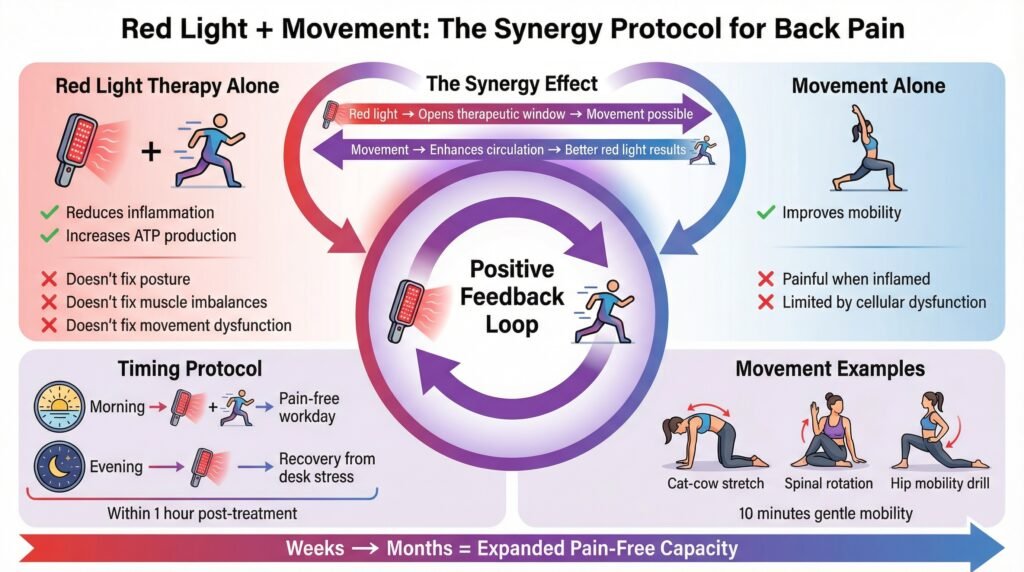
Red light therapy addresses inflammation and cellular energy deficits, but it doesn’t fix the postural patterns, muscular imbalances, or movement dysfunctions that often underlie chronic back pain. This is a crucial point that manufacturers rarely emphasize because it complicates their narrative.
The most effective approach I’ve seen combines red light therapy with deliberate movement practices. The increased ATP production and reduced inflammation create a window where movement feels more accessible and less painful.
This is the ideal time to work on mobility, core activation, and postural correction.
Consider performing gentle mobility work within an hour after your red light session.
Cat-cow stretches, gentle spinal rotations, or basic hip mobility drills take advantage of the reduced inflammation and enhanced cellular function.
You’re not trying to fix everything in one session.
Instead, you’re gradually expanding your pain-free movement capacity over weeks and months.
For desk workers, this combination is particularly powerful. A morning red light session followed by 10 minutes of mobility work can meaningfully impact how your back feels during eight hours of sitting.
Evening treatment helps recover from the accumulated postural stress of the workday.
The synergy works both ways. Movement enhances circulation, which helps deliver oxygen and nutrients to tissues being stimulated by red light therapy.
Better circulation also helps clear inflammatory byproducts and cellular waste from the treatment area.
You’re creating a positive feedback loop where each intervention enhances the effectiveness of the other.
Common Implementation Mistakes
One of the many common mistakes is device positioning errors. This undermines many home treatment attempts. Treating through clothing blocks wavelengths that don’t penetrate fabric well.
Positioning the device too far away reduces irradiance to sub-therapeutic levels.
Angling the panel so light hits your back at an oblique angle as opposed to perpendicularly decreases the effective energy delivered.
Unrealistic timelines create unnecessary disappointment. Some conditions respond quickly, with noticeable improvement within a week or two.
Others, particularly chronic pain that’s been present for years, need patient, consistent application for 6-8 weeks before meaningful changes emerge.
The cellular and tissue-level changes happening from the start aren’t always accompanied by immediate pain reduction.
Ignoring underlying causes is perhaps the most significant mistake. If your back pain stems from sitting in a terrible chair for 10 hours daily with no core strength and poor postural awareness, red light therapy might reduce inflammation enough to slightly decrease pain. But you’re fighting against continuous re-injury from ongoing dysfunction.
The therapy works best when you’re simultaneously addressing the factors creating the pain in the first place.
Excessive duration per session is less common but worth mentioning. The relationship between light dose and therapeutic response follows a biphasic curve.
Too little provides minimal benefit, but too much can actually suppress the positive responses you’re seeking.
Most research uses 10-20 minute sessions for good reason. Sitting in front of your panel for an hour doesn’t give you twice the benefit of 30 minutes; it may actually be less effective.
The most prevalent mistake is inconsistency disguised as experimentation. Someone uses their device sporadically for two weeks, sees minimal benefit, and concludes red light therapy doesn’t work.
But the research demonstrating effectiveness used consistent protocols for 4-7 weeks. Two weeks of occasional use don’t constitute a fair trial.
Hence, consistency leads to consistent results. Unfortunately, this can add up, with many professional red light therapy providers charging $75 – 100 per session.
When comparing these costs to at-home red light panels provided by brands like Vital Red Light or Hooga Budget products, the cost of these devices breaks even in less than a month if you are keeping to the 4-session minimum per week schedule. See the cost savings calculator below; crunch the real-time savings numbers of at-home red light therapy vs clinical sessions. Bookmark this page and come back whenever you are comparing the cost of red light therapy providers in your area.
See the cost savings calculator below; crunch the real-time savings numbers of at-home red light therapy vs clinical sessions. Bookmark this page and come back whenever you are comparing the cost of red light therapy providers in your area.
Red Light Therapy Cost Savings Calculator
Research demonstrating effectiveness for back pain used consistent protocols for 4-7 weeks. Two weeks of occasional use don’t constitute a fair trial. Consistency leads to consistent results. Professional sessions can cost $75-125 each, but at-home devices pay for themselves in less than a month when following the recommended 3 session minimum per week schedule.
Adapting to Different Back Pain Scenarios
Acute back pain from a recent injury responds differently from chronic pain that has persisted for years. Understanding these distinctions helps you adjust your approach appropriately.
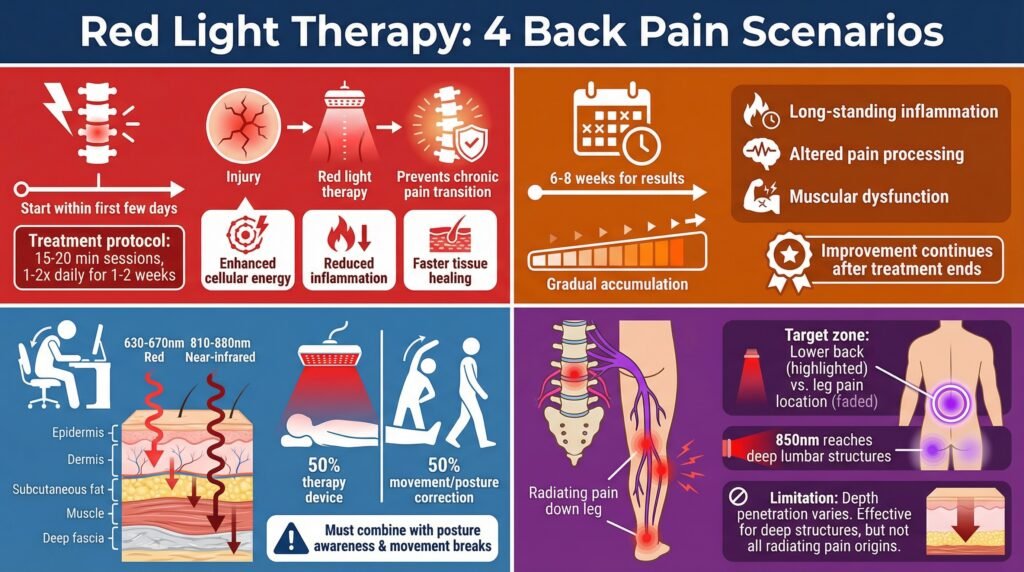
For acute injuries, earlier intervention with red light therapy may help prevent the transition to chronic pain. The enhanced cellular energy and reduced inflammation can support faster tissue healing and prevent the neurological changes that sometimes occur when pain continues beyond normal healing timeframes. Start treatment within the first few days if possible, using 15-20 minute sessions daily or twice daily for the first 1-2 weeks.
Chronic lower back pain needs a different mindset. You’re addressing long-standing inflammation, altered pain processing, and often secondary muscular dysfunction from protective guarding and movement avoidance.
Results accumulate gradually over 6-8 weeks.
Some research shows continued improvement even after treatment ends, suggesting you’re facilitating tissue remodeling that continues beyond the active intervention period.
Postural back pain, common in office workers and anyone with extended sitting exposure, often involves both muscular fatigue and fascial restriction. The combination of red and near-infrared wavelengths addresses inflammation in both muscle and connective tissue.
However, treatment must be paired with postural awareness and regular movement breaks to provide lasting benefit.
Sciatic pain presents unique challenges because the pain often radiates from nerve compression or inflammation as opposed to direct tissue injury at the pain location.
Treating the lower back where nerve roots exit the spine makes more sense than treating down the leg where you feel the pain. The 850nm wavelength can potentially reach nerve tissue and surrounding structures deep in the lumbar spine, though penetration to compressed nerve roots between vertebrae is limited.
The Evidence Landscape
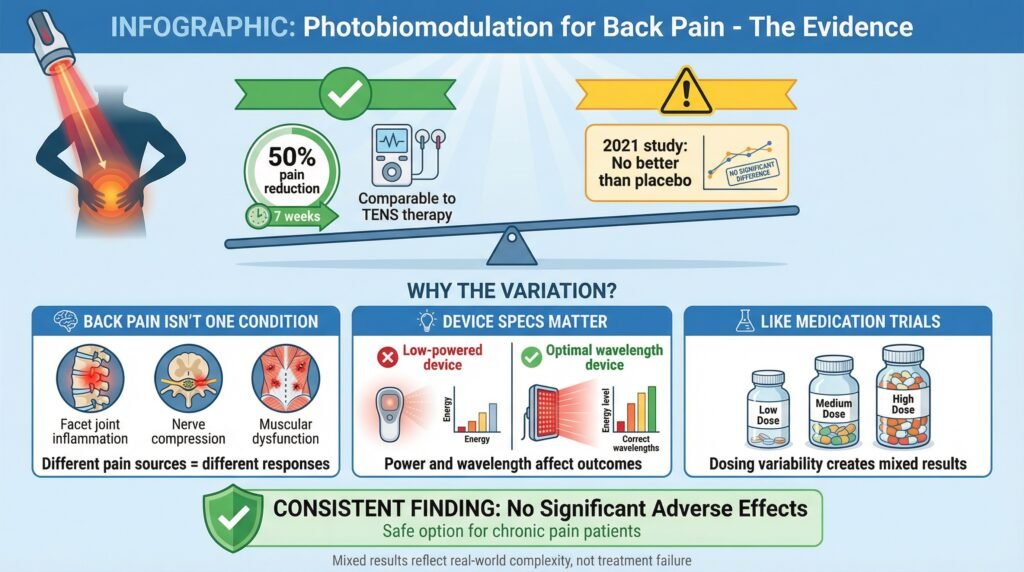
The research on photobiomodulation for back pain shows mixed results, which honestly makes me trust it more than if every study showed impressive outcomes.
Real interventions for complex conditions like back pain produce variable results across different populations and protocols.
Several well-controlled studies show meaningful pain reduction. One study showed 50% pain reduction in chronic lower back pain after seven weeks of consistent infrared light therapy.
Other research shows benefits comparable to transcutaneous electrical nerve stimulation, an established physical therapy intervention.
However, a 2021 study found photobiomodulation to be no more effective than a placebo for certain chronic low back pain cases. These contradictory findings likely reflect the heterogeneity of “back pain” as a category.
Someone with inflammatory facet joint pain may respond completely differently from someone with nerve compression or pure muscular dysfunction.
The variability in device specifications across studies also matters enormously. A study using a low-powered device with suboptimal wavelengths might show no benefit, while research with suitable parameters shows significant improvement.
This variability, based on dosing and delivery methods, happens with medication trials too.
What strikes me as most important is the safety profile. Even studies showing minimal benefit consistently report no significant adverse effects.
For people dealing with chronic back pain who’ve tried many interventions, a safe option with physiologically plausible mechanisms and at least some supporting evidence merits consideration.
Key Takeaways
Red light therapy for back pain works through cellular mechanisms involving mitochondrial stimulation and ATP production, supporting the body’s natural healing processes as opposed to masking symptoms.
Effective treatment needs devices combining 660nm red light and 850nm near-infrared wavelengths, positioned 6-12 inches from bare skin for 15-20 minutes per session.
Consistency matters more than intensity, with research supporting 3-5 sessions weekly for at least 4-6 weeks as opposed to sporadic longer treatments.
The therapy works best as part of comprehensive back pain management that includes movement, postural awareness, and addressing underlying causes.
Results vary significantly between people and back pain types, with some experiencing substantial relief while others see minimal benefit despite proper protocols.
The safety profile remains excellent across research, with no significant adverse effects reported in proper use, making it a reasonable option for chronic pain sufferers who’ve exhausted other conservative approaches.
Maintenance treatment may be necessary long-term, as benefits sometimes reduce within weeks of discontinuing therapy, particularly for chronic inflammatory conditions.
Ready to get started today? Use the links below to both Hooga and Vital Red Light products and find the right device for your budget and needs.
Frequently Asked Questions (FAQs)
Does red light therapy actually work for back pain?
Red light therapy can be effective for certain types of back pain, particularly those involving inflammation and muscle tissue issues. Research shows mixed results, with some studies demonstrating 50% pain reduction after consistent use for 6-7 weeks, while others show minimal benefit.
The therapy works best for inflammatory conditions affecting muscles, fascia, and superficial joints as opposed to structural problems like herniated discs or severe spinal stenosis.
How long does it take for red light therapy to work on back pain?
Most people who respond to red light therapy notice initial improvements within 2-4 weeks of consistent use, though significant pain reduction typically needs 6-8 weeks of regular treatment. Acute injuries may respond faster, sometimes within a week or two, while chronic pain that’s persisted for years generally needs longer treatment periods.
Consistency matters more than any single session.
What wavelength is best for lower back pain?
The combination of 660nm red light and 850nm near-infrared provides the most comprehensive treatment for lower back pain. The 660nm wavelength addresses surface inflammation and connective tissue healing, while 850nm penetrates several centimeters deep to reach paraspinal muscles, facet joints, and spinal ligaments. Devices offering both wavelengths are more effective than single-wavelength options.
Can red light therapy help with sciatica?
Red light therapy may help reduce inflammation around nerve roots in the lower spine, where sciatic pain originates. The 850nm wavelength can potentially reach nerve tissue and surrounding structures deep in the lumbar spine.
However, if your sciatica stems from significant nerve compression between vertebrae, light therapy has limited ability to address the underlying structural cause.
How often should I use red light therapy for back pain?
Research supporting red light therapy for back pain typically involves 15-20 minute sessions performed 3-5 times per week for at least 4-6 weeks. Daily treatment during acute flare-ups may be useful, while maintenance protocols might be reduced to 2-3 times weekly once pain improves.
Sporadic use provides minimal benefit compared to consistent, frequent sessions.
Should I use red light therapy before or after exercise?
Using red light therapy after exercise or movement practices may be more useful than before. The therapy can help reduce post-exercise inflammation and support tissue recovery.
However, some people find that treating before movement creates a window of reduced pain that makes exercise more accessible.
Experiment with both approaches to see what works better for your situation.
Can I use red light therapy through clothing?
You should apply red light therapy directly to bare skin for maximum effectiveness. Clothing blocks and scatters light wavelengths, significantly reducing the energy that reaches your tissues.
Even thin fabrics interfere with penetration, particularly for the 660nm red wavelengths.
Get started today with the effective and affordable options available through Hooga and Vital Red Light. Compare prices with the cost-savings calculator in this article when comparing with professional red light therapy providers in your area.
See our expanded reviews of affordable and effective red light therapy devices for back pain, as well as other full-body goals here.
This article includes affiliate links. If you click through and make a purchase, I may receive a small commission. This helps support the site and allows me to keep creating helpful content at no extra cost to you.