📌 Quick Summary
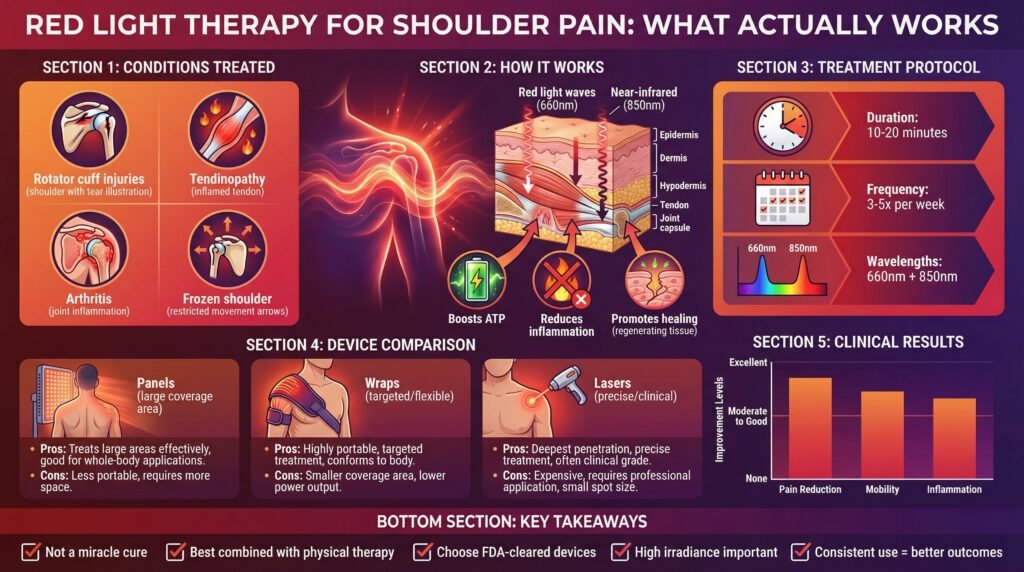
Red light therapy (RLT) and near-infrared light therapy show promising evidence for reducing shoulder pain, inflammation, and improving mobility, particularly for conditions like rotator cuff injuries, tendinopathy, arthritis, and frozen shoulder. It works by penetrating tissues to boost cellular energy (ATP), reduce oxidative stress, and promote healing.
Clinical studies show moderate to good results, with recommendations on treatment protocols (typically 10–20 minutes, 3–5x per week at 660nm + 850nm), and consistent use combined with physical therapy often yields the best outcomes.
🧾 Table of Contents
· Quick Summary
· Introduction
· Understanding How Red Light Actually Works on Shoulder Tissue
· What the Research Actually Shows for Shoulder Conditions
· Setting Up Your Treatment Protocol
· Common Mistakes That Sabotage Results
· Adapting Treatment for Different Shoulder Problems
· Building Photobiomodulation Into a Comprehensive Recovery Strategy
· Key Takeaways
· Frequently Asked Questions
Introduction
You lie awake at night, shifting positions every few minutes because no angle feels right. Reaching overhead for a dish in the cabinet makes you wince before your hand even touches the shelf.
Washing your hair becomes this careful choreography where you move in slow motion, trying to avoid that sharp spike of discomfort.
Shoulder pain has this way of infiltrating every part of your day. The joint itself is remarkably complex, with dozens of tendons, ligaments, and muscles coordinating in precise patterns just to lift your arm.
When inflammation sets in, or a rotator cuff tendon starts fraying, or adhesive capsulitis begins restricting your movement, traditional treatments often feel like temporary bandages over a wound that refuses to heal.
Red light therapy caught my attention because the mechanism actually addresses cellular function as opposed to just numbing signals. When you direct specific wavelengths of light at damaged tissue, you provide energy that helps cells do what they’re already attempting to do on their own.
The approach works with your biology instead of against it.
Understanding How Red Light Actually Works on Shoulder Tissue
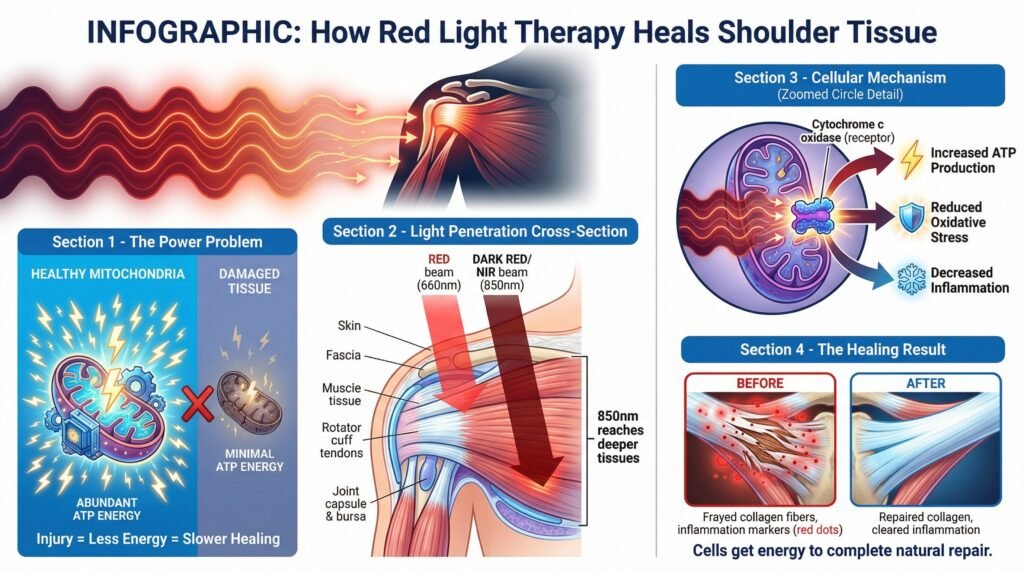
The science behind photobiomodulation becomes clearer when you understand what happens inside your cells. Mitochondria function as power generators, producing ATP that fuels every process your body needs to run.
When tissue gets damaged or inflamed, mitochondrial function often drops, which means cells can’t generate adequate energy for effective repair.
Red wavelengths around 660nm and near-infrared wavelengths around 850nm penetrate through the skin into the underlying tissue. These specific wavelengths get absorbed by chromophores in your mitochondria, particularly cytochrome c oxidase.
This absorption triggers increased ATP production, reduces oxidative stress, and modulates inflammation at the cellular level.
For shoulder applications, this matters tremendously because you need to reach relatively deep structures. Rotator cuff tendons, the joint capsule, bursa, and various muscles all sit beneath layers of skin and fascia.
Near-infrared wavelengths around 850nm penetrate deeper than 660nm red light, making them particularly valuable for treating shoulders.
The practical reality is that you’re supporting natural biological processes as opposed to forcing something artificial to happen. Your cells already want to repair damaged collagen fibers in rotator cuff tendons.
They want to clear inflammatory markers from the subacromial space and restore proper function to the shoulder capsule.
Red light therapy removes barriers to that healing by ensuring cells have enough energy to finish the work.
What the Research Actually Shows for Shoulder Conditions
The published research on photobiomodulation for shoulder pain shows consistent findings when studies use suitable parameters. A systematic review examining musculoskeletal conditions found that red and near-infrared light therapy significantly reduced pain and improved function when specific dosing guidelines were followed properly.
Studies on rotator cuff tendinopathy demonstrated reductions in pain scores and improvements in range of motion when treatment protocols included wavelengths between 810nm and 850nm, with energy densities ranging from 4 to 8 joules per square centimeter per session. These improvements weren’t marginal either.
Many participants experienced clinically meaningful reductions in pain that continued beyond the active treatment period.
Frozen shoulder represents one of those conditions that can completely disrupt your life. Conventional treatment often means waiting months for the natural disease progression to run its course or pursuing aggressive physical therapy and sometimes surgical intervention.
Research on photobiomodulation for adhesive capsulitis demonstrated improvements in both pain and range of motion, particularly when combined with targeted stretching and mobility work.
Studies measuring inflammatory markers in treated tissue showed actual reductions in pro-inflammatory cytokines and increases in anti-inflammatory mediators. Your shoulder feels better because the inflammatory environment contributing to your pain gets modulated at a cellular level, as opposed to just having pain signals blocked.
One critical point that emerges repeatedly in research is that dosing matters tremendously. Too little light energy produces no therapeutic effects.
Too much can actually inhibit the cellular responses you’re trying to stimulate. This biphasic dose response means you need to understand proper dosing if you want red light therapy to work effectively for shoulder pain.
Setting Up Your Treatment Protocol
When you approach red light therapy for your shoulder, positioning comes first. Your shoulder has contoured surfaces, and the rotator cuff tendons, joint capsule, and other structures sit at various depths and angles.
The most effective approach treats from many angles as opposed to just applying light to one spot and hoping it reaches everything.
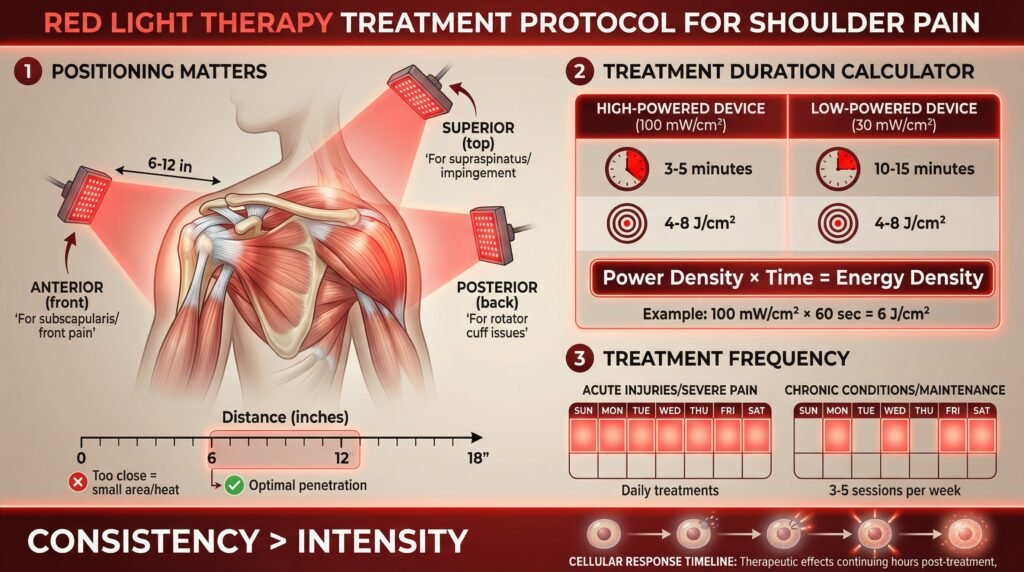
For anterior shoulder pain or subscapularis tendon issues, position your device directly over the front of your shoulder, holding the light panel about 6 to 12 inches from your skin. This distance provides optimal irradiance. Close enough that light energy concentrates effectively, but not so close that you only treat a tiny area or generate excessive heat.
For posterior rotator cuff issues, treat from the back of your shoulder. For superior issues like supraspinatus tendinopathy or subacromial impingement, position the light above your shoulder, angled slightly to target the space between your acromion and humeral head.
Understanding where the actual problem sits anatomically makes a substantial difference in treatment effectiveness.
Treatment duration depends on your device’s power output. A high-powered LED panel delivering 100 milliwatts per square centimeter might only need 3 to 5 minutes per treatment area to reach therapeutic doses in the 4 to 8 joules per square centimeter range.
A lower-powered device at 30 milliwatts per square centimeter needs longer treatment times, potentially 10 to 15 minutes per area.
The calculation is straightforward. Power density multiplied by time equals energy density.
So, 100 mW/cm² times 60 seconds equals 6 joules per square centimeter.
Calculate what your specific device delivers and adjust your treatment time accordingly.
Treatment frequency affects outcomes significantly. For acute shoulder injuries or severe pain, daily treatments typically work best.
For chronic conditions or maintenance, 3 to 5 sessions per week often produce good results.
Consistency matters more than cramming many sessions into one day. Your cellular response to photobiomodulation continues for hours after treatment, so spacing sessions out maintains an ongoing therapeutic effect.
With this in mind, shelling out $75 to $125 for professional red light therapy sessions, at a minimum of three times a week, within a clinical setting can be costly. Companies like Kineon and Flexbeam offer reasonably priced portable and attachable devices for targeted treatments. With devices starting in the $449 to $599 range, they hit breakeven and pay for themselves in less than a month. After that, you have free sessions for life.
Both Flexbeam and Kineon are HSA/FSA-eligible portable devices designed for targeted treatments directly on the shoulder, knee, and various other joints to provide relief.
See the cost savings calculator below, where you can compare both brands against the cost of professional sessions. Bookmark this page so you can revisit whenever you are comparing the costs of red light therapy providers in your local area.
Red Light Therapy Cost Savings Calculator
Professional red light therapy sessions cost $75-125 per session in most cities. With recommended protocols of 3-4x weekly, that’s $600-1,800 per month. Discover how much you’ll save with an at-home device.
Common Mistakes That Sabotage Results
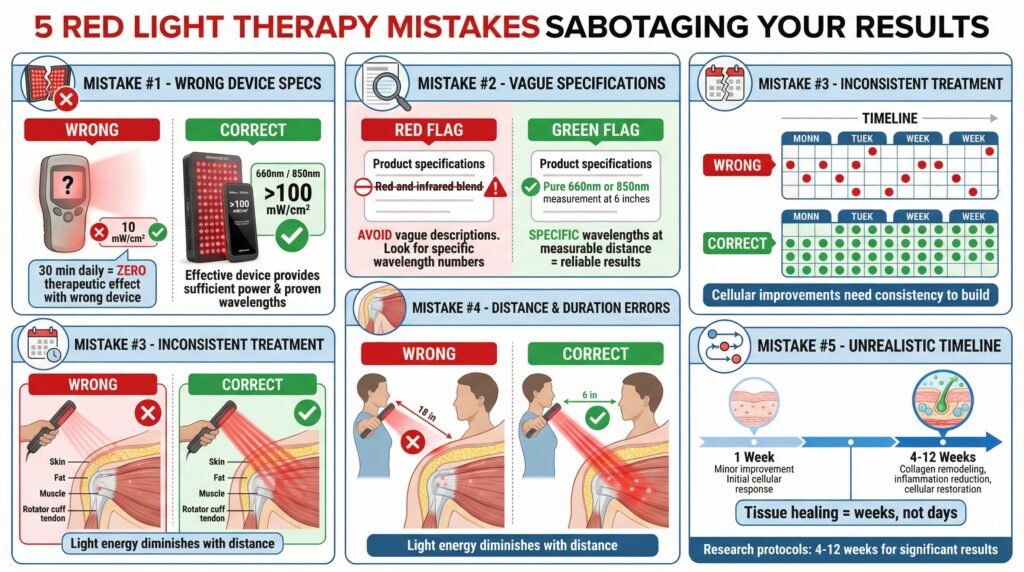
The biggest mistake people make involves using devices that don’t actually deliver therapeutic wavelengths or adequate power density. The market is flooded with cheap red light devices that might look impressive but output less than 10 milliwatts per square centimeter at wavelengths that aren’t well-supported by research.
You could use one of these devices for 30 minutes daily and never reach therapeutic energy densities.
Before investing in any device, verify the specifications carefully. Look for devices that clearly state their wavelength output.
You want pure red around 660nm or near-infrared around 850nm, not some vague “red and infrared blend.” Check the power output at a specified distance, typically measured at 6 inches from the device.
Reputable manufacturers provide this information clearly because they understand informed users care about these details.
Inconsistent treatment represents another common pitfall, problem, issue, problem, issue. Photobiomodulation creates added effects over time.
Using red light therapy sporadically- a few times one week, nothing for two weeks, then a couple of sessions- doesn’t allow your tissues to build on cellular improvements from previous sessions.
Random workouts produce minimal results compared to a consistent training program.
People often treat for too short a duration or from too far away, which means they’re not actually delivering therapeutic doses to the target tissue. If your shoulder pain comes from rotator cuff tendons sitting about 1 to 2 centimeters below your skin surface, and you’re using a low-powered device from 18 inches away, the amount of light energy actually reaching those tendons is negligible.
Expecting overnight results sets you up for disappointment. While some people notice improvements in pain within a few sessions, significant healing of damaged tissue takes time.
Collagen remodeling, reduction of chronic inflammation, and restoration of proper cellular function in compromised tissue happen over weeks, not days.
Most research protocols showing significant benefits for shoulder pain ran for 4 to 12 weeks.
Adapting Treatment for Different Shoulder Problems
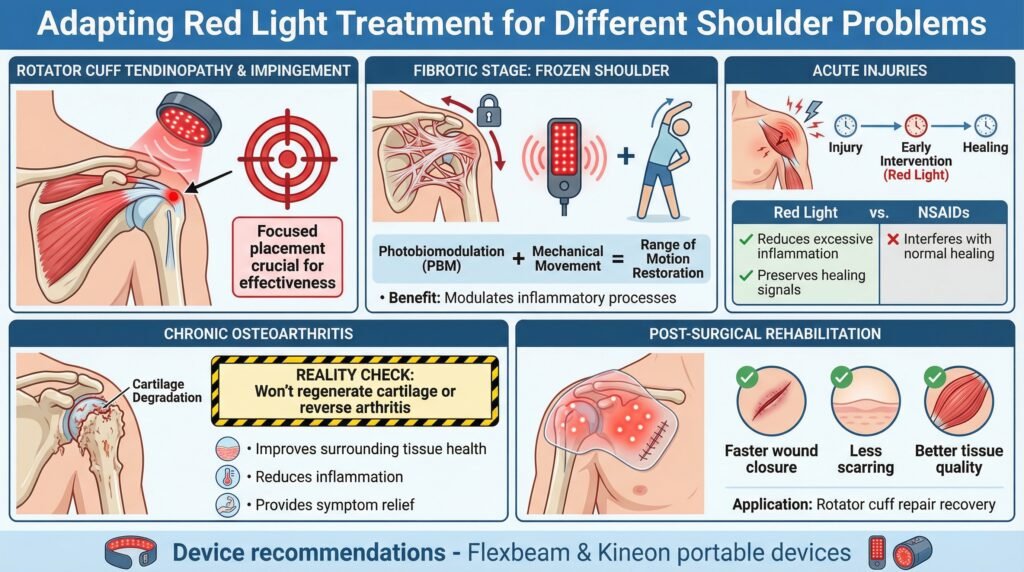
Rotator cuff tendinopathy and impingement syndrome need focused treatment on the specific tendons involved. The supraspinatus tendon, commonly affected, runs across the top of your shoulder and inserts on the greater tubercle of your humerus.
Positioning your light device to target this area specifically, as opposed to just generally shining light on your shoulder, makes the treatment far more effective.
If you’re dealing with frozen shoulder in the fibrotic stage, where significant capsular restriction and adhesions have developed, red light therapy can help modulate the inflammatory processes contributing to ongoing fibrosis. You’ll need to mix it with suitable stretching and mobility work, though.
Photobiomodulation supports tissue remodeling, but mechanical input is necessary to actually restore the range of motion.
For acute injuries, say you partially tore your rotator cuff or severely strained your shoulder, early intervention with red light therapy can potentially speed up the healing timeline. Research on soft tissue injuries shows that photobiomodulation applied in the acute phase reduces excessive inflammation without suppressing the inflammatory signals necessary for initiating repair.
This provides an elegant solution because NSAIDs and other anti-inflammatory medications often interfere with normal healing processes when used too aggressively in acute injuries.
Chronic shoulder pain from osteoarthritis in the acromioclavicular joint or glenohumeral joint responds differently than soft tissue injuries. You’re dealing with cartilage degradation, bone changes, and chronic inflammation.
Red light therapy won’t regenerate cartilage or reverse arthritic changes.
However, improving the health of surrounding soft tissues, reducing inflammatory burden, and supporting better cellular function in the joint capsule can still provide meaningful symptom relief.
Post-surgical shoulder rehabilitation represents another scenario where photobiomodulation shows promise. Studies on surgical incision healing show that suitable wavelengths and doses speed up wound closure, reduce scar tissue formation, and improve tissue quality.
If you’ve had rotator cuff repair surgery, incorporating red light therapy during rehabilitation might support better tendon healing and potentially improve long-term outcomes.
Both Flexbeam and Kineon provide HSA/FSA-eligible portable devices designed for targeted treatments directly on the shoulder. Compare both products by clicking the buttons below and find out which fits your needs.
Building Photobiomodulation Into a Comprehensive Recovery Strategy
Red light therapy works best as part of a broader strategy that addresses all factors contributing to your shoulder problem, as opposed to existing in isolation.
Mobility work stays essential, particularly if you’ve developed compensatory movement patterns or restrictions from pain and inflammation. Gentle pendulum exercises, wall slides, and progressive range of motion work help maintain joint health and prevent secondary issues like frozen shoulder.
When you mix this mechanical input with cellular support from photobiomodulation, you create an environment where tissues can adapt and heal more effectively.
Strengthening the rotator cuff and scapular stabilizers matters for long-term shoulder health, but timing is everything. Early aggressive strengthening of inflamed or damaged tissues can perpetuate problems.
Red light therapy can potentially shorten the timeline to when you can safely begin progressive loading by supporting faster tissue healing and reducing inflammation that would otherwise be aggravated by strengthening exercises.
Sleep position becomes surprisingly important when dealing with shoulder pain. Sleeping on the affected shoulder compresses inflamed tissues and restricts blood flow. Even sleeping on the opposite shoulder can be problematic because your painful shoulder often rolls forward, putting strain on the anterior capsule.
Using pillows to support proper shoulder position during sleep allows for better tissue recovery overnight.
Combining this with evening red light therapy sessions creates an optimal environment for healing while you sleep.
Stress management doesn’t get discussed enough in the context of musculoskeletal pain, but chronic stress elevates cortisol and other hormones that directly impair tissue healing and increase pain sensitivity.
Red light therapy has some research showing effects on systemic inflammation, but addressing stress through other means complements the cellular support from photobiomodulation.
Nutrition plays into shoulder recovery in ways that often get overlooked. Collagen synthesis needs vitamin C, copper, and adequate protein. Reducing systemic inflammation through dietary approaches, cutting back on highly processed foods, increasing omega-3 fatty acids, and eating plenty of vegetables creates a better overall healing environment. Red light therapy improves cellular energy and function, but if you’re not providing the nutritional building blocks your cells need for tissue repair, you’re limiting the potential benefits.
Key Takeaways
Red light therapy supports your body’s natural healing processes through cellular mechanisms, making it fundamentally different from conventional pain management that simply masks symptoms.
Wavelength and dose determine whether you achieve therapeutic effects. You need specific red or near-infrared wavelengths delivered at adequate energy densities to reach deeper shoulder structures where pain originates.
Your shoulder anatomy needs to be treated in many areas and angles as opposed to just shining light on one spot, given the complex three-dimensional arrangement of tendons, muscles, and joint structures.
Consistency over weeks produces significant results because you’re supporting biological healing processes that need time, not triggering immediate pharmaceutical-type effects.
Device quality determines success or failure. Cheap devices that don’t deliver adequate power or suitable wavelengths waste your time regardless of how consistently you use them.
Red light therapy enhances, as opposed to replacing, other shoulder rehabilitation elements like mobility work, progressive strengthening, proper sleep positioning, stress management, and nutrition that supports tissue repair.
Get started today with the HSA/FSA-eligible Flexbeam and Kineon wearable devices by clicking the links below:
Frequently Asked Questions
Can red light therapy help rotator cuff tears?
Red light therapy can support the healing of partial rotator cuff tears by improving cellular energy production and reducing inflammation in the damaged tendon tissue. For finished tears, photobiomodulation may help manage pain and support tissue health, but surgical repair is often necessary for full-thickness tears.
The therapy works best when combined with suitable rehabilitation exercises and proper load management during the healing process.
How long does it take for red light therapy to work on shoulder pain?
Most people notice some reduction in shoulder pain within 2 to 4 weeks of consistent treatment, though the timeline varies based on the severity and type of shoulder problem. Acute injuries may respond faster, sometimes within a few sessions, while chronic conditions like long-standing rotator cuff tendinopathy or adhesive capsulitis typically need 6 to 12 weeks of regular treatment to see significant improvements.
Consistency matters more than intensity when using photobiomodulation for shoulder pain.
What wavelength is best for shoulder pain?
Near-infrared wavelengths around 850nm penetrate deeper into tissue and work well for shoulder structures like rotator cuff tendons and joint capsules. Red light at 660nm effectively treats more superficial tissues, including skin and fascia.
Many people get the best results using devices that mix both wavelengths, allowing treatment of many tissue depths simultaneously.
Research supporting shoulder pain treatment typically uses wavelengths between 810nm and 850nm.
Does red light therapy work for frozen shoulder?
Red light therapy can help manage frozen shoulder by reducing inflammation and supporting tissue remodeling in the thickened joint capsule. Research shows improvements in both pain and range of motion when photobiomodulation is combined with stretching and mobility exercises.
The therapy alone won’t release adhesions or restore full motion, but it creates better conditions for mechanical rehabilitation to work effectively.
Treatment typically needs to continue for several months, given the prolonged nature of adhesive capsulitis.
How close should red light therapy be to the shoulder?
Position red light devices 6 to 12 inches from your shoulder for optimal results. This distance provides adequate irradiance while covering a reasonable treatment area.
Too close and you treat only a small spot; too far and the power density drops below therapeutic levels.
Check your device specifications for power output at different distances and calculate treatment time based on the distance you’re actually using during sessions.
Can I use red light therapy every day for shoulder pain?
Daily red light therapy is safe and often recommended for acute shoulder injuries or severe pain. For chronic conditions, 3 to 5 sessions per week typically produce good results. Your cells continue responding to photobiomodulation for hours after treatment, so spacing sessions out maintains ongoing therapeutic effects.
More frequent treatment doesn’t necessarily produce better results, and consistency over weeks matters more than daily use.
See our expanded reviews of affordable and effective red light therapy devices for shoulder pain, as well as other full-body goals, here.
This article includes affiliate links. If you click through and make a purchase, I may receive a small commission. This helps support the site and allows me to keep creating helpful content at no extra cost to you.