📌 Quick Summary
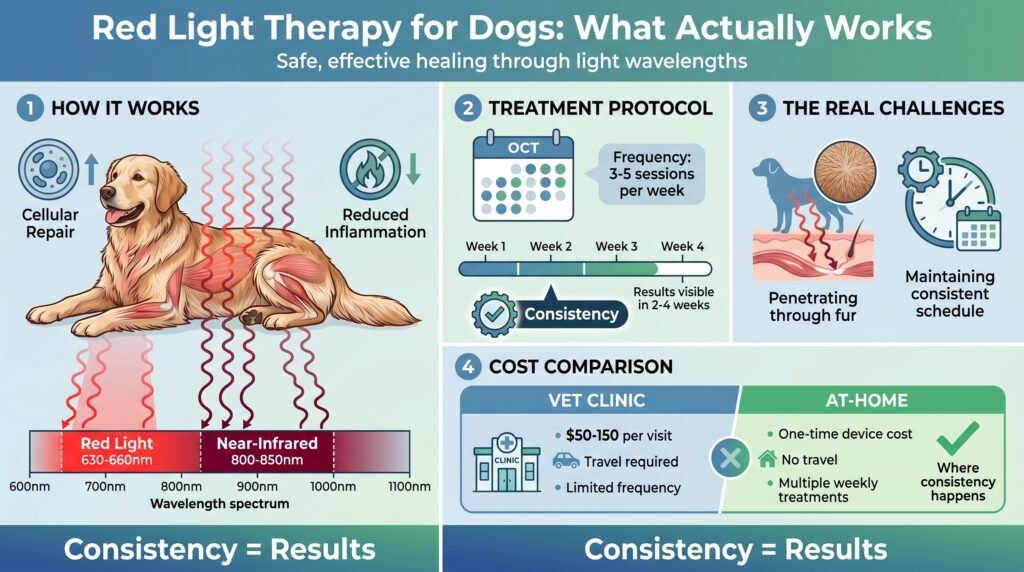
Red light therapy uses specific light wavelengths (somewhere between 630-1000nm) to help with cellular repair and bring down inflammation in dogs. The devices that actually work mix red light (630-660nm) with near-infrared (800-850nm) wavelengths, deliver decent power at the skin surface, and get used consistently- we’re talking 3-5 sessions per week before you see real results (usually within 2-4 weeks).
The biggest challenge isn’t picking a device. It’s getting light through your dog’s fur and sticking to a treatment schedule that actually makes sense for your life.
Professional vet sessions run $50-150 per visit, and you’ve got to drive there every time.
At-home options let you treat your dog multiple times a week without leaving the house, which is honestly where the consistency (and the results) actually happen.
🧾 Table of Contents
- Understanding Red Light Therapy for Dogs
- Best Red Light Therapy Devices for Dogs at Home
- Key Factors That Actually Determine Results
- Red Light Therapy vs. Other Treatment Options
- Red Light Therapy Cost Savings Calculator
- Setting Up a Realistic Treatment Routine
- Safety Considerations
- Conclusion
- Frequently Asked Questions
Understanding Red Light Therapy for Dogs
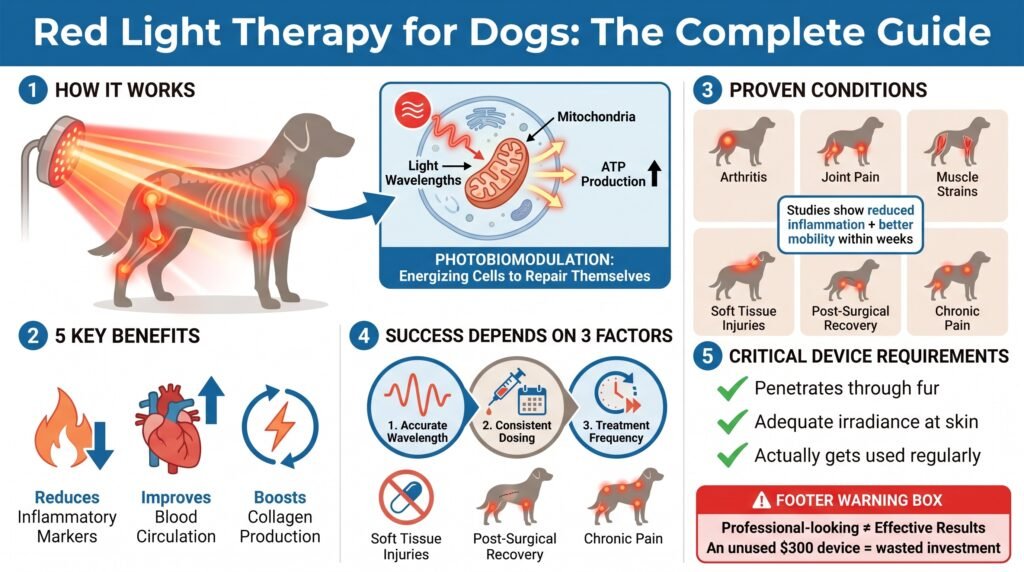
Red light therapy works through something called photobiomodulation. When light at specific wavelengths hits your dog’s tissue, it revs up mitochondrial activity and cranks out more ATP production.
Basically, giving cells more energy to repair themselves.
This helps with:
- Bringing down inflammatory markers
- Getting better blood circulation going
- Speeding up collagen production
- Pain relief without needing medication
- Faster healing for wounds and surgical sites
The research backs this up for dogs dealing with arthritis, joint pain, muscle strains, soft tissue injuries, post-surgical recovery, and chronic pain conditions. Studies pretty consistently show that dogs getting light therapy have less inflammation and move better within a few weeks.
But here’s the thing: results depend entirely on three factors: whether the wavelength is actually accurate, whether you’re dosing consistently, and how often you do treatments.
What trips up most pet owners is this: a device that looks professional doesn’t automatically deliver results. What matters is whether it actually gets through fur, delivers adequate irradiance at the skin surface, and whether you can realistically stick to using it.
A $300 device sitting in your closet beats nothing, but only slightly.
Best Red Light Therapy Devices for Dogs at Home
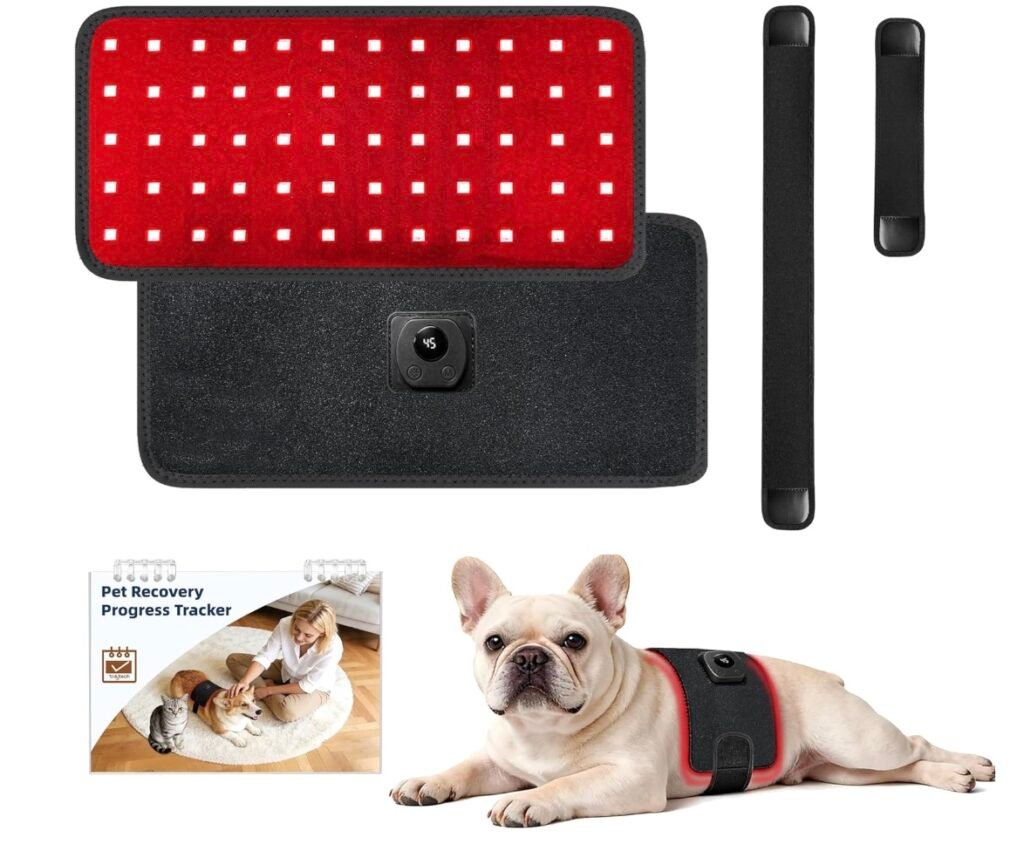
1. Pets Upgraded Red Light Therapy Belt
Click Here to Check Current Price on Amazon →
This belt-style device covers way more area compared to those handheld options, which makes it practical for dogs with joint issues all over or those tricky spots where you’d need to treat multiple areas. The wrap design means you can secure it around the leg, hip, or torso without manually holding it there the whole time.
What works here:
Coverage across multiple joints at once means you’re not sitting there for an hour treating different spots. Hands-free operation lets you apply treatment while your dog just chills out comfortably.
It handles both red and infrared wavelengths, typically delivered through this kind of format.
More forgiving if your dog shifts around during treatment (and let’s be honest, they will).
What you need to know:
Larger surface area can mean lower power density per spot; check the actual manufacturer specs for irradiance (measured in mW/cm²). How well it gets through fur depends entirely on the design and whether it includes an optical comb or compression features.
Your dog has to tolerate wearing the device, and some dogs absolutely hate it.
How effective it is for deeper tissues like hip joints varies based on device thickness and wavelength.
Best for: Dogs with chronic arthritis hitting multiple joints, or those that tolerate contact-based treatments pretty well. Short-haired breeds get way better results than long-haired dogs.
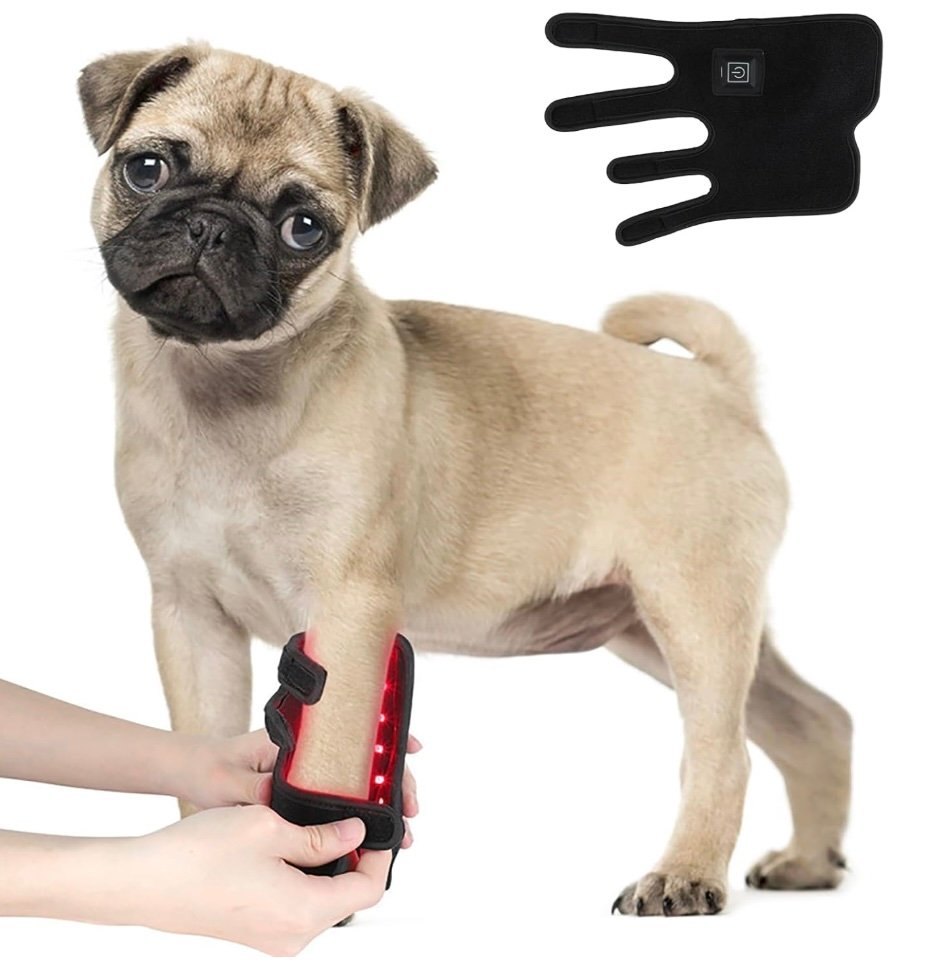
2. Red Light Therapy for Dogs’ Legs
Click Here to Check Current Price on Amazon →
Leg-specific devices go after the most common pain area in aging and active dogs: the hips, knees, and lower legs. This targeted approach means you’re concentrating power delivery to the exact problem area as opposed to spreading energy across a huge surface.
What works here:
Concentrated light delivery to a specific joint means you’re not wasting energy. Compact design makes it easier to position correctly (less fumbling around).
Shorter treatment times compared to full-body devices.
Good option if your dog has localized pain in one or two legs and that’s it.
What you need to know:
Won’t address multi-joint arthritis effectively at all. You’ll need separate sessions for different areas if your dog has pain in multiple limbs.
Success depends heavily on whether the device penetrates thick fur on the leg (spoiler: it often doesn’t).
Some designs position poorly on dogs with different leg shapes or sizes; one size definitely doesn’t fit all.
Best for: Dogs with single-leg or dual-leg issues (like hip dysplasia affecting one side way more than the other). Works well for post-surgical recovery on a specific limb.
3. Pet Red Light Therapy Device for Dogs and Cats
Click Here to Check Current Price on Amazon →
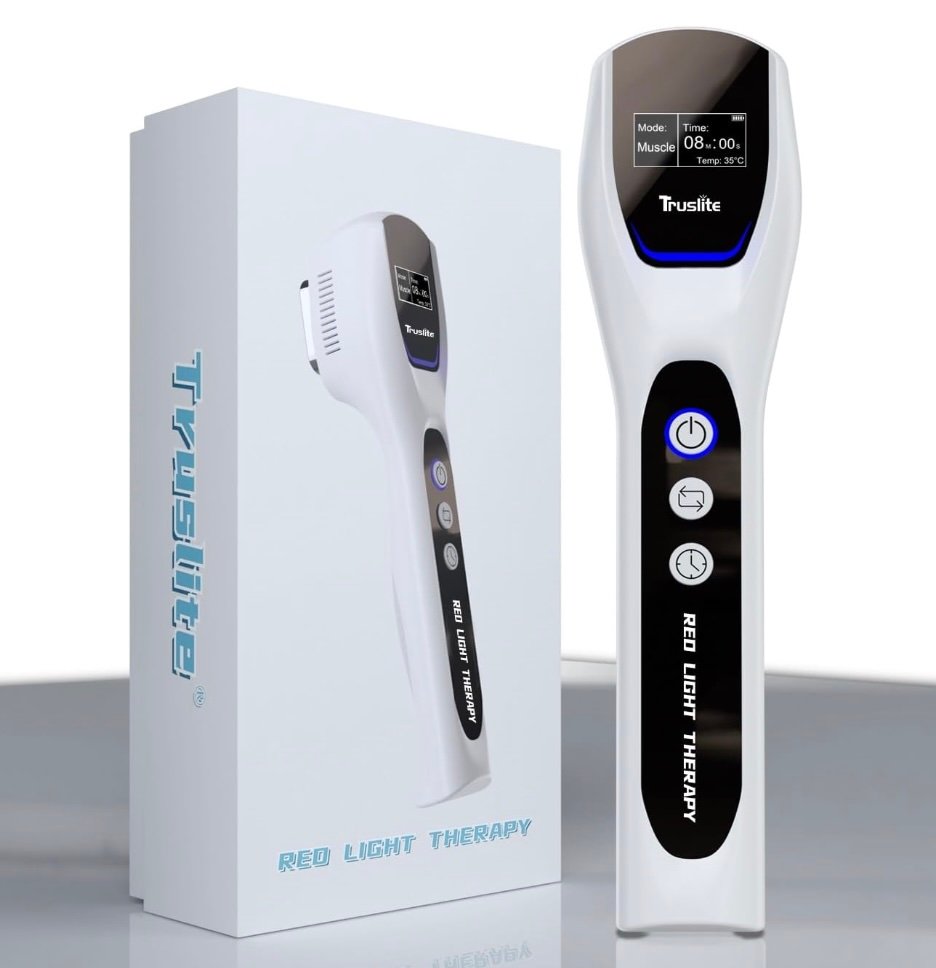
Handheld pet-specific devices designed for home use give you flexibility and precision. You control exactly where the light hits and for how long, making it easier to follow clinical dosing protocols if that’s your thing.
What works here:
Portable and adjustable, you move the device, not your dog (much easier). Usually delivers better irradiance than wraps or larger panels.
Designed specifically for pet fur, not human skin, which matters more than you’d think.
Can treat multiple areas in one session. Usually includes some kind of treatment duration guidance so you’re not guessing.
What you need to know:
Requires active participation from you during each session (you can’t just set it and forget it). Your dog has to tolerate you holding the device near their body for 5-15 minutes, which some dogs absolutely will not do.
How effective it is depends heavily on whether you maintain close, consistent contact and proper distance.
Some pets hate the warm sensation or just don’t like something so close to their body. Results depend on your consistency; this needs discipline over weeks, not days.
Best for: Committed pet owners who can dedicate 10-15 minutes per session, 3-5 times weekly without excuses. Works for multiple problem areas since you can move the device around.
Dogs with moderate to severe arthritis or active healing needs.
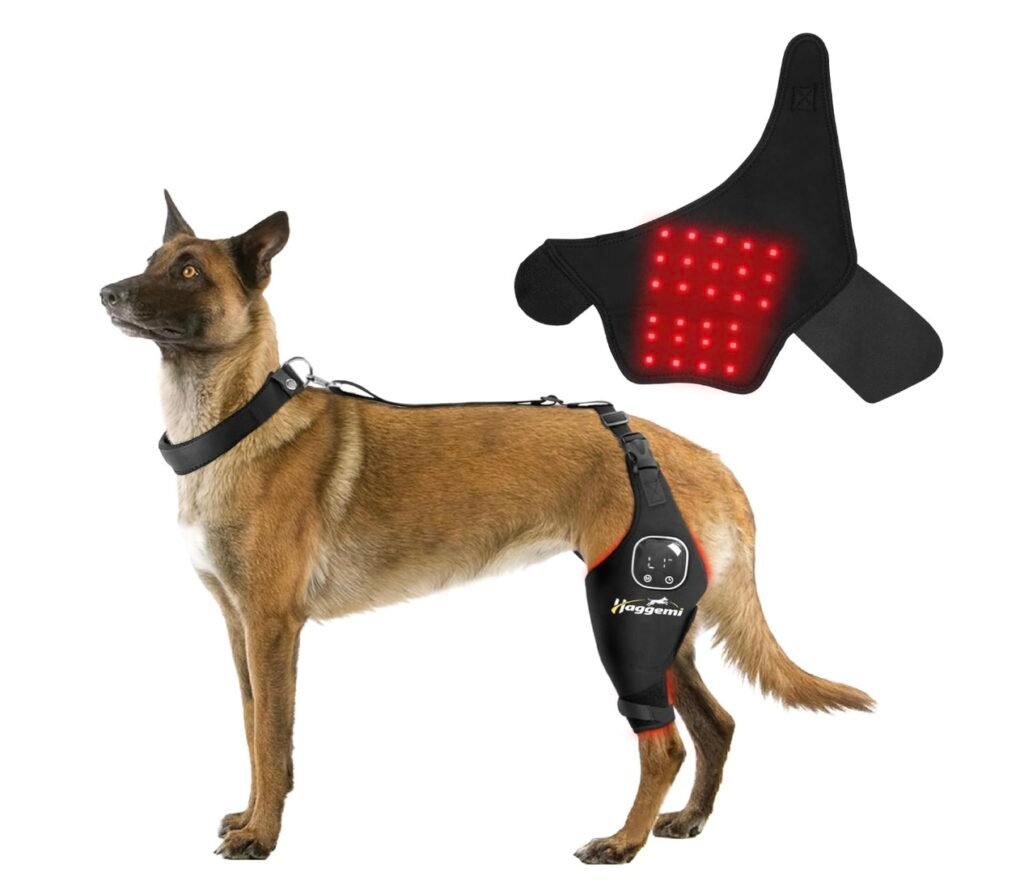
4. Dog Knee Brace with Red Light Therapy Integration
Click Here to Check Current Price on Amazon →
Combination devices that pair mechanical support with light therapy address two problems at once, stabilizing the joint while stimulating cellular repair. This appeals to owners managing both acute pain and long-term joint stability.
What works here:
Mechanical support takes stress off the joint during rest, which helps immediately. Integrated light therapy provides a healing stimulus without needing extra devices cluttering your house.
An all-in-one approach means fewer things to remember (or forget).
Keeps the device in place naturally through the brace structure.
What you need to know:
Less flexible than standalone devices, you’re locked into whatever the brace design is. Comfort depends heavily on proper fit.
Ill-fitting braces cause irritation or pressure sores, which creates a whole new problem.
Light delivery effectiveness varies based on the brace material and design. Your dog has to tolerate wearing the brace consistently (not all will).
Fur penetration can get compromised if the brace sits too loosely or shifts during wear.
More expensive than comparable standalone options.
Best for: Dogs needing both stabilization and healing support, particularly after ACL injuries, knee surgery, or severe knee arthritis. Best for dogs that are comfortable wearing braces for extended periods.
Key Factors That Actually Determine Results
Most pet owners pick a device based on price or how it looks. Here’s what actually matters:
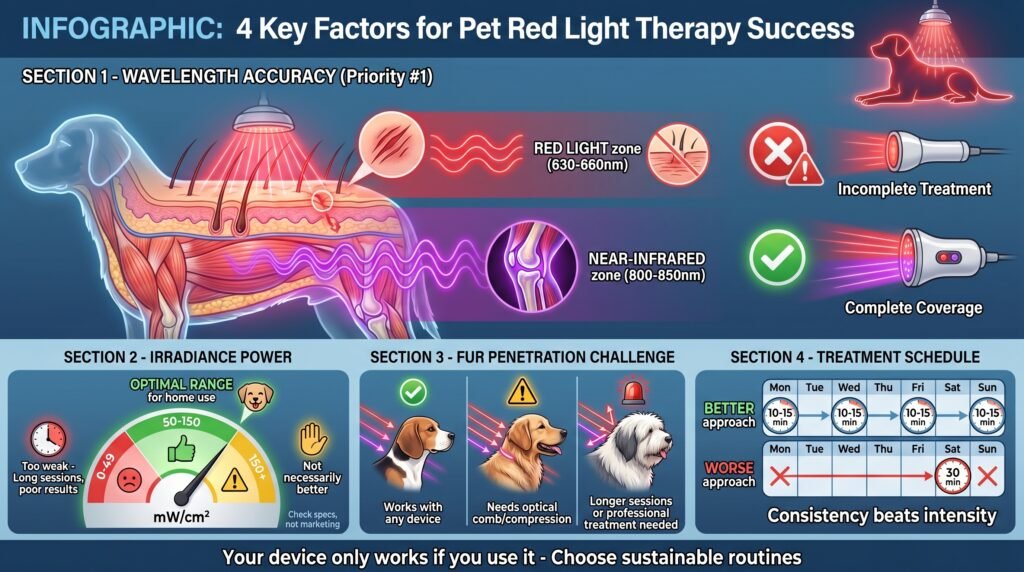
Wavelength accuracy matters more than anything else. Effective devices deliver both red (630-660nm) and near-infrared (800-850nm) light.
Red light addresses surface tissues and wounds.
Infrared reaches deeper structures like joints and muscles.
Devices using only red light miss deeper targets completely. Avoid devices that don’t specify wavelengths; generic claims about “healing light” don’t cut it.
Irradiance at the skin gets measured in mW/cm² and represents actual power reaching your dog’s tissue. Higher isn’t always better, but too low means longer treatment times and inconsistent results.
The sweet spot for at-home devices typically lands around 50-150 mW/cm², depending on device type. Check manufacturer specs, not marketing claims.
Fur penetration is where most at-home devices fail silently. Light can’t help what it can’t reach.
Devices with optical combs or compression features perform better on thick-coated breeds. Short-haired dogs get better results with any device, period. If your dog is long-haired, expect way longer treatment times or consider professional sessions instead.
A realistic treatment schedule decides everything. Research shows lower-intensity treatments applied frequently beat occasional high-dose sessions.
Three to five sessions weekly for 10-15 minutes each produce better results than one intensive 30-minute session.
Your device only works if you actually use it. Choose something you can realistically maintain for weeks without burning out.
Red Light Therapy vs. Other Treatment Options
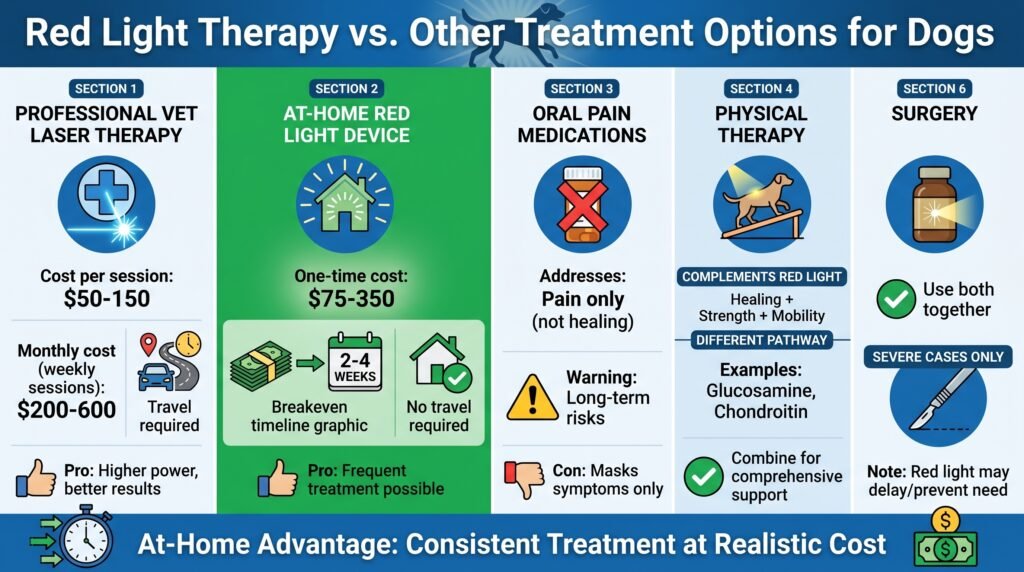
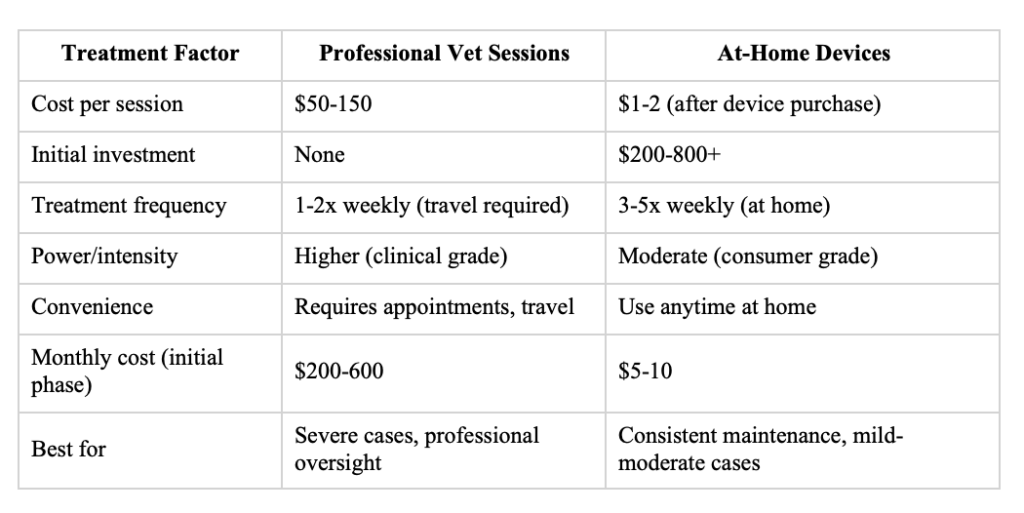
Professional vet laser therapy delivers higher power and typically yields better results, but it costs $50-150 per session and requires frequent travel. Most dogs need weekly sessions initially, which means $200- $ 600 per month.
The price range for the aforementioned device is between $75 and $350, and the breakeven point for even the more expensive devices is within a few weeks.
Oral pain medications address pain but don’t support tissue healing at all. They carry long-term risks with regular use and don’t address underlying inflammation.
Red light supports healing without just masking symptoms.
Physical therapy combines with red light therapy pretty well, actually. Light therapy supports healing while physical therapy rebuilds strength and mobility.
Consider using both for better outcomes.
Joint supplements like glucosamine and chondroitin support joint health but work on a totally different pathway than light therapy. Many owners mix both approaches for more comprehensive support.
Surgical intervention is reserved for severe cases. Red light therapy often delays or prevents the need for surgery when started early enough.
The advantage of at-home red light therapy isn’t that it replaces professional treatment. The advantage is that it lets you treat frequently at a cost that makes consistency actually realistic for most households.
See the cost-savings calculator below to crunch the real-time numbers and see how the savings add up. Bookmark this page and come back to the calculator anytime you are comparing red light services in your area.
🐾 Pet Laser Therapy Cost Savings Calculator
Discover how much you can save by investing in an at-home laser therapy device instead of paying for professional vet sessions. Calculate your breakeven point and long-term savings below.
Setting Up a Realistic Treatment Routine
Success with red light therapy depends way more on consistency than device specifications.
Here’s a practical framework:
Week 1-2: Start with sessions 3 times weekly. Pick a calm time of day when your dog naturally rests; early morning or evening works well.
Choose the same location each time to establish a routine.
Sessions should run 10-15 minutes, depending on your device and your dog’s condition.
Week 3-4: Bump up to 4-5 sessions weekly if you’re seeing a positive response. Many dogs show initial improvement in mobility or willingness to move by week 3.
Some owners notice their dog seeking out the treatment area, which shows the sessions feel useful to them.
Week 5+: Maintain at 3-4 sessions weekly as maintenance therapy. Some conditions benefit from daily sessions initially, but this needs significant commitment.
Discuss frequency with your veterinarian based on your dog’s specific condition.
Observation matters a lot here. Track mobility changes, pain response, and behavioral improvements. Does your dog move more freely after sessions?
Are they limping less during walks?
Do they seem more comfortable lying down or getting up? These observations guide decisions about whether to continue, adjust frequency, or change the approach entirely.
Safety Considerations
Red light therapy carries minimal risk when used properly.
Protect your dog’s eyes by positioning devices away from direct eye exposure. The American Animal Hospital Association guidelines specifically recommend avoiding direct eye contact (pretty obvious, but worth stating).
Check treated areas with your hand; they should feel warm, not hot. If skin shows irritation or heat during treatment, stop immediately and talk to your veterinarian.
Dogs with active cancer, photosensitivity conditions, or seizure disorders should get veterinary clearance before starting therapy. Don’t use red light therapy over open wounds without vet approval.
Pregnant dogs should get cleared with your vet first.
Monitor for any adverse reactions during the first few sessions. Most dogs tolerate therapy well with zero side effects.
If your dog shows signs of stress, anxiety, or resistance to treatment, discuss alternative approaches with your veterinarian.
Conclusion
The best red light therapy for dogs at home matches three criteria: it delivers verified wavelengths and irradiance, it penetrates your dog’s specific coat type, and it fits realistically into your routine.
A $300 device you use consistently beats a $2,000 device collecting dust every single time.
For widespread joint issues across multiple limbs, belt-style devices provide effective coverage. For targeted single-leg problems, leg-specific devices concentrate power effectively.
Handheld options offer the most flexibility for varied treatment locations.
Combination braces work if your dog needs both stabilization and healing support.
The research is pretty detailed: red light therapy supports healing, reduces inflammation, and improves mobility in dogs when frequency, wavelength, and dosing align properly. Results typically show up within 2-4 weeks of consistent use.
The limiting factor for most pet owners isn’t device quality.
The limiting factor is staying committed to the protocol week after week.
See the latest red light therapy options on Amazon by clicking the buttons below →
Frequently Asked Questions
How long until I see results from red light therapy?
Most pet owners notice initial improvements in mobility or pain response within 2-4 weeks of consistent use (3-5 sessions weekly). Some see changes within the first week, but that’s less common.
Chronic conditions need longer commitment; 8-12 weeks isn’t uncommon for significant arthritis improvement.
Can I use human red light therapy devices on my dog?
Not reliably, no. Human devices often operate at different wavelengths or intensities designed for human skin. Pet-specific devices account for fur density and skin sensitivity differences.
Using a human device might work, but you won’t know if it’s actually delivering therapeutic wavelengths to your dog’s tissue.
What if my dog has very thick fur?
Thick-coated breeds present real challenges, honestly. Look for devices with optical combs, compression features, or those specifically marketed for long-haired dogs.
Expect longer treatment times regardless.
Some owners part the fur to improve contact. Your veterinarian might recommend professional sessions if at-home penetration proves inadequate.
Is red light therapy safe with other treatments?
Yes. Red light therapy complements medications, supplements, physical therapy, and other treatments pretty well.
Discuss the combination with your veterinarian to confirm coordinated care.
It doesn’t interfere with pharmaceuticals.
How often should I replace the device?
Quality pet red light therapy devices last several years with typical home use. Check manufacturer guidelines for LED lifespan.
Most devices signal when LEDs need replacement or maintain effective output for 5+ years.
Does breed or size matter?
Coat type matters way more than breed. Short-haired breeds benefit from any device. Long-haired breeds need better penetration or longer sessions.
Large dogs might benefit from devices with larger treatment areas.
Small dogs work fine with compact handheld devices.
Ready to Get Started?
Understanding the cost difference between at-home therapy and professional sessions reveals why consistency becomes possible at home. Monthly professional therapy costs quickly exceed the annual at-home device investment.
Your dog’s mobility and comfort depend on addressing inflammation and supporting healing where it matters most. The best time to start is when you’re ready to commit to consistent weekly sessions, not when the problem becomes severe.
See the buttons below to browse current options on Amazon today→
This article includes affiliate links. If you click through and make a purchase, I may receive a small commission. This helps support the site and allows me to keep creating helpful content at no extra cost to you.