📌Quick Answer
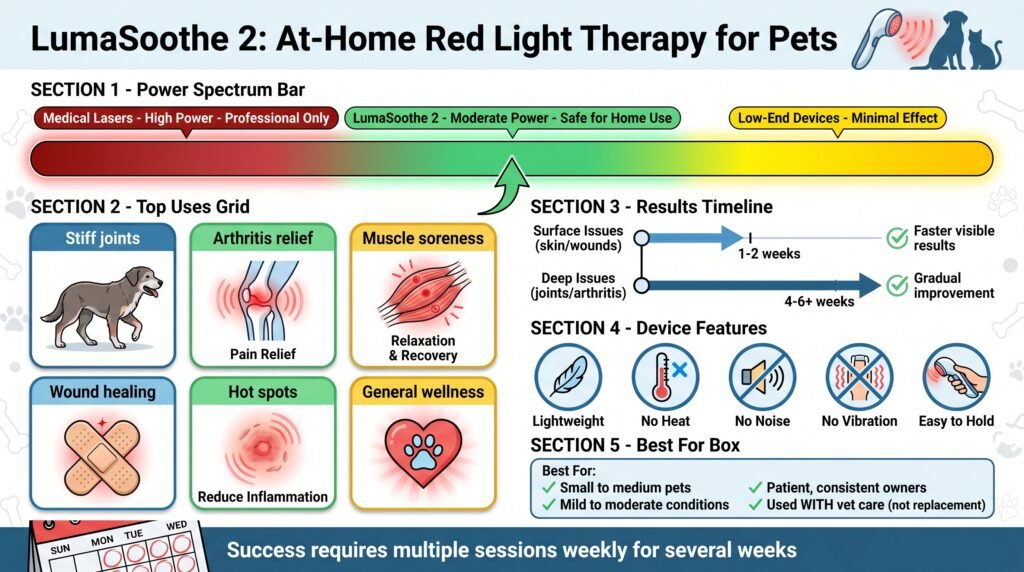
The LumaSoothe 2 is a handheld LED red light therapy device designed for pet owners seeking an affordable, at-home option to manage joint stiffness, minor injuries, and everyday wellness in dogs and cats.
It operates at lower power levels than veterinary laser equipment, which makes it safer and easier for beginners, but also means you need longer treatment sessions and consistent daily use to see gradual improvements.
The device works best for pet owners who understand this supports but doesn’t replace proper veterinary care.
The LumaSoothe 2 sits in that middle zone where you get a legitimate red and near-infrared light therapy device without the scary power levels of medical lasers or the massive price tag of professional equipment.
Pet owners seem to use it most for arthritis management in older dogs, muscle soreness after activity, wound healing, hot spots, and general comfort support. The feedback shows faster results with surface issues like skin problems and slower, more subtle changes with deep joint stuff.
The device itself is lightweight and easy to hold. Most pets tolerate it well since there’s no heat, noise, or vibration involved. The real challenge is sticking with it many times per week for several weeks, because light therapy relies heavily on consistency over time.
If you’ve got a small to medium dog or cat with mild to moderate issues and you’re willing to commit to a routine, the LumaSoothe 2 makes sense as a supportive tool alongside whatever your vet already has you doing.
🧾 Table of Contents
- Quick Answer
- Brand Overview
- LumaSoothe 2, Product Range Analysis
- Quality and Performance Testing Comparison with Other Red Light Devices
- Pricing and Value Assessment
- How Red Light Therapy for Pets Compares to Alternatives
- Pros and Cons Summary
- Final Recommendation
- FAQ
Brand Overview
LumaSoothe focuses on bringing light therapy out of the clinic and into regular households. The whole pitch is that you shouldn’t need to schedule appointments and pay per session just to give your aging dog some photobiomodulation support at home.
The brand markets the LumaSoothe 2 for dogs, cats, and even larger animals like horses. Customer stories and reviews across different platforms show owners using it for arthritis, general stiffness, recovery from soft tissue injuries, wounds, and skin irritation.
The common thread in online feedback is pretty clear. Pet owners want something that feels less intimidating than a vet laser, something they can use regularly without ongoing costs, and some actual guidance on realistic expectations for what light therapy can and can’t do.
LumaSoothe 2 fills that gap. It’s consumer-grade equipment with safer output levels and a price that feels more like a decent home gadget than a medical device.
LumaSoothe 2, Product Range Analysis
Device Type and Light Modes
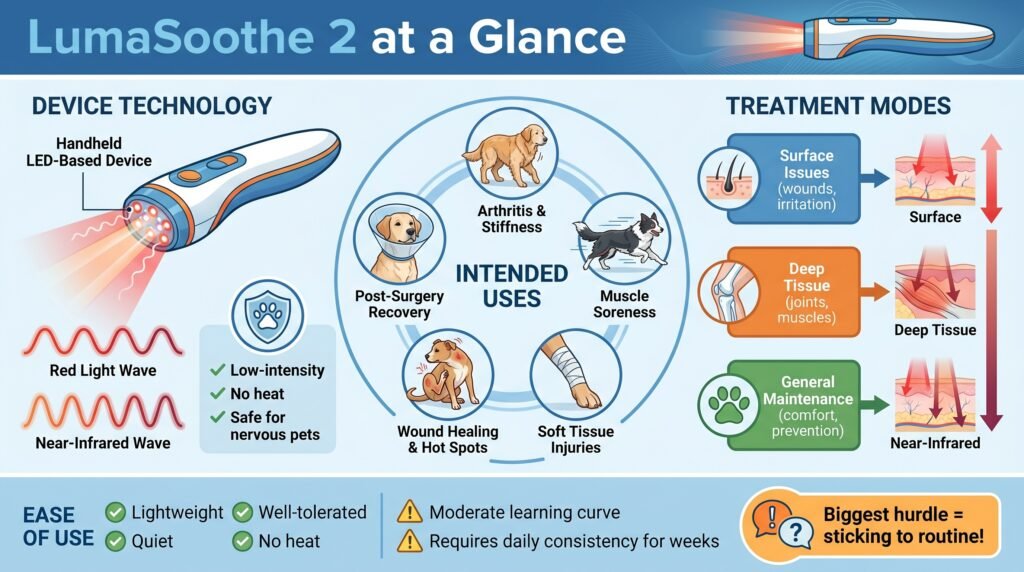
The LumaSoothe 2 is a handheld LED-based device. It uses a combination of visible red and near-infrared wavelengths, the same general bands used in photobiomodulation to support circulation, tissue repair, and inflammation management in animals.
Unlike high-powered medical lasers, this device uses lower-intensity LEDs and doesn’t produce noticeable heat during sessions. That’s a big deal for nervous pets and owners who worry about accidentally burning their dog.
The brand offers different treatment programs or modes aimed at:
- Surface issues like skin irritation and minor wounds
- Deeper tissues like joints and muscles
- General comfort and maintenance
These categories match how photobiomodulation gets used in veterinary practices. Shorter wavelengths tend to target more superficial tissues, and longer near-infrared wavelengths reach deeper structures.
Intended Uses
Based on product pages, testimonials, and retailer reviews, owners commonly use the LumaSoothe 2 for:
Osteoarthritis and age-related stiffness in older dogs and cats who move slowly in the morning or struggle with stairs.
Muscle soreness after activity, especially in working dogs or active breeds who go hard at the dog park.
Soft tissue injuries like strains or sprains that need support during the healing process.
Wound healing and hot spots, particularly the kind of surface irritation that drives dogs crazy with licking.
Post-surgical recovery under veterinary guidance, as a complementary tool to help with tissue healing.
Some owners mention that their pets seem calmer during sessions. That makes sense because the treatment is quiet, non-invasive, and doesn’t involve heat or vibration.
The device doesn’t treat anxiety, but it does tend to be well tolerated once the pet gets used to the routine.
Ease of Use
User feedback across different platforms shows a few consistent patterns:
The device is lightweight and easy to hold for extended periods. Pets usually tolerate sessions well because there’s no heat or noise.
The learning curve is moderate, meaning you need to remember which mode to use and how long to hold it over each area.
For a lot of pet parents, the biggest challenge isn’t the device itself. The actual struggle is sticking with daily or near-daily sessions for weeks, because photobiomodulation relies heavily on consistent dosing over time.
If you’re someone who forgets to give your dog their daily joint supplement half the time, you might struggle with this too. >>
Click the button below to bring the power of professional light therapy into your home with Luma from MedcoVet. Get started by filling out their short contact form.
Quality and Performance Testing Comparison with Other Red Light Devices
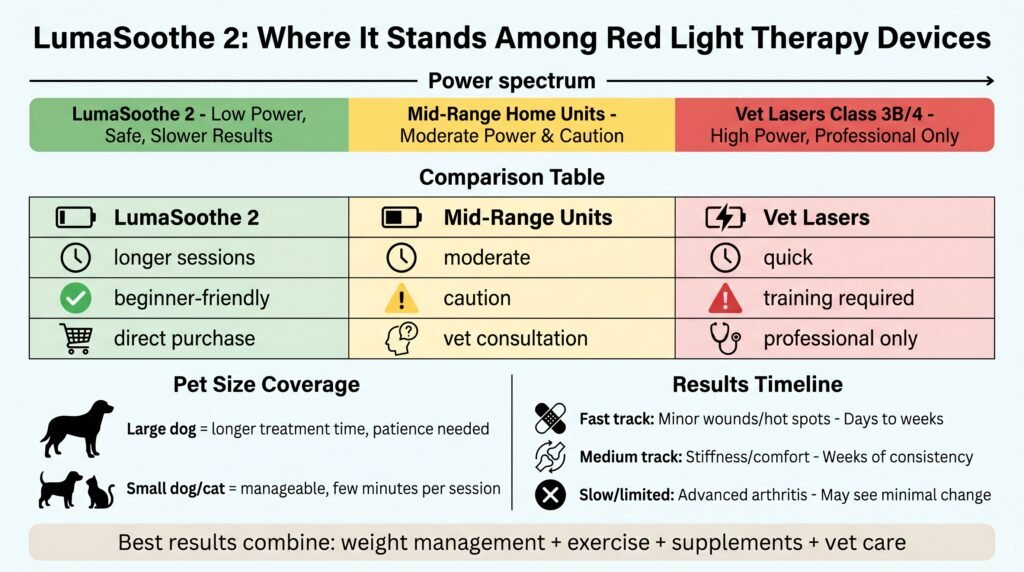
Clinical-grade photobiomodulation and home LED devices exist on a spectrum. The LumaSoothe 2 falls on the milder, safer, slower end of that spectrum.
Output and Power Density
Independent commentary notes that the LumaSoothe 2 doesn’t generate enough power to need heat management. That’s a hint that the power density is relatively low compared to veterinary lasers or high-end home photobiomodulation devices designed for shorter treatment times.
In controlled veterinary research, typical photobiomodulation doses for canine arthritis fall around 10-20 joules per square centimeter per joint, applied several times per week over six weeks. Studies using those parameters have shown improvements in lameness and pain scores in that clinical context.
Reaching similar energy doses with low-power LEDs often means longer treatment times per spot.
The trade-off looks like this:
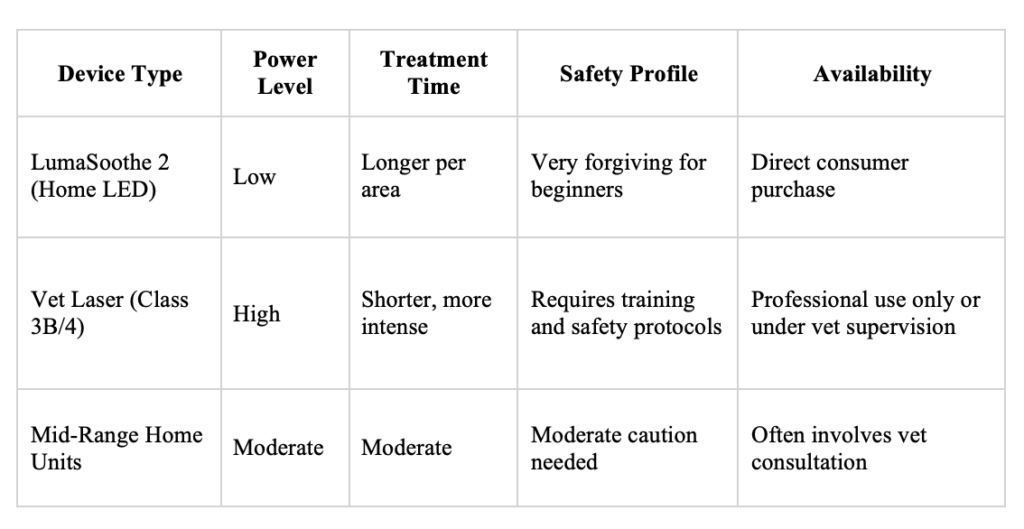
Coverage and Practicality
The LumaSoothe 2 is handheld with a modest treatment area. Covering a large dog with many sore joints can take a while.
Owners of giant breeds or multi-pet households mention needing strong routines and patience to keep up with everything.
For small dogs and cats, the treatment area is more manageable. A few spots per session is realistic when each one only takes a few minutes.
Real-World User Feedback
Looking at reviews across different platforms, you see a mix. Some owners describe impressively fast changes in minor wounds or hot spots.
Others report gradual improvement over several weeks in stiffness and comfort.
Some owners don’t notice much difference, especially in advanced arthritis cases where joint damage is already severe.
This spread makes sense. Photobiomodulation doesn’t work like a magic fix.
It tends to work best as part of a broader plan that might include weight management, mobility exercises, joint supplements, and suitable veterinary care.
For this LumaSoothe 2 review, the realistic expectation is that you may see faster and more obvious changes in small, superficial issues and slower, more subtle changes in chronic joint problems, especially when you consistently treat several times per week.
Pricing and Value Assessment
The LumaSoothe 2 usually sits in the lower to middle price tier for pet light therapy devices available online. It costs significantly less than veterinary-only lasers and most prescription-grade home units.
Compared with Clinic Sessions
Professional photobiomodulation or laser sessions at a veterinary clinic often run anywhere from the cost of a standard exam to several times that per visit, depending on location and equipment.
Arthritis or chronic back issues can need two to three sessions per week for several weeks and then ongoing maintenance. Costs add up quickly.
Many owners eventually scale back or stop sessions for budget reasons.
Buying a device like the LumaSoothe 2 shifts that cost front-loaded into a single purchase. The trade-off is that per-session power is lower, and results can be slower or milder than clinic-level equipment.
For owners who physically cannot get to the clinic regularly, though, a decent home device still beats doing nothing between vet visits.
Compared with Other Home Devices
In comparison with other at-home light and laser devices for pets, you see something like this:
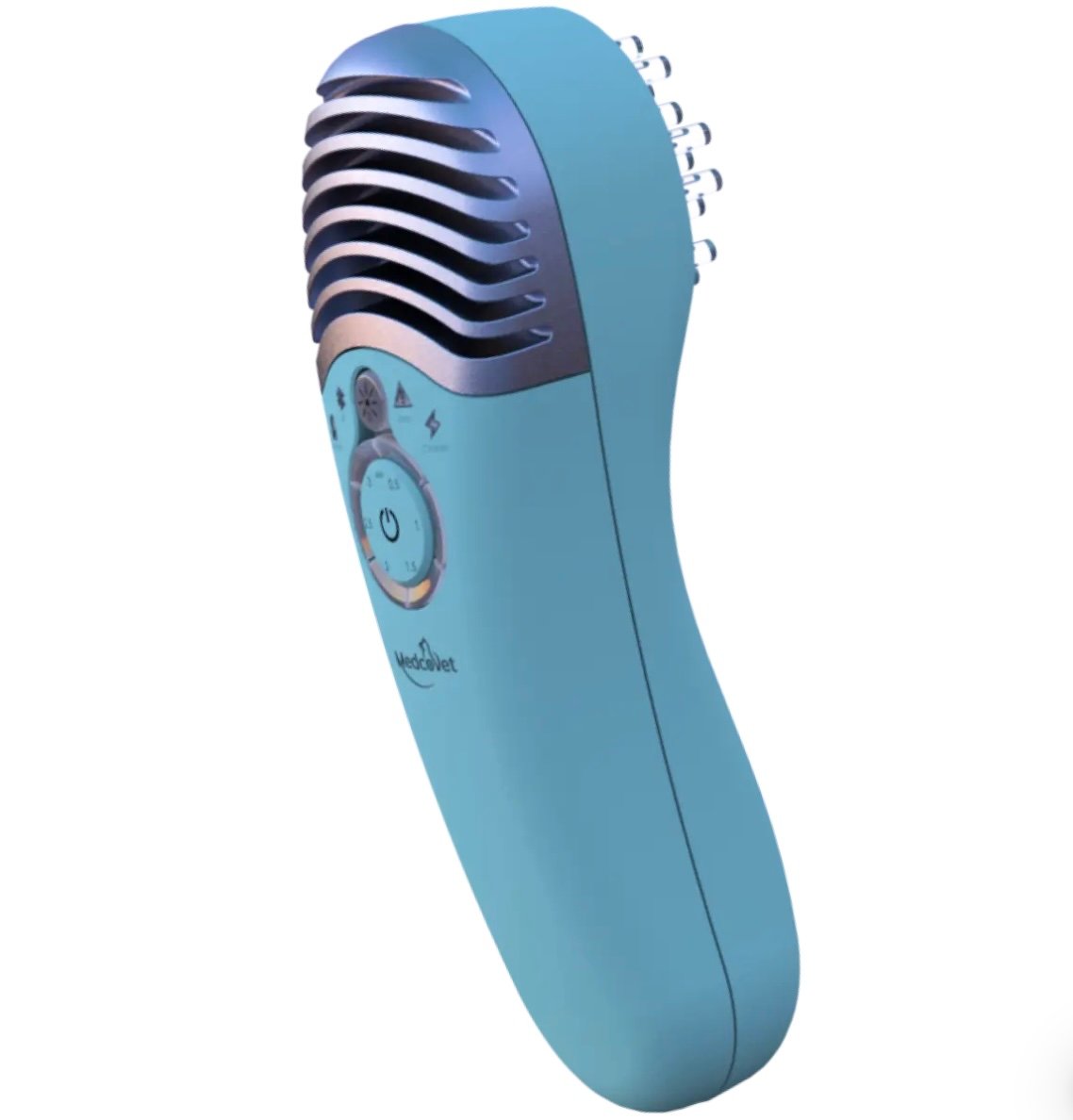
MedcoVet Luma is a stronger at-home system that uses 635 nm red and 850 nm infrared light with an optical comb to improve light penetration through fur. It’s positioned as a more powerful device and tends to sit at a higher price point with veterinary involvement.
Dedicated vet-oriented lasers like My Pet Laser, B-Cure Vet Laser Pro, Dog Med Laser, and similar devices are usually class 3B equipment with higher power outputs. They’re priced more like medical equipment than consumer gadgets.
Smaller LED gadgets designed mainly for skin are often cheaper than the LumaSoothe 2 but usually target only surface issues and may not offer near-infrared coverage for deeper joints.
The LumaSoothe 2 lands in a “good enough for many households” category. It’s not the strongest and not the weakest, and usually more affordable than true laser systems.
Click the button below to bring the power of professional light therapy into your home with Luma from MedcoVet. Get started by filling out their short contact form.
How Red Light Therapy for Pets Compares to Alternatives
Red and near-infrared light therapy for pets has grown because it fits between medications and surgery. It’s non-invasive, drug-free, and usually well tolerated. But it’s still only one tool.
Evidence and Realistic Expectations
Studies in dogs show that photobiomodulation can improve lameness scores and reduce pain in osteoarthritis when used at suitable doses over several weeks. Clinical reports and reviews also describe faster wound closure and better tissue quality in some cases treated with red and near-infrared light.
At the same time, expert commentary stresses that research is still developing. Photobiomodulation works best as a complementary modality alongside proper veterinary diagnosis and treatment.
The process demands consistency, patience, and realistic goals.
Alternatives and Where LumaSoothe 2 Fits
Common options for arthritis, injuries, and chronic pain in pets include:
NSAIDs and pain medications prescribed by a vet. Joint supplements and specialized diets.
Weight management and controlled exercise programs.
Physical therapy and hydrotherapy sessions. Acupuncture or chiropractic care.
Surgery in severe cases.
Red light therapy sits next to these as a supportive, non-drug option that may help with comfort and mobility for some animals. Compared with NSAIDs, light therapy has a different risk profile with fewer systemic side effects and slower, more variable results. The LumaSoothe 2 fits best for owners who already work with a vet and want something safe to use at home between appointments. It also suits pets who cannot tolerate certain medications or need every reasonable non-drug option explored.
Pros and Cons Summary
Pros
Non-invasive and gentle. Low-power LEDs with no significant heat make the device safer and less intimidating for new users.
Multi-purpose use across different tissues. Modes and wavelength ranges cover both surface and deeper tissues, matching common photobiomodulation applications for skin, wounds, muscles, and joints.
Reasonable price for most pet households. The device costs significantly less than vet-only lasers and many medical-grade home units.
Good feedback for certain problems. Many owners describe positive experiences for minor wounds, hot spots, and maintenance of older pets’ comfort.
Pets usually tolerate sessions well. The treatment is quiet with no heat and no vibration, so most pets don’t fight it once they’re used to the routine.
Cons
Lower power than vet lasers or stronger photobiomodulation units. Treatment times per area are slower and effects are potentially milder, especially for deep, advanced joint disease.
Consistency demands discipline. Real benefits often need many treatments per week over many weeks. Some owners struggle to stick with the schedule.
Mixed results in severe cases. Owners of pets with advanced arthritis report variable improvement, which fits with the general reality that no single modality can fully reverse joint damage.
Handheld format can feel tedious. Treating many joints on a large dog takes time. Some people find it tiring to hold the device in place for extended sessions.
Final Recommendation
The LumaSoothe 2 makes the most sense for pet owners who have small to medium pets or a limited number of target areas, who are willing to follow a consistent routine several times per week, and who understand that results tend to be gradual and that this device supports as opposed to replacing, veterinary care.
For that group, the LumaSoothe 2 offers a gentle, relatively affordable way to bring light therapy into the home. Owners report especially encouraging results with minor skin issues, hot spots, post-injury support, and maintenance for aging pets who already have a good care plan in place.
If you need intensive treatment for severe arthritis or complex spinal issues, a stronger vet-grade photobiomodulation or laser system under professional supervision usually makes more sense as the primary tool. In that scenario, a device like the LumaSoothe 2 might still play a role between clinic visits, but expectations should stay conservative.
If you decide to try it, talk with your veterinarian first, especially if your pet has cancer, eye issues, or any condition where light exposure might be a concern. Then commit to a realistic schedule for at least several weeks before you judge whether it earns a permanent place in your routine.
FAQ
Is LumaSoothe 2 safe for dogs and cats?
The LumaSoothe 2 uses low-power LEDs and is designed for home use on dogs and cats. It produces no significant heat and has a safety profile that is generally considered favorable for supervised use.
You still need to avoid shining it directly into eyes and follow the manufacturer’s instructions and your vet’s guidance.
Can LumaSoothe 2 replace my vet’s laser treatments?
The LumaSoothe 2 doesn’t replace veterinary care or clinic-grade laser sessions. Vet lasers and higher-power photobiomodulation units deliver stronger doses in shorter sessions and are used under professional supervision for more complex or severe problems.
A home device can sometimes complement those treatments, but it’s not a direct substitute.
How long before I might see any change?
Studies on photobiomodulation for canine arthritis use several weeks of regular treatment before assessing results, often six weeks or more. Owner reports for the LumaSoothe 2 range from quick changes in minor skin issues to gradual shifts in comfort over weeks for chronic problems.
Individual responses vary, and there are no guarantees.
Does LumaSoothe 2 help with arthritis?
Research on photobiomodulation shows potential benefits for canine osteoarthritis when suitable doses are applied consistently, including improvements in lameness and pain scores in controlled studies. The LumaSoothe 2 aims to bring similar wavelength ranges into a home device but at lower power.
Some owners report better mobility and comfort in arthritic pets, while others notice little change.
This uncertainty is part of using any consumer device.
Is LumaSoothe 2 worth it compared with stronger devices?
Stronger options like MedcoVet Luma, My Pet Laser, and other vet-oriented lasers provide higher power densities and are often used under veterinary supervision. They can deliver more intense sessions but come with a higher price and more professional involvement.
The LumaSoothe 2 offers a lower-cost, lower-power choice that suits owners who want a gentle, accessible tool and understand that results may be slower and less dramatic.
This article includes affiliate links. If you click through and make a purchase, I may receive a small commission. This helps support the site and allows me to keep creating helpful content at no extra cost to you.