📌Quick Answer
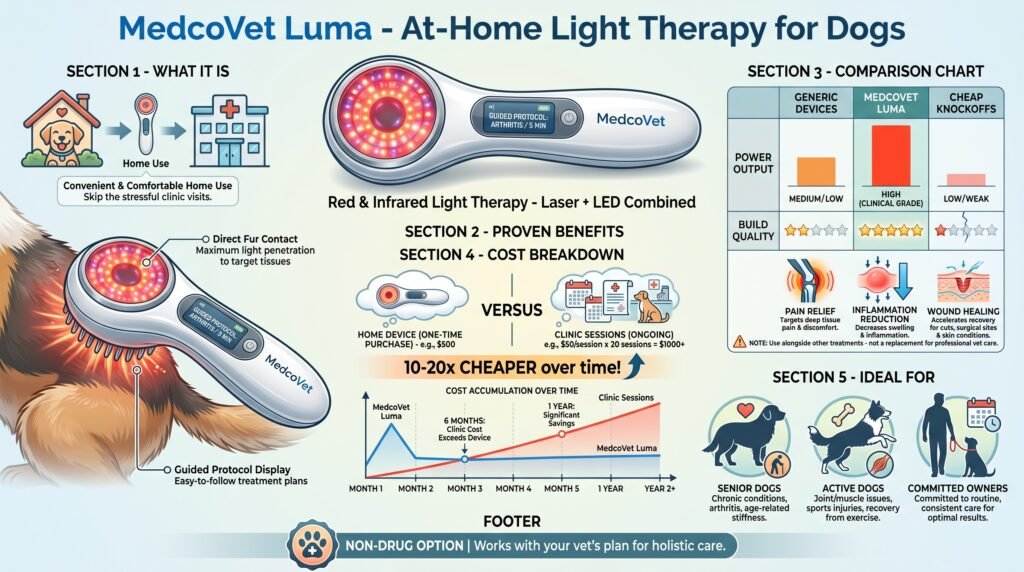
MedcoVet Luma is a red and infrared light therapy device built specifically for pets. It combines laser and LED therapy in one unit that you can use at home instead of driving to the vet every week.
The device focuses on direct contact with your dog’s fur, which matters more than you’d think for long-haired breeds. It comes with guided protocols, so you’re not just guessing about treatment times and placement.
Research on red and near-infrared light for dogs shows potential benefits for pain, inflammation, and wound healing. The evidence is still building, and vets generally recommend it as something to add alongside other treatments, not as a replacement.
Compared to generic red light devices and cheap knockoffs also called “Luma,” MedcoVet’s version appears to deliver higher power output and better build quality. Independent comparison videos show the difference is pretty noticeable.
The upfront cost is higher than budget LED pads, but way lower than paying for clinic laser sessions over months or years. Some analyses suggest home devices can be 10-20x cheaper than ongoing professional treatments.
This makes the most sense if you’ve got a senior dog or active dog with chronic issues, you’re willing to stick to a routine, and you want a non-drug option that fits into your vet’s overall plan.
See what deals are available right now
🧾 Table of Contents
- Brand Overview
- MedcoVet Luma – Product Range Analysis
- Quality and Performance Testing vs Other Red Light Masks
- Pricing and Value Assessment
- How Red Light Therapy for Pets Compares to Alternatives
- Pros and Cons Summary
- Final Recommendation
- FAQ
Brand Overview
MedcoVet focuses on light therapy for pets. Luma is their main home-use device that’s supposed to bring clinic-style red and infrared light therapy into your house without the hassle of appointments.
The company positions Luma as something that blends attributes of both laser and LED technology. The idea is you get safe, broad coverage that works for home users who don’t have veterinary training.
Three things show up consistently in their messaging:
Purpose-built for animals. They designed this specifically for pets, not humans.
Repeatable dosing through fur contact. The device is meant to press into your dog’s coat to reach the skin, which is supposed to help with thick or long fur.
Education and structure. They provide protocols and guidance so you’re not left wondering if you’re doing it right.
MedcoVet talks a lot about the frustration of driving to the vet, paying per session, and not being able to do treatments often enough for chronic problems like arthritis. That’s the problem Luma is trying to solve.
They also publish comparison articles about similar products like LumaSoothe 2 and other devices. Some of this is clearly competitive positioning, but it does help clarify what makes their device different from the cheap stuff flooding Amazon.
MedcoVet Luma – Product Range Analysis
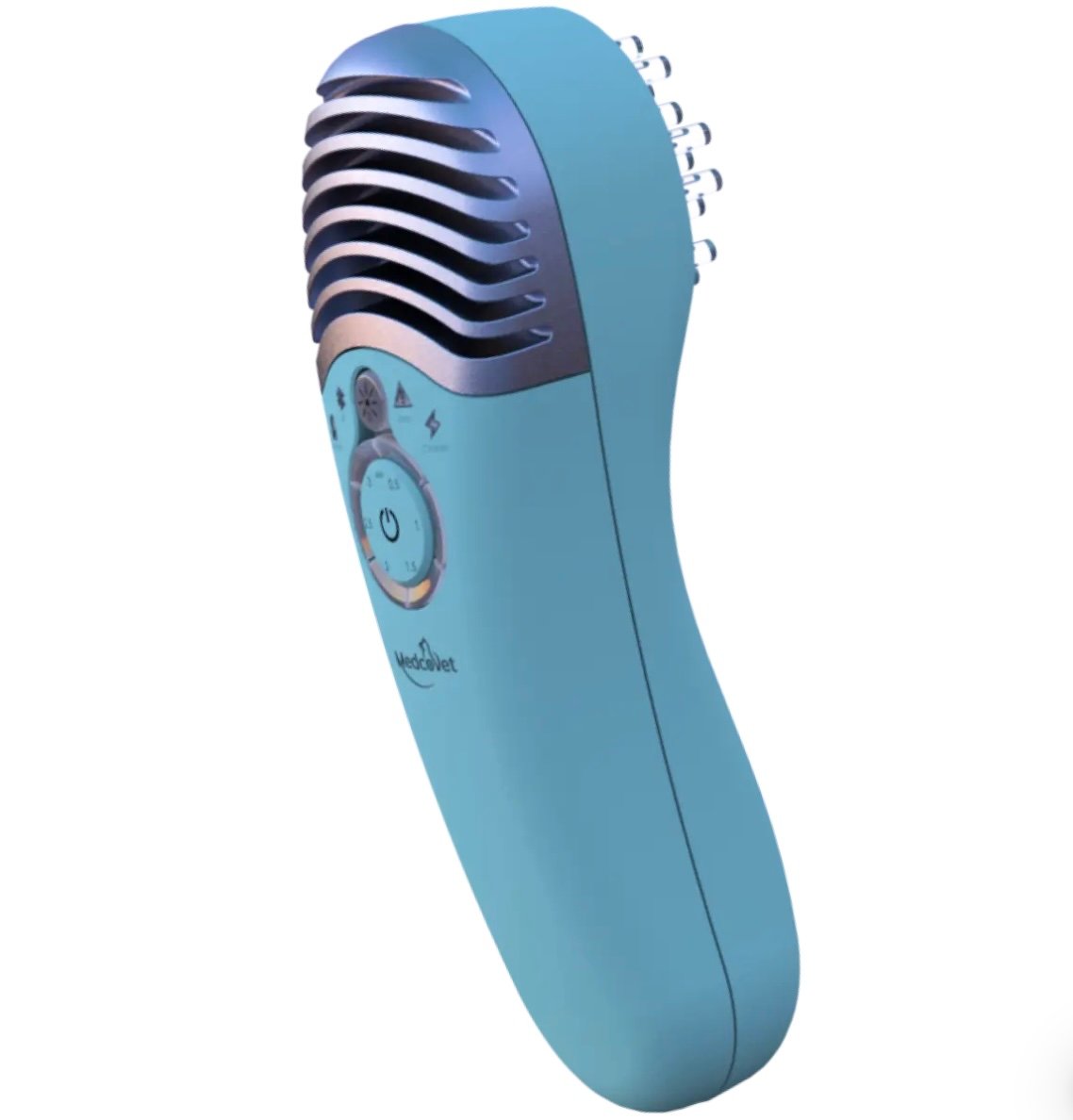
Most people looking at MedcoVet are just looking at Luma itself. It’s the flagship device.
There isn’t a huge product lineup, which actually makes sense because most pet owners just want one solid tool they can use on different body areas and different dogs.
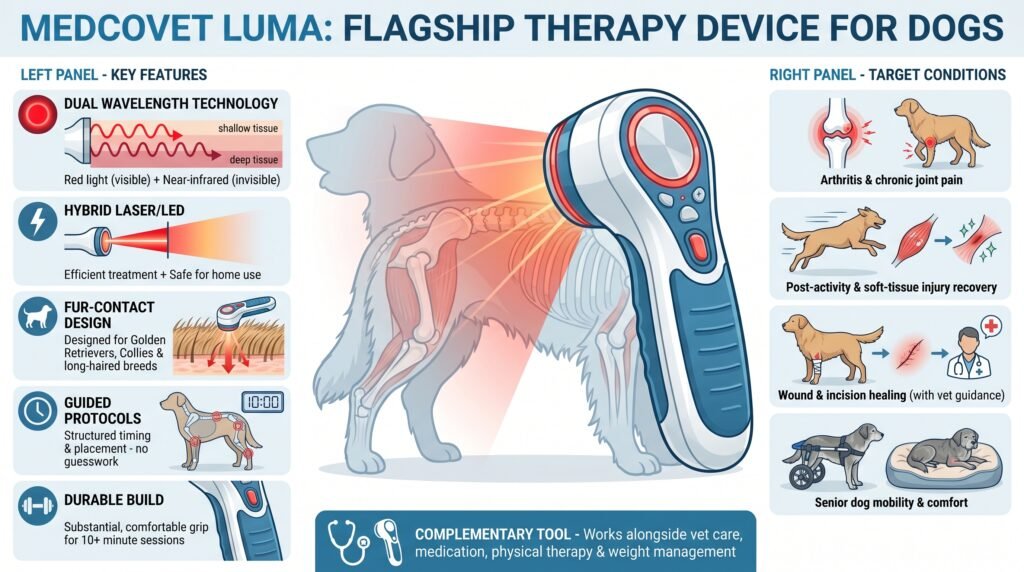
Here’s what stands out about the Luma design based on product materials and user discussions:
Red + infrared wavelengths
Luma uses both visible red light and invisible near-infrared light. The combination targets tissues at different depths, which is a common approach in photobiomodulation therapy for pain and healing support.
Hybrid laser/LED approach
The device combines laser and LED attributes. This usually means you get some focused light delivery mixed with broader coverage, which helps treat an area efficiently while staying safe for non-professionals to use at home.
Fur-contact strategy
MedcoVet emphasizes that you press this thing directly into your dog’s coat. More light reaches the skin instead of bouncing off or getting blocked by hair.
They specifically mention they designed it with long-haired breeds in mind, which is a real pain point for golden retrievers, collies, that kind of thing.
Guided protocols
Luma comes with structured guidance on treatment time and placement. You’re not left guessing whether five minutes is enough or if you need thirty.
That helps reduce the “am I even doing this right?” anxiety that comes up a lot in forums.
Solid build
Reviews describe the device as substantial and well-built. It feels solid in your hand and sits comfortably on the treatment area.
That matters when you’re holding something against your 70-pound dog’s hip for ten minutes at a time.
What conditions does Luma target?
The device is marketed for:
- Arthritis and chronic joint discomfort
- Recovery after activity or soft-tissue injuries
- Wound and incision healing support (under vet guidance)
- General mobility and comfort for aging dogs
MedcoVet doesn’t claim Luma replaces your vet. It shows up in their materials as a complementary tool that vets might recommend alongside medication, weight management, physical therapy, and other standard treatments.
Quality and Performance Compared with Other Red Light Devices
Build quality and usability
MedcoVet’s own content emphasizes that the Luma feels solid and durable the moment you hold it. The design makes it easy to position on your pet without fighting to keep it in place.
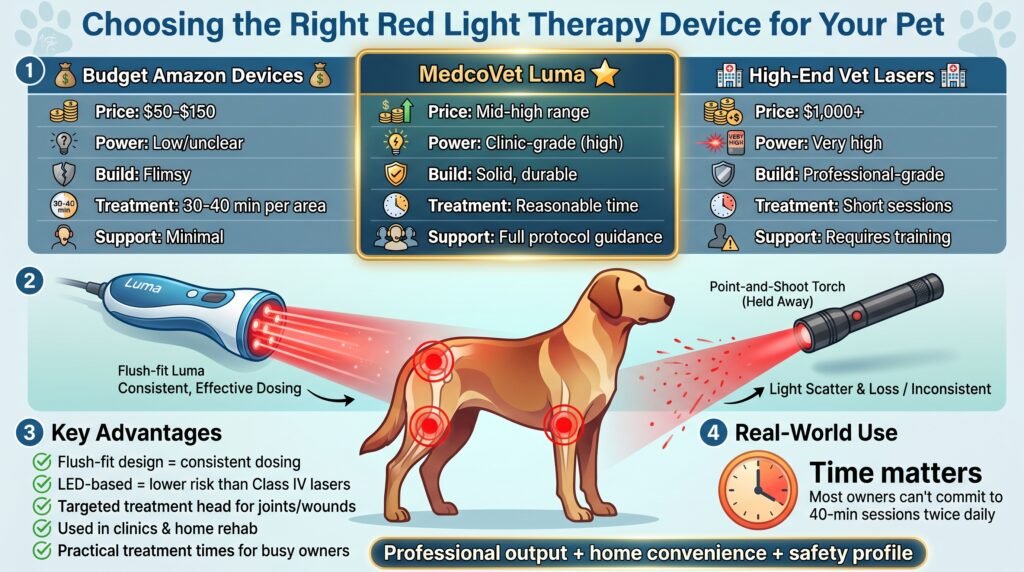
The body is made to sit flush against the fur and skin, which reduces light loss and helps achieve a more consistent dose compared to point-and-shoot torches that sit several inches away.
The device is not a flexible pad or blanket. It behaves more like a focused treatment head meant for targeted application on specific joints, muscles, or wounds.
For owners working on arthritic hips, elbows, or stifles, this design improves dose control and limits wasted time.
Output and treatment time
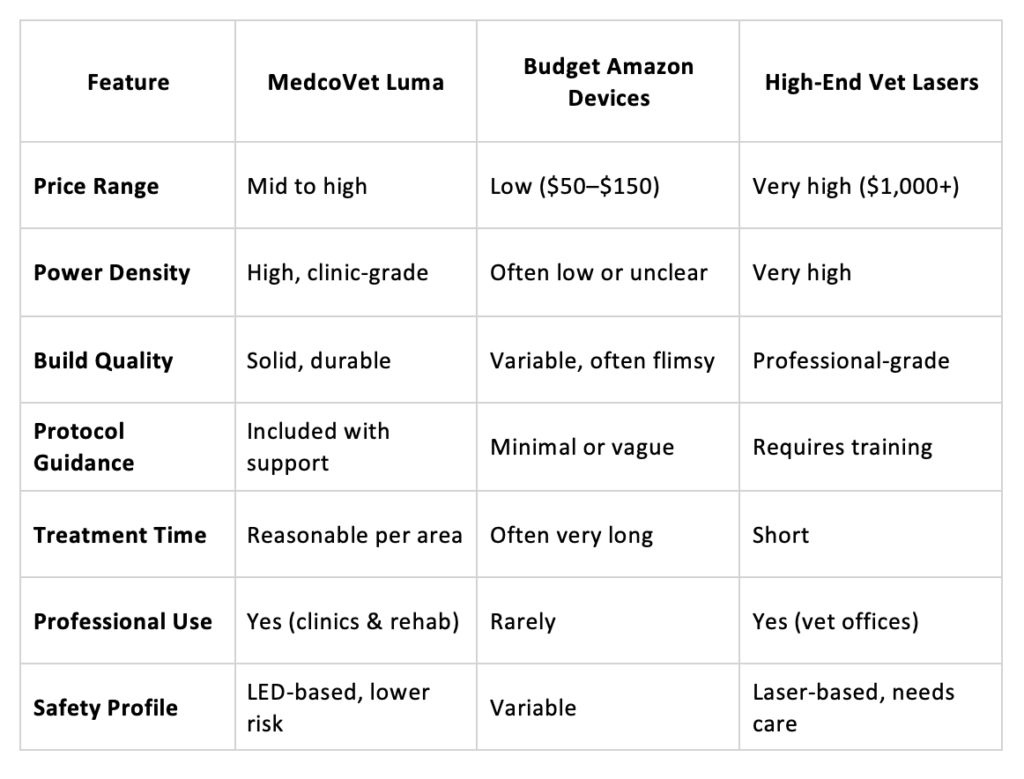
MedcoVet’s educational content about the best red light devices for dogs stresses three key specs: wavelength, power density, and treatment time. They point out that many consumer LED gadgets for pets have relatively weak output, which forces owners into very long sessions for each area and sometimes never reaches the power density that research and clinical practice commonly use.
Luma is marketed as a higher-output device that reaches a clinic-like dose within a targeted area in reasonable treatment times. That matters for real-world use, because most of us will not consistently stick with a 30–40 minute per-joint protocol on a senior dog twice per day, especially when you’ve also got work, kids, and other pets to manage.
Third-party pet wellness blogs that cover home red light therapy note that vet-approved devices should deliver a therapeutic dose in a practical timeframe and have clear guidance on how long and how often to treat. The combination of stronger output plus guided protocol support is a core part of Luma’s positioning.
Compared with other pet red light and laser devices
MedcoVet published a detailed breakdown of LumaSoothe 2, one of the better-known budget pet light devices. In that comparison, they highlight limitations such as lower power, less consistent coverage, and weaker construction compared with pro-level tools.
Similar concerns show up in independent vet blogs that compare home laser and light devices, where cheaper units often have lower intensity, smaller beam areas, or vague documentation.
A separate vet resource listing some of the “best home laser therapy devices for pets” mentions products like My Pet Laser, B-Cure Laser Vet Pro, and Worx LumaPet. Many of these are serious investments as well.
These devices share the same goal: bring clinic-type therapy to the home.
Luma competes directly in that space but is LED-based as opposed to a Class IV laser, which can offer a different risk profile and learning curve for owners.
Owners in social groups focused on canine rehab have commented that they use the MedcoVet Luma even on very small pets and call it both safe and effective when used properly. That type of feedback doesn’t replace research or veterinary guidance, but it does show that the device is being used in real rehab contexts, not just sold as a novelty.
Pricing and Value Assessment
Red light therapy sits in a weird spot between “gadget” and “medical equipment,” and pricing reflects that.
Clinic vs home device economics
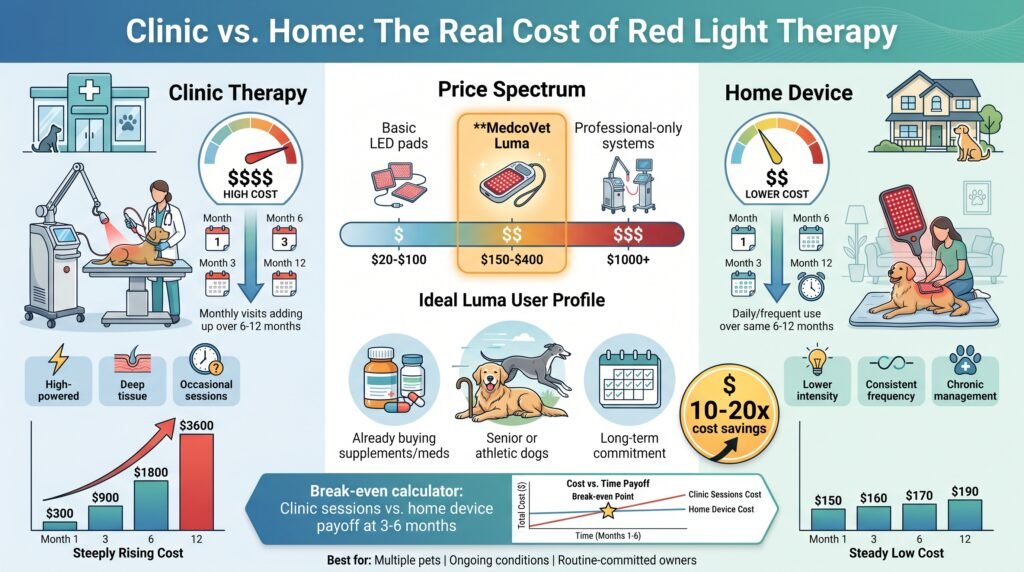
Professional laser therapy sessions add up fast for chronic conditions. A meta-analysis on red light therapy for dogs notes that ongoing clinic visits carry high costs over time, while home devices can deliver 10-20x cost advantages when used consistently.
Guides on dog laser therapy point out that Class IV lasers at the vet clinic are strong for deep tissue issues, but daily or frequent home sessions with lower-power devices can be more realistic for long-term inflammation management when done properly.
In simpler terms, frequent lower-intensity sessions at home sometimes match up better with chronic issues than occasional high-powered treatments limited by your schedule and budget.
Where MedcoVet Luma fits
Luma typically costs more than basic LED pads but less than professional-only systems. That puts it in a “serious home user” category.
This price range tends to appeal to owners who:
- Already spend money on joint supplements, pain meds, or rehab
- Have senior dogs or athletic dogs needing frequent recovery help
- Want a structured, long-term tool instead of a one-off gadget
Many vets note that portable, pet-specific light therapy units can deliver professional-grade therapy at home when used correctly. That’s why clinics increasingly recommend them as part of ongoing care plans.
For owners paying per-session clinic fees, the math usually shifts after a few months of consistent home use, especially with multiple pets. For owners unsure they’ll maintain a routine, the upfront investment can feel steep.
Pros and Cons Summary
Pros
Purpose-built for pets
Designed specifically for animals with a fur-contact strategy and long-hair-friendly design, not just a repurposed human device.
Red + near-infrared combination
Uses red and near-infrared light similar to protocols in photobiomodulation studies for wound healing and musculoskeletal support.
Hybrid laser/LED approach
Combines attributes of laser and LED systems for a balance of safety and performance suited for home users.
Strong build quality
Solid, durable construction that holds up to repeated use and moving pets.
Guided protocols and education
Backed by structured protocols, safety considerations, and realistic expectations instead of leaving you to guess.
Better engineering than generic “Luma” devices
Side-by-side tests show MedcoVet’s Luma delivers higher power output and better build quality than many devices using the same name.
Multi-pet friendly
One device works across multiple animals and body areas, a common scenario in owner stories and vet recommendations.
Cons
Higher upfront price
Costs more than simple LED wraps or small handheld lights, which can put it out of reach for some budgets.
Requires consistency
Benefits from regular sessions over weeks. You need to build it into your routine, and not everyone can commit to that.
Evidence base still growing
Research on red light therapy in dogs is promising but limited. It’s generally framed as complementary as opposed to standalone treatment.
Not suitable for every pet
Some sources caution against use in pets with certain conditions like seizure disorders. Vet guidance matters before starting.
Brand bias in comparisons
MedcoVet publishes critiques of competitors, which can be useful but reflects obvious competitive bias. Independent comparison helps.
Final Recommendation
If you’re serious about adding light therapy as a long-term, non-invasive tool alongside your vet’s care plan, MedcoVet Luma sits in a strong position.
The device is built specifically for animals with design details aimed at real-world use: fur contact, guided protocols, long-hair considerations, and solid construction that withstands repeated handling. Research into red and near-infrared light in dogs points toward potential benefits for pain, inflammation, and wound healing, though experts consistently frame it as complementary with a still-developing evidence base.
Compared to cheap red light pads and generic “Luma” masks, MedcoVet Luma brings better engineering, clearer guidance, and more transparent performance comparisons, including direct side-by-side power tests.
Compared to ongoing clinic-only protocols, a well-designed home device can reduce long-term costs and make frequent sessions more realistic, which many analyses highlight as a key advantage for chronic conditions.
Luma fits best if you:
- Work closely with a vet and want a structured home tool
- Have pets with chronic joint or soft-tissue issues where consistent support matters
- Can build sessions into daily or weekly routines
Luma makes less sense if you:
- Want a quick, guaranteed fix
- Struggle to commit to consistent routines
- Prefer to rely only on medication or occasional clinic visits
Luma is a premium, long-term piece of equipment that can justify its cost if it becomes a steady part of your dog’s care plan under veterinary guidance.
FAQ
Is MedcoVet Luma safe for pets?
Expert materials describe red light therapy as generally safe for most pets when used correctly. Some sources caution that certain conditions like seizure disorders may need extra care or avoidance, so your vet should review your pet’s specific situation before starting any light therapy.
What can MedcoVet Luma be used for?
Luma is marketed for joint and muscle discomfort, age-related stiffness, and support for wound or incision healing, all as part of a broader veterinary plan. Studies and expert commentary on red light therapy in dogs describe potential for reduced inflammation, support for tissue repair, and comfort improvements, though results vary between animals and research is still evolving.
How often do you need to use it?
Most guides on at-home red light therapy emphasize consistent, repeated sessions instead of sporadic use. Some experts suggest daily or near-daily home treatments can offer better long-term support for inflammation and tissue comfort than occasional clinic visits alone, assuming your vet approves the protocol.
MedcoVet promotes guided routines designed for use over weeks to help maintain a realistic schedule.
How does MedcoVet Luma compare to cheaper red light pads?
Cheaper pads and generic masks often provide limited technical detail, lower output, and minimal protocol guidance. MedcoVet’s comparisons and third-party device tests show that some low-cost products using the “Luma” name have noticeably weaker power and less robust construction.
Luma also focuses on fur-contact application and long-hair design features that many generic devices don’t address.
Can MedcoVet Luma replace your vet or medications?
Luma isn’t positioned as a replacement for veterinary diagnosis, surgery, or medications. Expert articles describe red light therapy as a complementary tool that vets may combine with conventional treatments like medications, weight management, or physical rehabilitation.
Any use of Luma should fit into a plan your vet has reviewed and approved.
Is there real science behind red light therapy for pets?
Research in veterinary photobiomodulation reports promising results in areas like wound healing, post-surgical recovery, and musculoskeletal support, but experts describe the overall body of evidence as limited and evolving.
The proposed mechanism involves light interacting with cellular structures in mitochondria, potentially improving energy production and modulating inflammation pathways.
That scientific framework is why many vets treat it as a reasonable complementary option, especially when owners want something non-invasive and drug-free alongside standard care.
This article includes affiliate links. If you click through and make a purchase, I may receive a small commission. This helps support the site and allows me to keep creating helpful content at no extra cost to you.