📌 Quick Summary
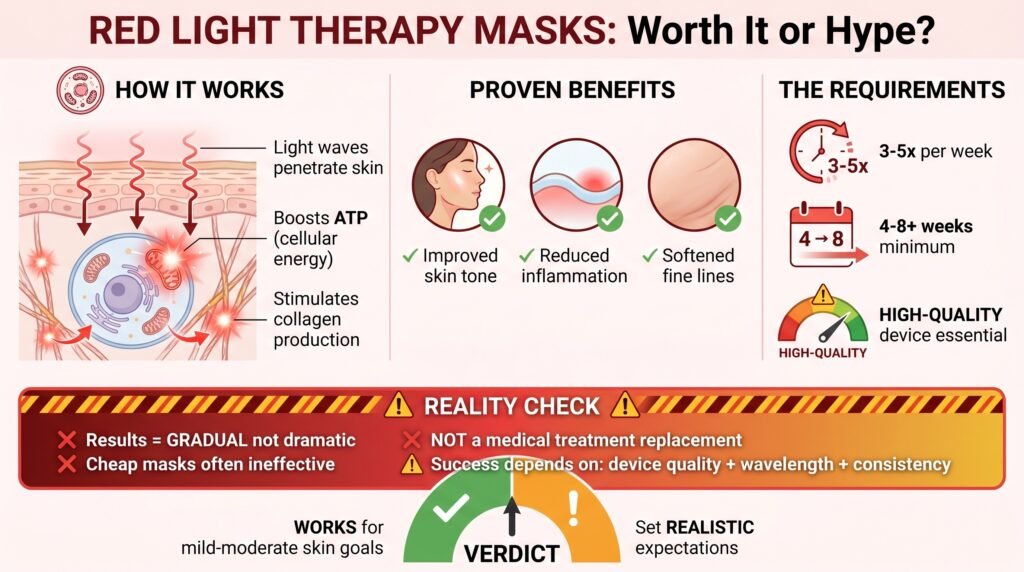
Red light therapy masks can improve skin tone, reduce inflammation, and soften fine lines by boosting cellular energy (ATP) and collagen production—but only if you use a high-quality device consistently (3–5x/week for 4–8+ weeks).
However:
- Results are gradual, not dramatic
- Cheap or low-powered masks often don’t work
- They’re not a replacement for medical treatments
- Benefits vary widely based on device quality, wavelength, and consistency
Bottom line: They work for mild-to-moderate skin goals—but expectations need to be realistic.
🧾 Table of Contents
Introduction
Understanding Photobiomodulation
What the Research Actually Supports
How to Use Red Light Masks Effectively
Common Implementation Mistakes
Adapting Treatment for Different Skin Concerns
Key Takeaways for Real Results
Frequently Asked Questions
Introduction
Red light therapy masks have become one of those skincare tools that seem to be everywhere – your favorite influencer uses one, your dermatologist mentions them, and suddenly half your friends are glowing with an otherworldly red hue every evening.
But when you’re staring at a $200-$500 price tag for what essentially looks like a futuristic Halloween mask, you really need to know: do these things actually work, or are we all just funding the LED light industry’s retirement plan?
Red light therapy masks do produce measurable results for certain skin concerns, but they’re not the secret cure that marketing claims suggest. The science is solid on some applications, shaky on others, and completely absent for many of the wild claims floating around social media.
What really matters is understanding exactly what these devices can and cannot do, so you can make an informed decision about whether they’re worth your time and money. Because here’s the thing – they absolutely can improve your skin, but only if you use them correctly, consistently, and with realistic expectations about what “improvement” actually means.
Understanding Photobiomodulation
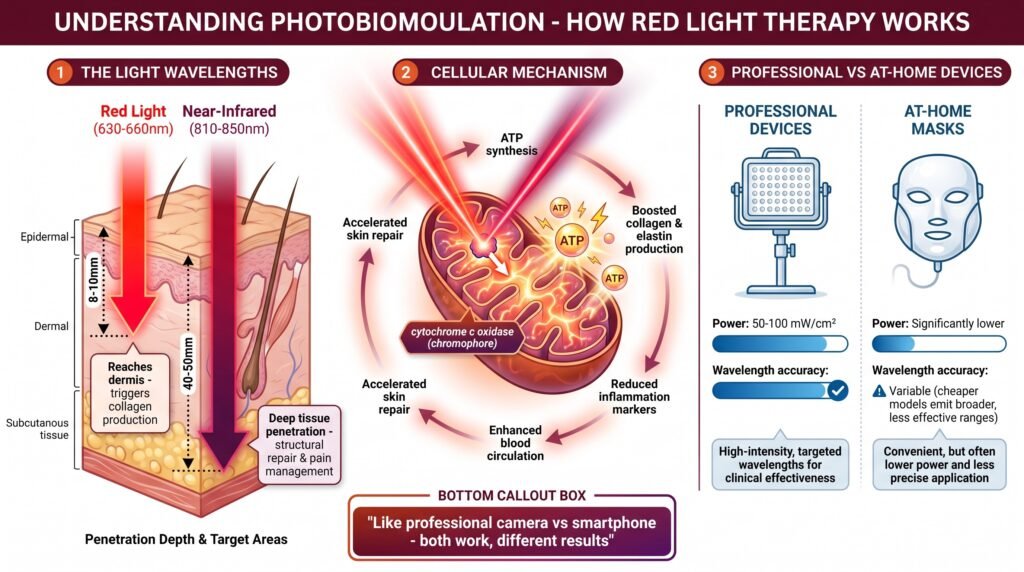
The mechanism behind red light therapy has a solid foundation in biology called photobiomodulation. When specific wavelengths of light penetrate your skin, they interact with chromophores in your cells, particularly a molecule called cytochrome c oxidase in your mitochondria.
This interaction essentially supercharges your cellular energy production, increasing ATP synthesis and triggering a cascade of useful cellular responses.
The key wavelengths that matter are red light at 630-660 nanometers and near-infrared at 810-850 nanometers. Red light works on surface-level concerns because it penetrates about 8-10 millimeters into your skin, reaching the dermis where collagen production happens.
Near-infrared light goes even deeper, sometimes reaching 40-50 millimeters into tissue, which is why it’s used for deeper structural improvements and even some pain management applications.
Your cells respond to this light exposure by ramping up collagen and elastin production, reducing inflammatory markers, increasing blood circulation to the treated area, and enhancing your skin’s natural repair mechanisms. The same basic principle that allows plants to convert light into energy through photosynthesis applies here, just with different biological pathways.
The challenge with at-home masks versus professional treatments comes down to power density and wavelength accuracy. Professional devices in dermatology offices often deliver 50-100 milliwatts per square centimeter, while many consumer masks deliver significantly less.
Some cheaper masks also emit broader wavelength ranges that include less effective light frequencies, diluting the therapeutic benefit.
This difference explains why some people see dramatic results while others wonder if their mask is even turned on.
Think of it like comparing a professional-grade camera to a smartphone camera. Both take pictures, both use similar underlying technology, but the quality and control you get from each varies considerably.
The same applies to red light devices – a medical-grade panel in your dermatologist’s office operates on a completely different level than most consumer masks, though some higher-end home devices come surprisingly close.
What the Research Actually Supports
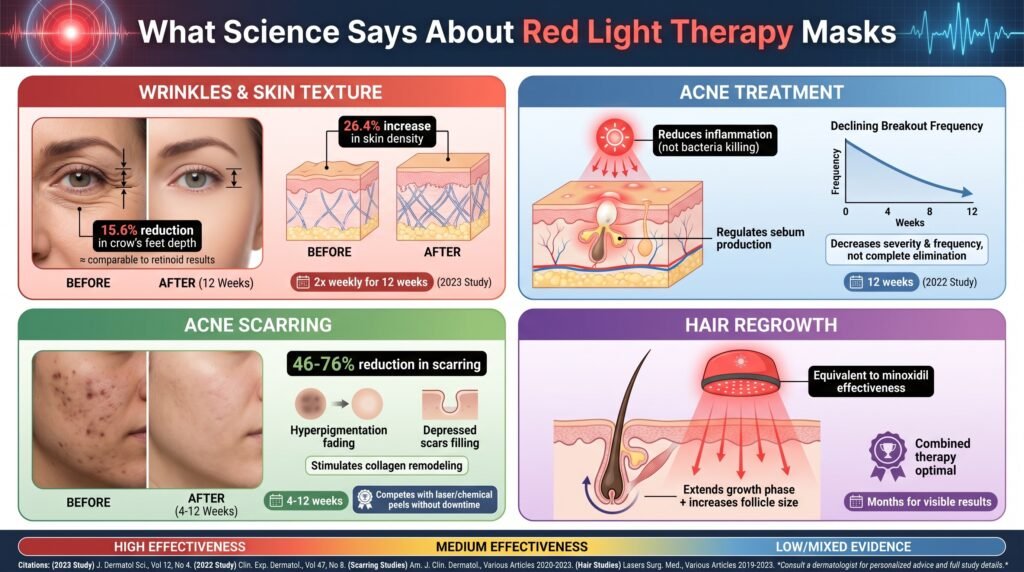
The evidence for red light therapy masks is strongest for wrinkle reduction and skin texture improvement. A 2023 study published in a dermatology journal tracked participants using red light masks twice weekly for twelve weeks and found a 15.6% reduction in crow’s feet depth, which sounds modest until you realize that’s comparable to results from some topical retinoid studies.
The same research showed a 26.4% increase in skin density, which translates to firmer, more resilient skin that better resists sagging.
For acne treatment, the mechanism works differently than you might expect. Red light doesn’t kill acne bacteria directly, as blue light does.
Instead, it reduces inflammation in active lesions and appears to regulate sebum production over time.
A 2022 study showed meaningful improvements in acne severity after twelve weeks of consistent use, though participants still experienced occasional breakouts – the frequency and severity decreased as opposed to acne disappearing entirely.
The really interesting application is acne scarring. Multiple studies have documented 46-76% reductions in hyperpigmentation and textural scarring within 4-12 weeks, which is actually pretty remarkable for a non-invasive treatment.
The light stimulates collagen remodeling in scar tissue, gradually filling in depressed scars and evening out discoloration.
This is one area where red light therapy genuinely competes with more aggressive treatments like laser resurfacing or chemical peels, without the downtime or risk of complications.
Hair regrowth represents another well-supported use case. Research comparing low-level laser therapy to minoxidil found equivalent effectiveness for androgenetic alopecia, with the best results when both treatments were combined.
The light appears to extend the growth phase of hair follicles and increase follicle size, though you need consistent treatment for months before seeing new growth.
However, a red light caps, not masks, are used for targeted hair regrowth. See the links below if you are interested in using red light therapy for hair follicle support.
>>CurrentBody Skin LED Hair Regrowth Device>>Available on Amazon>>Click Here
What’s less supported? Claims about dramatic fat reduction, cellulite elimination, significant wound healing acceleration, and mental health improvements.
Some preliminary research exists in these areas, but it’s not robust enough to justify purchasing a mask specifically for those purposes.
How to Use Red Light Masks Effectively
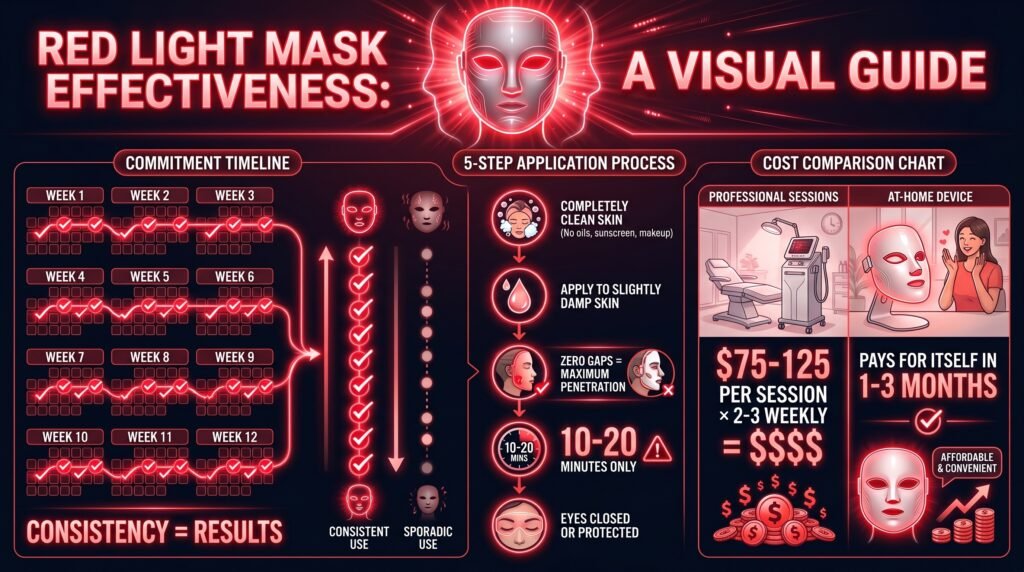
The difference between people who see results and those who don’t often comes down to consistency and technique as opposed to the device itself. You absolutely must commit to using your mask at least three to five times per week, every single week, for a least of twelve weeks before evaluating effectiveness.
Sporadic use – putting it on when you remember or feel motivated – produces sporadic results at best.
Start with completely clean skin. I mean, actually clean, not just makeup-free. Oil residue, sunscreen, serums, and moisturizers create a barrier that reduces light penetration.
Cleanse thoroughly with a gentle cleanser, pat dry, and immediately apply your mask while skin is still slightly damp.
The moisture actually helps conduct light into your skin more effectively.
Positioning matters more than most people realize. The mask needs to sit flush against your face with minimal gaps between the LEDs and your skin. Every millimeter of distance reduces the power density reaching your cells.
Most masks have adjustable straps – actually use them to create a snug fit as opposed to just loosely draping the device over your face while you scroll through your phone.
Session duration should follow manufacturer guidelines, but typically ranges from ten to twenty minutes, depending on your device’s power output. More is not better here.
Overexposure doesn’t increase benefits and may actually trigger inflammatory responses in sensitive skin. Set a timer and stick to it as opposed to guessing or getting distracted. I’ve caught myself falling asleep with my mask on more than once, which is ineffective and a good way to wake up looking like a tomato.
Eye protection is non-negotiable. Close your eyes during treatment, and if your mask doesn’t cover your eyes completely, use the provided eye protection or keep the room dim.
While red light is safer than blue light for retinal exposure, there’s documented risk of eye strain and potential damage from prolonged direct exposure to bright LEDs.
The timing question comes up constantly – morning or evening? Honestly, the research doesn’t show significant differences.
What matters is consistency and fitting it into your routine, where you’ll actually do it. At-home red light devices can greatly reduce the friction to maintaining consistency.
Many professional red light therapy providers charge $75 – 125 per session. When you are looking at 2-3 sessions per week, the costs can add up.
When shopping for at-home devices, look for FDA-cleared products that specify exact wavelength output, power density, and treatment area size. Read actual user reviews from people with rosacea, not just general skin care testimonials.
Two such devices are the Mito Glow Red Light Mask and the CurrentBody Skin LED Light Therapy Face Mask: Series 2.
When comparing these at-home red light masks to the cost of professional sessions multiple times a week, the CurrentBody and HSA/FSA eligible Mito Glow Mask pays for itself in less than a month.
In addition to the MitoGlow mask, Mito Red Light provides larger panel options for greater expanded body coverage as well.
See the cost savings calculator below, crunch the real-time savings numbers of at-home red light therapy vs clinical sessions. Bookmark this page and come back whenever you are comparing the cost of red light therapy providers in your area.
Red Light Therapy Cost Savings Calculator
Research demonstrates that consistent red light therapy protocols for 4-7 weeks deliver the best results. Calculate how much you can save by investing in an at-home device compared to ongoing professional sessions.
Common Implementation Mistakes
The biggest mistake is treating red light therapy as a standalone solution. It works best as part of a comprehensive skincare approach that includes sun protection, antioxidants, proper hydration, and suitable active ingredients for your concerns.
Expecting a mask to undo years of sun damage while you skip SPF daily is like expecting a gym membership to get you fit while you never actually work out.
Another critical error is choosing devices based on aesthetics or price alone as opposed to specifications. A beautiful mask with inadequate wavelength accuracy or power density is an expensive paperweight.
Before purchasing, verify that the device clearly states its wavelength output in nanometers, power density in milliwatts per square centimeter, and ideally has FDA clearance as a low-risk device.
If this information isn’t readily available on the product listing, that’s a red flag.
People also dramatically underestimate the timeline required for results. Your skin renews itself about every 28 days, and collagen remodeling takes even longer.
Seeing subtle improvements at four to six weeks is normal.
Expecting a dramatic transformation at two weeks sets you up for disappointment and premature abandonment of a treatment that might have worked with patience.
Inconsistent usage patterns sabotage results more than any other factor. Using your mask daily for two weeks, then forgetting about it for a month, then using it sporadically doesn’t provide the added stimulus your cells need to maintain increased collagen production and cellular turnover.
Your skin adapts to regular stimulus – irregular stimulus produces irregular results.
Some people make the mistake of combining too many aggressive treatments simultaneously. Using red light therapy while also starting retinoids, chemical peels, and microneedling all at once makes it impossible to identify what’s working and increases your risk of irritation.
Layer in treatments gradually, giving each one time to show its personal effects.
The opposite problem also occurs – people use red light therapy but neglect basic skincare fundamentals. If you’re not cleansing properly, using SPF daily, and maintaining adequate hydration, you’re undermining your results.
Red light therapy enhances your skin’s capacity to repair and regenerate, but it can’t compensate for actively damaging your skin through poor habits.
Adapting Treatment for Different Skin Concerns
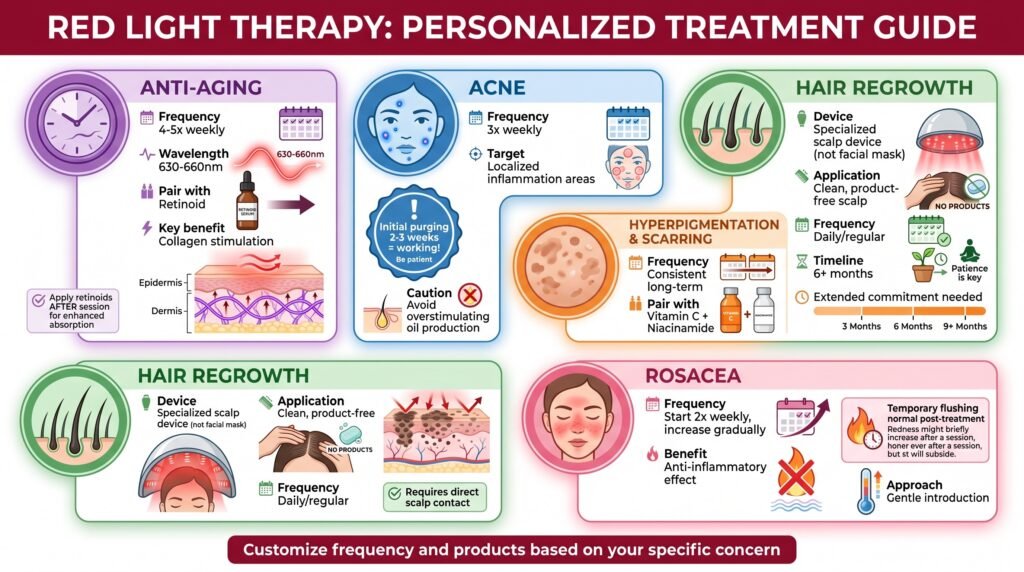
For anti-aging focused treatment, you want consistent exposure at least four to five times weekly with emphasis on wavelengths in the 630-660nm range for collagen stimulation. Pair this with retinoids applied after your red light session, when increased circulation may enhance penetration and effectiveness.
The combination produces better results than either treatment alone, according to research on combined modalities.
Acne treatment needs a different approach. Start with three times weekly to avoid overstimulating oil production, and focus on areas with active inflammation as opposed to your entire face if breakouts are localized. You might see initial purging as increased circulation brings congestion to the surface faster.
This typically decides within two to three weeks and shows the treatment is working as opposed to making things worse.
For hyperpigmentation and acne scarring, consistent long-term use produces the best results. You’re literally remodeling tissue and redistributing melanin, which takes time.
Combine red light with vitamin C serums and niacinamide, which work synergistically with the increased cellular activity to fade discoloration more effectively than any single treatment.
I’ve seen my own post-inflammatory hyperpigmentation from old breakouts fade significantly faster when using red light therapy compared to topicals alone.
Hair regrowth applications need direct scalp contact, which standard facial masks don’t provide. If hair growth is your primary goal, you need a device specifically designed for scalp treatment with suitable coverage.
Apply to a clean, product-free scalp for optimal light penetration, and commit to at least six months of consistent use before evaluating results, since hair growth cycles are slow.
Rosacea management benefits from red light’s anti-inflammatory effects, but needs a gentle introduction. Start with twice-weekly sessions and gradually increase frequency if your skin tolerates it well.
Some rosacea sufferers experience temporary flushing immediately after treatment as circulation increases, which isn’t harmful but can be alarming if you’re not expecting it.
Ready to get started with treating your skin with this groundbreaking technology? Click the links below to find the right red light mask for your specific budget and needs.
Key Takeaways for Real Results
Red light therapy masks produce measurable improvements in collagen density, fine lines, acne inflammation, and hyperpigmentation when used consistently for twelve-plus weeks at suitable frequencies. Results are added gradually rather than being dramatic and immediate, requiring genuine commitment to a regular schedule rather than sporadic use when you remember.
Device quality matters enormously – verify wavelength specifications, power density, and FDA clearance before purchasing, as cheaper masks often deliver inadequate light therapy despite looking similar to effective devices.
The gap between a legitimate therapeutic device and an overpriced toy often comes down to these technical specifications that manufacturers don’t always prominently display.
Consistency trumps intensity in producing results, with three to five sessions weekly outperforming daily use that leads to burnout and abandonment after a few weeks.
Your skin responds to regular stimulus over time as opposed to sporadic intense exposure, making sustainable routines more effective than unsustainable perfectionism.
Red light therapy works best as part of a comprehensive skincare regimen that includes sun protection, suitable actives, and good basic habits. The devices enhance your skin’s capacity to benefit from everything else you do as opposed to replacing the fundamentals.
You can’t out-LED a terrible skincare routine or constant sun damage.
Realistic expectations prevent disappointment – these masks improve mild to moderate concerns incrementally but cannot replace more aggressive treatments for severe aging or damage.
Understanding what red light therapy can and cannot accomplish helps you make informed decisions about whether it’s the right investment for your specific situation.
If you’re looking for overnight miracles, you’ll be disappointed. If you’re willing to commit to consistent use over months and track gradual improvements, you might be surprised by what you see.
See the two affordable, effective options below and find the device that best suits your needs.
Frequently Asked Questions
Does red light therapy help with wrinkles?
Red light therapy has been shown to reduce fine lines and wrinkles by stimulating collagen production in the dermis. Studies show an average reduction of 15-20% in wrinkle depth after 12 weeks of consistent use, three to five times per week.
The results are comparable to some topical retinoid treatments, though they take longer to appear.
How long does it take to see results from red light therapy?
Most people begin noticing subtle improvements around 4-6 weeks, with more significant changes appearing at 8-12 weeks. Collagen remodeling takes time, and your skin renews about every 28 days, so patience is essential.
Expecting dramatic results in two weeks will lead to disappointment.
Can red light therapy help acne scars?
Research shows red light therapy can reduce hyperpigmentation and textural scarring by 46-76% within 4-12 weeks. The light stimulates collagen remodeling in scar tissue, gradually filling in depressed scars and evening out discoloration.
This makes it one of the more effective non-invasive treatments for acne scarring.
What wavelength is best for skin rejuvenation?
The optimal wavelength for skin rejuvenation is 630-660nm (red light) for surface-level improvements and collagen stimulation. Near-infrared wavelengths at 810-850nm penetrate deeper into tissue and are better for greater structural improvements.
Many effective devices combine both wavelengths.
Should I use red light therapy in the morning or evening?
Research doesn’t show significant differences between morning and evening use. The most important factor is consistency – choose whichever time you’ll actually stick with long-term.
Evening use may offer benefits if you apply skincare products afterward, as increased blood flow could enhance absorption.
Can I use retinol with red light therapy?
Yes, you can combine retinol with red light therapy. In fact, using retinol after your red light session may enhance its effectiveness because of increased circulation and cellular activity.
Just introduce both treatments gradually to avoid irritation, and always use sunscreen during the day.
Does red light therapy work for hair growth?
Studies show red light therapy can be as effective as minoxidil for treating androgenetic alopecia, with best results when both treatments are combined. However, you need a device specifically designed for scalp treatment, and consistent use for at least six months before evaluating results.
How often should I use a red light therapy mask?
For optimal results, use your red light therapy mask 3-5 times per week for at least 12 weeks. More frequent use doesn’t necessarily produce better results and may cause irritation in sensitive skin. Consistency matters more than intensity.
This article includes affiliate links. If you click through and make a purchase, I may receive a small commission. This helps support the site and allows me to keep creating helpful content at no extra cost to you.