📌Quick Answer
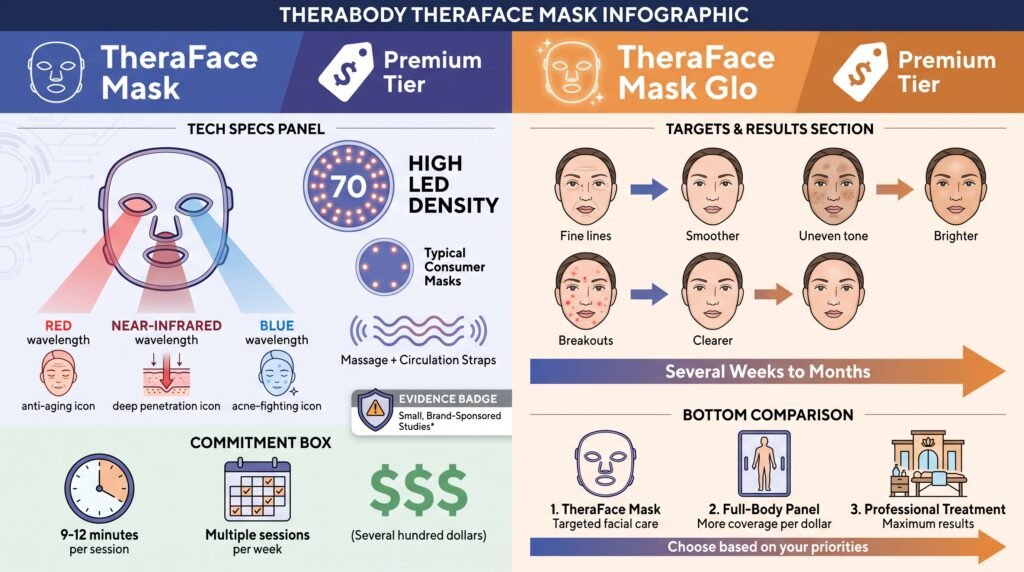
The Therabody TheraFace Mask and the newer TheraFace Mask Glo both sit at the higher end of at-home red light therapy devices. They pack way more LEDs than typical consumer masks, offer many wavelengths (red, near-infrared, and blue), and include vibration straps for added massage and circulation benefits.
The target is pretty clear: fine lines, uneven skin tone, and breakouts. A bunch of reviewers mention smoother, brighter skin after several weeks to months of consistent use.
That said, results aren’t guaranteed, and the clinical studies backing these claims are relatively small and brand-sponsored.
If you want a structured nine-to-twelve-minute LED session at home and you’re comfortable paying several hundred dollars for a mask you’ll actually use many times per week, Therabody is one of the solid choices. If you’re mainly chasing maximum value per dollar for skin or body benefits, a larger full-body red light panel or even occasional professional sessions can deliver more.
See Latest Promotions on Therabody’s official store before deciding, because pricing and bundles change pretty often.
🧾 Table of Contents
- Brand Overview
- Therabody Face Mask – Product Range Analysis
- Quality and Performance Testing vs Other Red Light Masks
- Pricing and Value Assessment
- At-Home Red Light Therapy vs Professional Sessions
- Pros and Cons Summary
- Final Recommendation
- FAQ
Brand Overview
Therabody made its name with percussive massage guns (you’ve probably seen the Theragun everywhere), then branched out into wellness tech like compression boots, SmartGoggles, and facial devices. The TheraFace Mask line is part of that expansion into skin and stress support.
What sets them apart from random beauty gadgets is their emphasis on clinical data and regulatory clearance. The original TheraFace Mask is FDA-cleared, uses medical-grade LEDs, and is backed by a 12-week brand-sponsored clinical study.
The newer TheraFace Mask Glo extends that data with a larger participant group.
For people dealing with aging skin, chronic conditions, or just trying to improve their wellness routine, Therabody positions these masks as structured tools as opposed to quick-fix cosmetic gadgets. They’re designed to fit into a broader routine, not replace everything else you’re doing.
Therabody Face Mask – Product Range Analysis
TheraFace Mask (Original)
The original model is the flagship device. Here’s what you need to know:
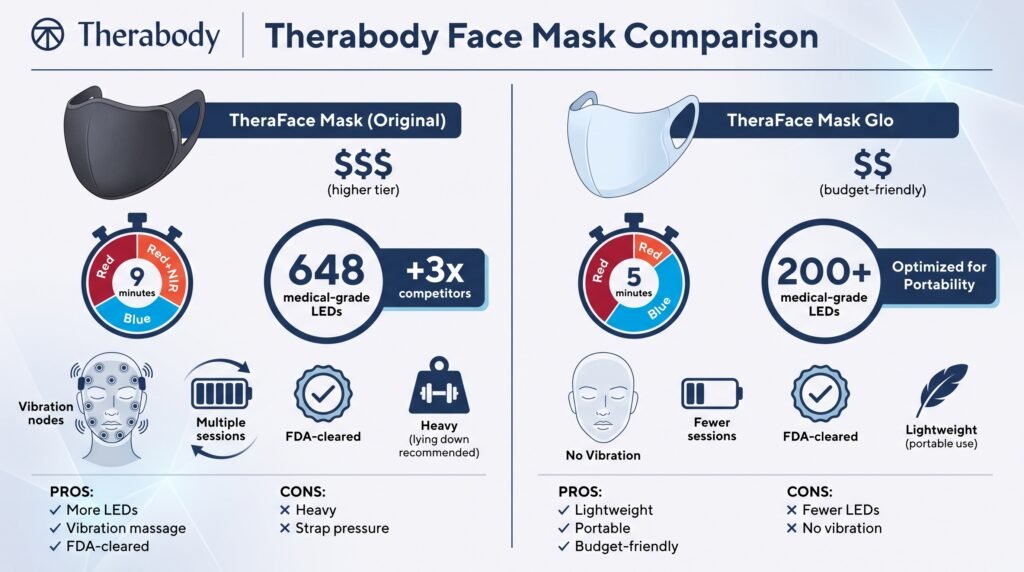
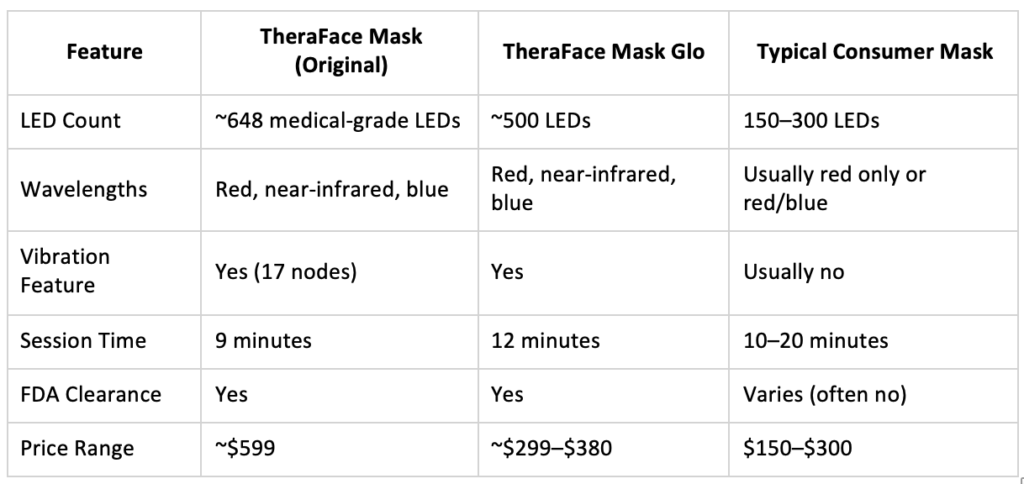
It uses red, red + near-infrared, and blue light in a pre-set nine-minute routine. You get three minutes of red, three minutes of red + near-infrared, and three minutes of blue.
Simple and automated.
It contains about 648 medical-grade LEDs, which is significantly more than most consumer masks and roughly three times more than some leading competitors.
More LEDs generally means better coverage and potentially stronger light output.
There are 17 vibration nodes built into the straps and temples. These provide massage, tension relief, and circulation support during your sessions.
Some people end up loving the vibration feature as much as the light therapy itself.
The light coverage extends slightly onto the neck and lower face, which helps with wrinkle-prone areas. That said, it doesn’t equal a full chest or neck panel.
It runs wirelessly, is FDA-cleared, and has battery life that supports many sessions per charge.
One thing that comes up repeatedly in reviews is the weight. This mask feels heavy, and most people prefer using it while lying down.
Some users mention strap pressure around the eyes or forehead, which can be annoying.
How the Mask Fits Different Users
Aging adults (45-65) focused on wrinkles and texture:
The red and near-infrared LEDs target collagen support and overall skin rejuvenation. Independent reviewers testing it for anti-aging rated it as viable among at-home masks, with decent coverage and power for fine lines and tone, though still below professional panels in raw intensity.
Social media users in midlife share improvements in redness, irritation, and overall glow. Some posts mention menopausal skin looking calmer and less reactive.
Results are gradual, which fits patient people who can stick with a 10-20 minute routine many times per week.
TheraFace Mask Glo
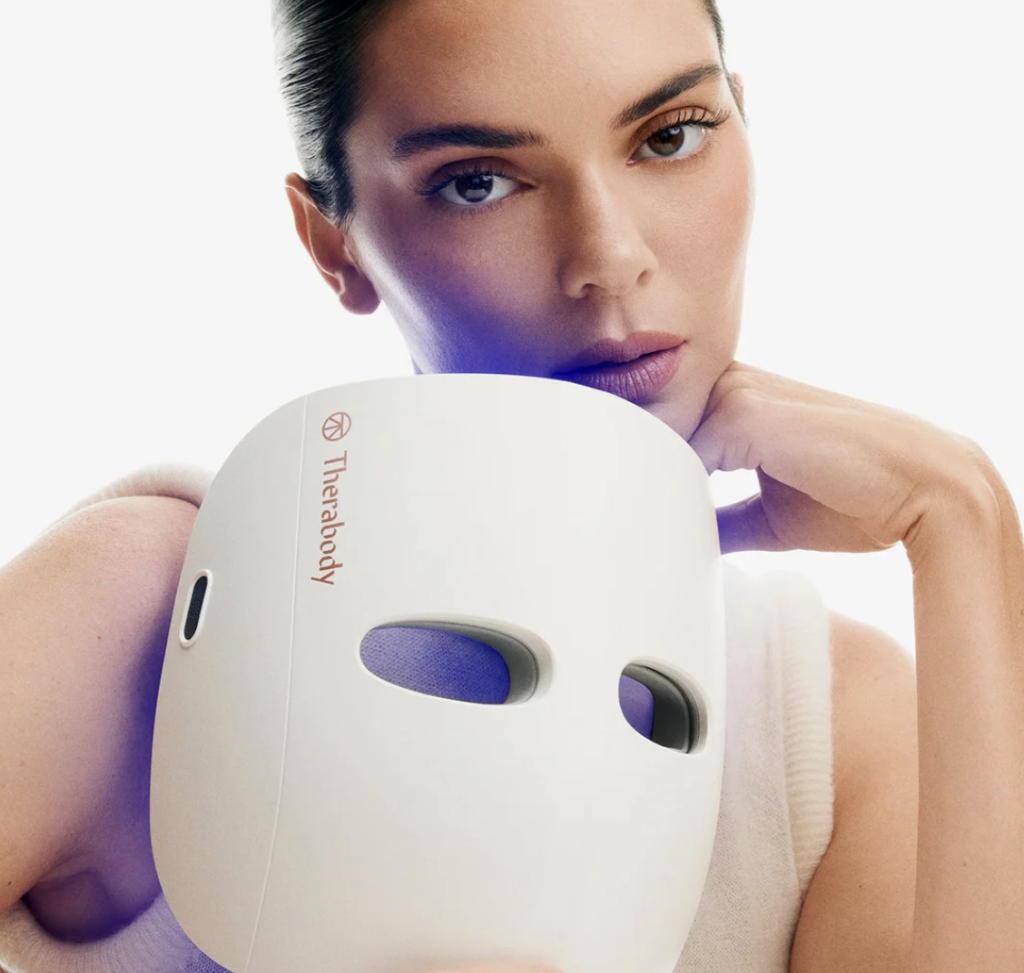
The Glo is the more budget-friendly follow-up with some design tweaks.
Treatment time is typically 12 minutes, with cycles through red, blue, and infrared modes similar to the original but with slightly longer exposure time.
It uses fewer LEDs (around the 500-LED mark versus 648 in the original), but coverage across the face is still pretty even.
Battery life is about 60 minutes, which translates to around five treatment sessions per charge.
Several reviews mention better comfort than the original model. The bulkiness and strap marks still show up as minor complaints, but it’s an improvement.
Pricing is lower, especially during sale periods. You can sometimes catch it under $300 during promotions, which makes it more accessible for first-time LED mask buyers.
For most people, the Glo sits in a sweet spot: lower price, still multi-wavelength, still backed by Therabody’s clinical data, but with small trade-offs in LED count and overall “luxury” feel.
Click the button below to take advantage of the latest promotions on Therabody’s science-backed recovery, wellness and beauty favorites.
Quality and Performance Testing vs Other Red Light Masks
Clinical Data and Studies
Therabody highlights brand-sponsored 12-week studies for both masks.
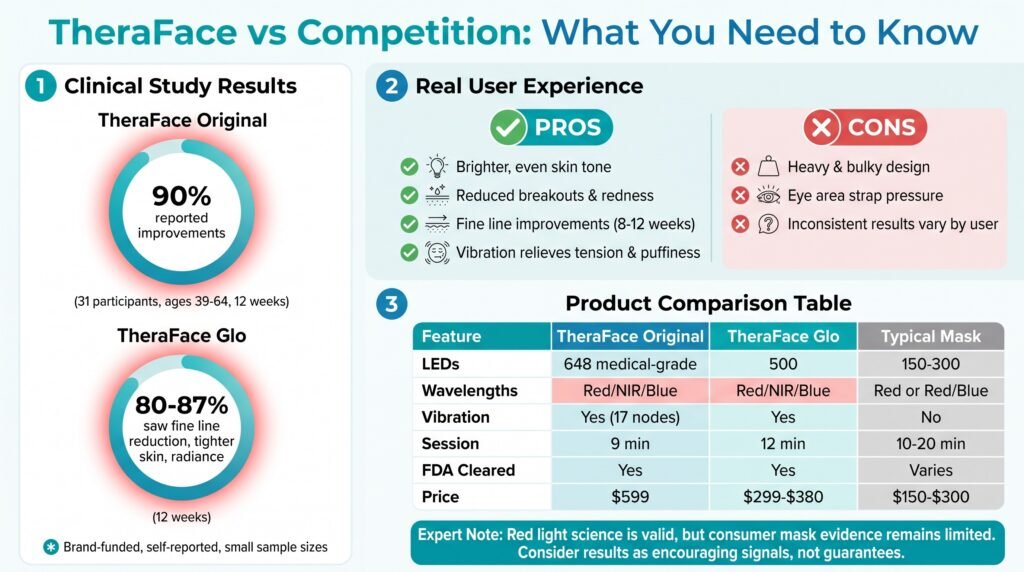
In Therabody’s early trial with about 31 participants aged 39–64, over 90% reported reduced fine lines and improved skin tone after consistent use of the TheraFace Mask.
Later data for the Glo reference: 80–87% of participants noticed improvements in fine lines, tighter skin, and more radiant complexions after 12 weeks.
These numbers sound impressive on the surface. But they come from small, brand-funded studies with self-reported improvements.
Dermatology experts point out that most consumer LED evidence is limited, short-term, and lacks standardized protocols.
The science behind red light isn’t fake, but the quality of evidence for consumer masks stays modest and uneven. Take the percentages as encouraging signals, not guarantees.
Real-World Reviewer Impressions
Independent reviewers and beauty editors generally report:
Skin that looks brighter and more even, with fewer breakouts and calmer redness after several weeks of use.
Subtle improvements in fine lines and firmness, especially around the cheeks and eyes. These changes often get noted after 8–12 weeks as opposed to immediately.
A noticeable stress and tension relief effect from the vibration feature. Some users even mention it helping with tension headaches or morning puffiness.
On the downside:
Bulkiness, weight, and strap pressure around the eye area show up as recurring complaints across reviews.
Results are inconsistent. Some users see clear changes in texture and clarity, while others describe modest or hard-to-measure improvements despite regular use.
Comparison with Other Red Light Masks
In comparison with other red light masks, reviewers often highlight:
Higher LED counts and stronger irradiance (light output) than many competitors. This means shorter sessions can deliver similar light doses.
A more premium build with vibration and preset treatment routines that some competing masks lack.
Much higher prices than mass-market LED masks, which often sit in the $150–$300 range without the same clinical emphasis or build quality.
Comparison with Other Red Light Masks
In comparison with other red light masks, reviewers often highlight:
Higher LED counts and stronger irradiance (light output) than many competitors. This means shorter sessions can deliver similar light doses.
A more premium build with vibration and preset treatment routines that some competing masks lack.
Much higher prices than mass-market LED masks, which often sit in the $150–$300 range without the same clinical emphasis or build quality.
Pricing and Value Assessment
Therabody positions both masks as premium devices. Current and recent pricing snapshots show:
TheraFace Mask often retails around $599, with some bundles and periodic discounts.
TheraFace Mask Glo priced lower, generally around $299–$380, depending on sales.
The separate TheraFace PRO device (handheld, not the mask) is around $399 plus add-ons. This matters if you’re considering stacking devices for fuller coverage.
Compared with regular spa or clinic LED facials, the upfront cost looks steep. But the per-session cost drops quickly if you actually use the mask three to five days per week for months.
Value swings completely based on consistency. If the mask becomes a regular habit, the cost per use can fall below a single clinic session fairly quickly, especially over a year.
If it ends up in a drawer after a few weeks, it becomes a very expensive experiment.
Many reviewers call the mask a “worth the splurge if you use it regularly” kind of purchase. That sentiment lines up with basic math around device cost versus repeated treatments. You should probably check current promotions before committing. Therabody runs sales and bundle offers, and grabbing a discount can make the value proposition much more reasonable.
At-Home Red Light Therapy vs Professional Sessions
People weighing the Therabody face mask against clinic-grade red light therapy usually care about three things: cost, convenience, and depth of results.
Cost and Convenience
Professional LED facials and photodynamic therapy sessions sit at the higher end of skincare services, especially when you factor in repeated visits. At-home devices trade higher upfront cost for unlimited sessions, scheduled on your terms.
For busy adults and fitness-focused people, the biggest win is that a nine-to-twelve-minute mask session can slot into evenings at home without travel or appointment logistics.
Device Type and Coverage
Compared with larger red light panels, face masks deliver targeted coverage with less total light output. Full-body panels in the $800–$1,400 range can provide more comprehensive exposure for skin, muscle recovery, and general light dosing.
Masks focus on the face and a bit of neck, with some extra vibration support for stress and circulation.
Panels focus on overall exposure, which matters more for muscle recovery, systemic benefits, or broader skin coverage.
For someone whose main concern is facial fine lines and breakouts, a mask is more practical. For athletes, biohackers, or people with widespread psoriasis or chronic issues, a larger panel often brings more utility per dollar.
Click here to compare at-home Red Light Therapy devices to costly professional sessions and decide which mix of clinic visits and home devices fits your goals, budget, and tolerance for sticking with a routine.
Pros and Cons Summary
Pros
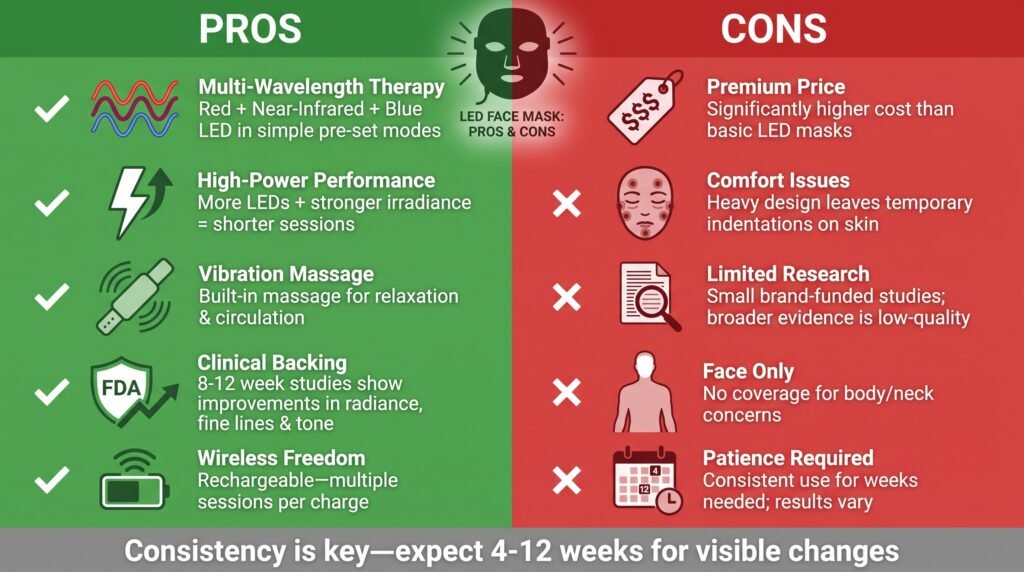
Multi-wavelength LED therapy (red, near-infrared, blue) in pre-set routines that keep things simple for non-technical users.
High LED count and strong irradiance, allowing shorter sessions for comparable light doses compared with many consumer masks.
Vibration massage straps that add relaxation, circulation support, and tension relief. Many users appreciate this feature as much as the light itself.
FDA clearance and clinical trial data, with 8- to 12-week studies showing self-reported improvements in radiance, fine lines, and tone for a majority of participants.
Wireless, rechargeable design with enough battery life for several sessions per charge, which makes it practical in daily routines.
Cons
High upfront price, especially for the original mask, with a noticeable jump over basic LED masks and many other beauty gadgets.
Bulkiness and strap pressure, including indentations around the eyes or forehead that fade but still feel annoying to many users.
Limited independent evidence, with small, brand-run studies and broader derm literature noting low-quality evidence for consumer light masks.
Face-focused coverage only, which limits usefulness for people who care more about body recovery or full-body skin issues.
Results depend heavily on consistency. Many reviewers stress that the mask needs four to twelve weeks of regular use before visible changes, and some users still report modest effects.
Take advantage of the latest promotions on Therabody’s science-backed recovery, wellness, and beauty favorites by clicking the button below.
Final Recommendation
For this Therabody face mask review, the verdict is pretty clear.
People concerned with fine lines, mild sagging, and uneven tone who are willing to commit to three to five sessions per week and who appreciate structured routines may find Therabody’s masks a good, though expensive, addition to their regimen.
Individuals with acne-prone skin who already manage diet, topical care, and stress may appreciate the blue light and reported improvements in breakout frequency and redness from consistent use.
Biohackers and wellness-optimizers who value data, high build quality, and multi-modal devices may prefer Therabody over cheaper masks, especially when stacking it with other recovery tools.
On the other hand:
Anyone primarily focused on muscle recovery, performance, or systemic light exposure likely gains more from a well-chosen full-body red light panel in the same price range or slightly above.
For those suffering from chronic joint or shoulder pain, a reasonably priced wearable red light device would be suitable.
Budget-conscious buyers and casual users who are unsure about long-term consistency are better off starting with lower-cost LED options or occasional professional treatments.
This device sits in the “premium but conditional value” category. It rewards consistent use and realistic expectations.
It doesn’t replace medical treatment; it doesn’t guarantee outcomes, and it should be treated as one tool among several.
Before deciding, click here to see what promotions are available and compare mask pricing against panels and local clinic options. Matching the device to your actual habits matters more than its specs on paper.
FAQ
Is the Therabody face mask safe?
Therabody’s masks are FDA-cleared, use medical-grade LEDs, and are designed with protective eye shields and controlled intensities. As with any light therapy device, you should follow manufacturer guidelines and speak with a healthcare professional if you have photosensitive conditions or are on medications that affect light sensitivity.
How often do people typically use it?
Most reviews and brand guidance point toward three to five sessions per week, with many users running one short session per day for several weeks or months. Consistency appears to matter more than occasional use for visible changes.
Can it replace professional red light therapy or dermatology care?
Consumer masks sit below professional photodynamic therapy in intensity and protocol control. Medical sources emphasize that evidence for at-home masks is limited and should not be treated as a stand-alone medical treatment.
They may complement professional care but are not replacements for physician-guided treatment of skin disease or serious conditions.
Does it help with acne and breakouts?
Blue light in the mask targets acne-causing bacteria. Several users and reviewers report fewer breakouts and faster calming of redness when they mix the device with suitable skincare.
Outcomes vary, and no device can guarantee that someone will avoid acne or other skin issues.
How does the Therabody face mask compare to cheaper LED masks?
Therabody generally offers higher LED counts, stronger light output, more wavelengths, and vibration features, backed by brand-run studies and FDA clearance, at a much higher price than mass-market masks.
Cheaper masks may still offer some light exposure but often lack the same build quality, coverage, and data.
They might not feel as comfortable or durable over time.
If you’re serious about integrating LED into your routine and okay with the price, Therabody can make sense. If you just want to experiment without much commitment, a lower-cost option or clinic visit is a more cautious starting point.
This article includes affiliate links. If you click through and make a purchase, I may receive a small commission. This helps support the site and allows me to keep creating helpful content at no extra cost to you.