📌 Quick Summary
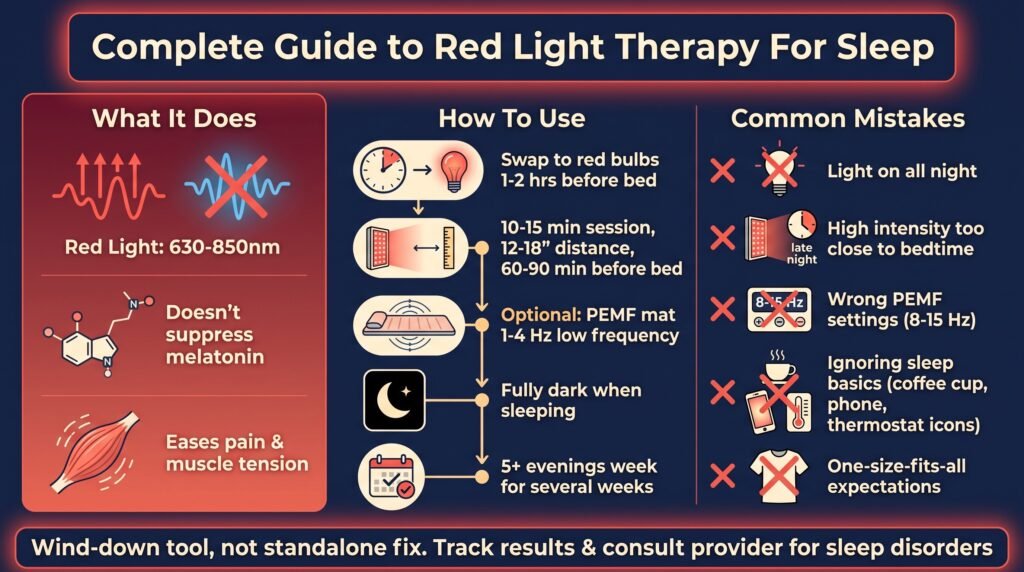
Red light therapy won’t knock you out like a sleeping pill, but it can help you wind down. Unlike blue light, red light (630-850 nm) doesn’t suppress melatonin, and it can ease pain and muscle tension that keep you awake. How you use it matters a lot.
How to use it:
- Swap your lighting: 1-2 hours before bed, replace bright overhead lights with red bulbs.
- Do a short session: 10-15 minutes with a panel at 12-18 inches (or a mask), ideally 60-90 minutes before bed. Keep total evening exposure under 30 minutes.
- Optional PEMF mat: Use a low-frequency (1-4 Hz) relaxation program, not the 8-15 Hz energizing settings.
- Go fully dark: Turn everything off once you’re in bed. Darkness is still the gold standard for sleep.
- Be consistent: Aim for 5+ evenings a week over several weeks.
Common mistakes:
- Leaving red lights on overnight
- Using high intensity too close to bedtime, which can increase alertness
- Choosing the wrong PEMF settings
- Treating it as a substitute for basic sleep hygiene (caffeine, screens, cool room, consistent bedtime)
- Expecting everyone to respond the same way
Bottom line: Red light is a helpful wind-down tool, not a standalone fix. Track your own results, and see a healthcare provider if you have a diagnosed sleep disorder or chronic insomnia.
🧾 Table of Contents
- Introduction
- Understanding How Red Light Interacts with Your Sleep System
- Why Red Light Might Help Your Sleep Indirectly
- Setting Up Your Evening Red Light Protocol
- Choosing the Right Devices for Sleep-Focused Use
- Timing and Consistency
- Avoiding the Most Common Red Light Sleep Mistakes
- Key Takeaways
- Frequently Asked Questions
Introduction
When I first heard people talking about red light therapy for sleep, I thought it sounded like new-age nonsense. Shining red lights on yourself before bed is supposed to help you sleep better? Give me a break.
But after digging into the research and actually trying it myself, I realized there’s genuinely something here worth paying attention to. Red light therapy can actually support better sleep quality when you use it correctly.
Most people get this completely wrong. They think red light therapy is supposed to knock them out like a sleeping pill.
That’s not how it works at all.
What red light therapy really does is help you transition into a state that’s more conducive to sleep. It works with your biology instead of fighting against it. I’m going to walk you through the science that matters, the practical setup that works, and the mistakes you absolutely need to avoid if you
Understanding How Red Light Interacts with Your Sleep System
Your brain has a master clock, and that clock is primarily driven by light exposure. This is why shift workers have such brutal sleep problems and why jet lag hits so hard.
Light is the most powerful signal your brain uses to figure out whether it should be pumping out wake-promoting hormones or sleep-promoting ones.
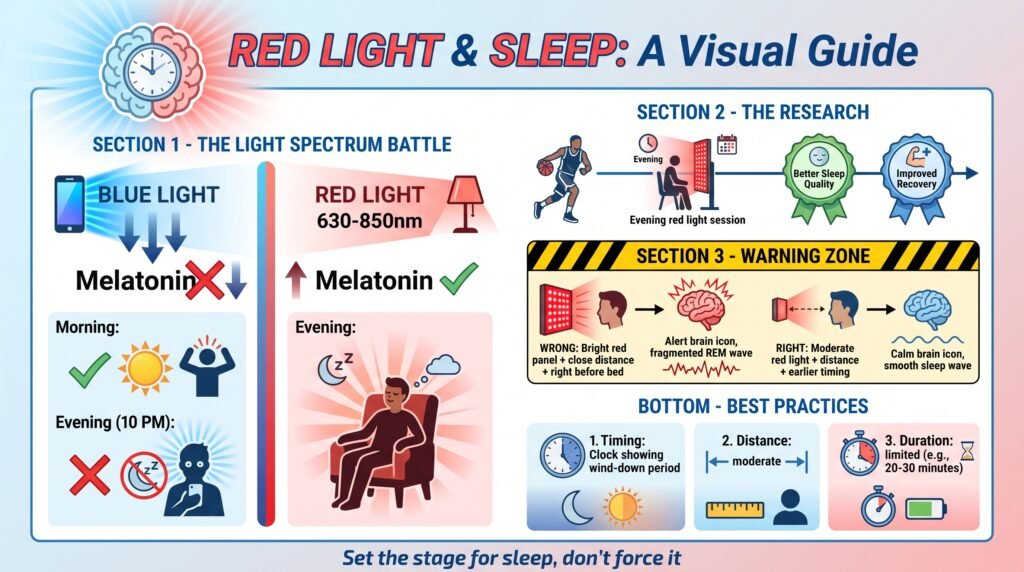
Blue light, the kind that comes from daylight and from your screens, hits photoreceptors in your eyes that directly suppress melatonin production. This is actually really useful in the morning because it helps you wake up and feel alert.
But in the evening?
Complete disaster. Every time you’re scrolling through your phone at 10 PM under bright white overhead lights, you’re basically telling your brain, “nope, still daytime, don’t you dare start the sleep process yet.”
Red light operates differently. Wavelengths in the 630 to 850 nanometer range, which is what most therapeutic red light devices use, don’t have the same melatonin-suppressing punch that blue light does.
Some research suggests that dim red light exposure in the evening might even support melatonin production and improve subjective sleep quality, particularly in people who’ve been using it consistently over time.
There was a study on female basketball players where they got red light sessions in the evening, and the results showed both improved sleep quality and better performance recovery. When your body can relax, reduce inflammation, and ease into the evening without harsh light blasting your circadian system, sleep naturally gets better.
But here’s the nuance that almost nobody talks about. Intensity and timing matter just as much as color.
One study found that red light exposure actually increased alertness and negative emotions in some participants, and it altered REM sleep fragmentation.
So, if you’re using a super bright red light panel at close range right before bed, you can still end up stimulating yourself instead of calming down.
The key is using red light strategically, earlier in your wind-down routine, at moderate distances, and for limited durations. Think of it as setting the stage for sleep rather than forcing sleep to happen.
Why Red Light Might Help Your Sleep Indirectly
One of the most underappreciated aspects of red light therapy for sleep is that it doesn’t work by directly sedating you. Instead, it helps with things that interfere with sleep, and by addressing those, sleep quality naturally improves.
Take pain, for example. If you’re lying in bed with a sore lower back or tight shoulders, you’re not falling asleep easily no matter how dark your room is.
Red and near-infrared light have been shown in many studies to reduce inflammation, improve circulation, and ease muscle tension.
When you use a red light panel for 10 to 15 minutes on areas that typically hold stress like your neck, shoulders, or lower back, you’re giving your body a chance to physically relax before bed. That physical relaxation translates into easier sleep onset and fewer middle-of-the-night wake-ups because of discomfort.
There’s also the nervous system angle. Red light therapy appears to influence mitochondrial function and cellular energy production, which sounds super technical but essentially means it helps your cells work more efficiently.
When your cells are functioning well, your entire system tends to be less stressed and more resilient.
Combine that with the psychological signal of a calming evening routine, and you’ve got a recipe for better sleep.
And then there’s the hormone piece. Women over 40, especially those dealing with perimenopause or menopause, often experience sleep disruptions tied to hormonal shifts.
While red light therapy isn’t going to replace hormone therapy or other medical interventions, some users report that the combination of reduced pain, better mood, and circadian support helps them navigate this transition more smoothly.
I’ve talked to women who say that their hot flashes still happen, but the overall quality of their sleep has improved enough that they feel more rested even when they do wake up during the night. That matters.
Setting Up Your Evening Red Light Protocol
Let me get practical. To use red light therapy to support sleep, you need a protocol that’s smart, not just a device sitting in the corner collecting dust.
Replace Your Evening Lighting
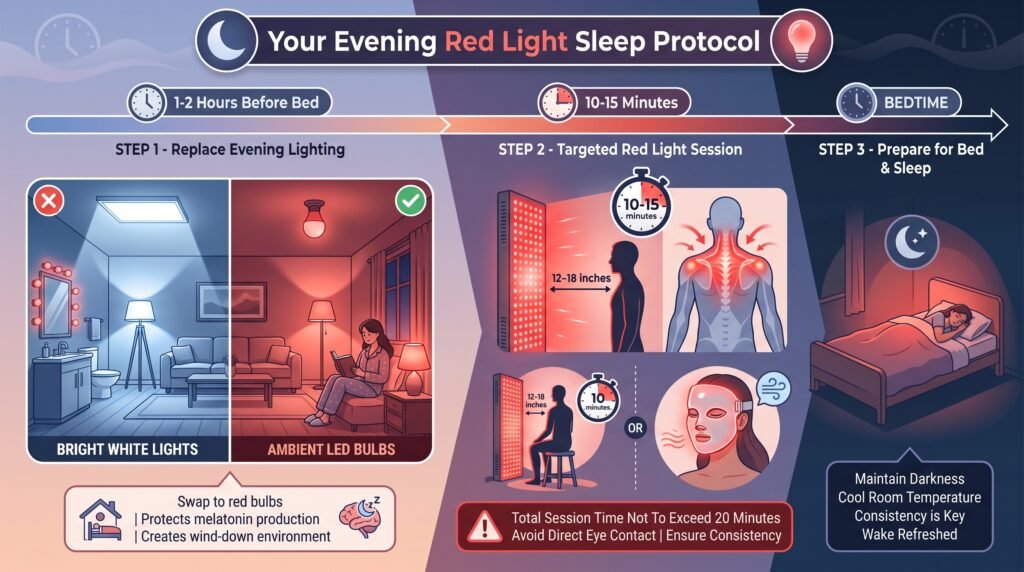
This is the simplest and most underrated step. About one to two hours before bed, switch off your bright overhead lights and swap in red light bulbs in the spaces you use most: your bedroom, bathroom, maybe your living room.
You’re not trying to create a nightclub vibe here.
You just want ambient lighting that won’t hammer your melatonin production.
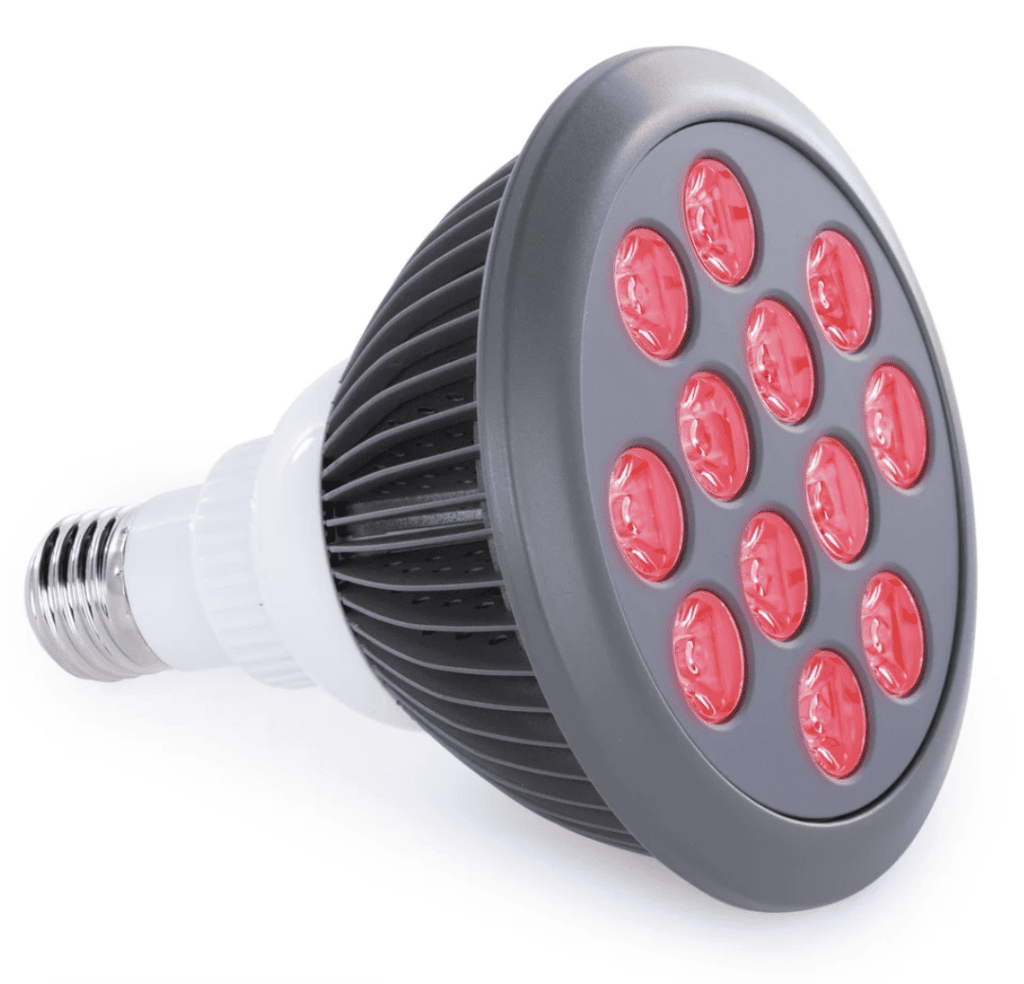
A quality red therapy bulb in a bedside lamp is perfect for reading, journaling, or just moving around your space without turning on harsh white LEDs. This alone can make a noticeable difference.
I started doing this about a year ago, and honestly, it was one of those changes that seemed too simple to matter but actually shifted how I felt in the evening.
My brain started associating that red-lit environment with winding down, and falling asleep became easier.
Targeted Red Light Session
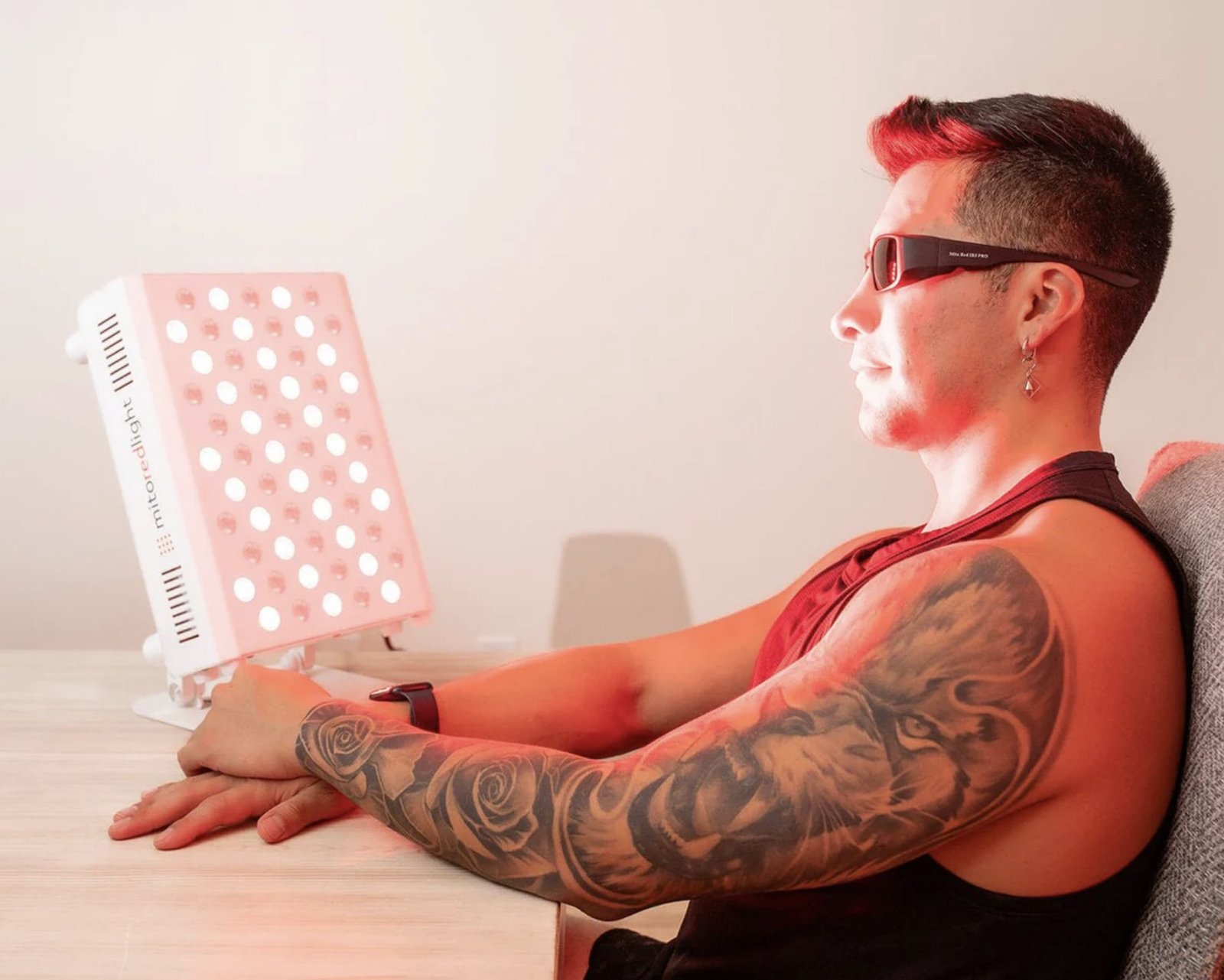
If you’ve invested in a panel like a MitoPRO or similar device, this is where you use it strategically. Position the panel so you’re standing or sitting about 12 to 18 inches away.
Set a timer for 10 to 15 minutes and expose the front of your body, focusing on areas that tend to hold tension.
For most people, that’s the upper back, neck, and shoulders. You can close your eyes or look away, you don’t need to stare directly into the panel.
You’re looking for gentle, supportive exposure that calms your system instead of revving it up.
If your panel has adjustable intensity, consider dialing it down for evening use.
Some people like to do a second 10-minute session with their back facing the panel, especially if they’re dealing with lower back tightness or general soreness. That’s fine, but I’d recommend keeping the total evening red light exposure under 30 minutes and finishing at least 60 to 90 minutes before you actually get into bed.
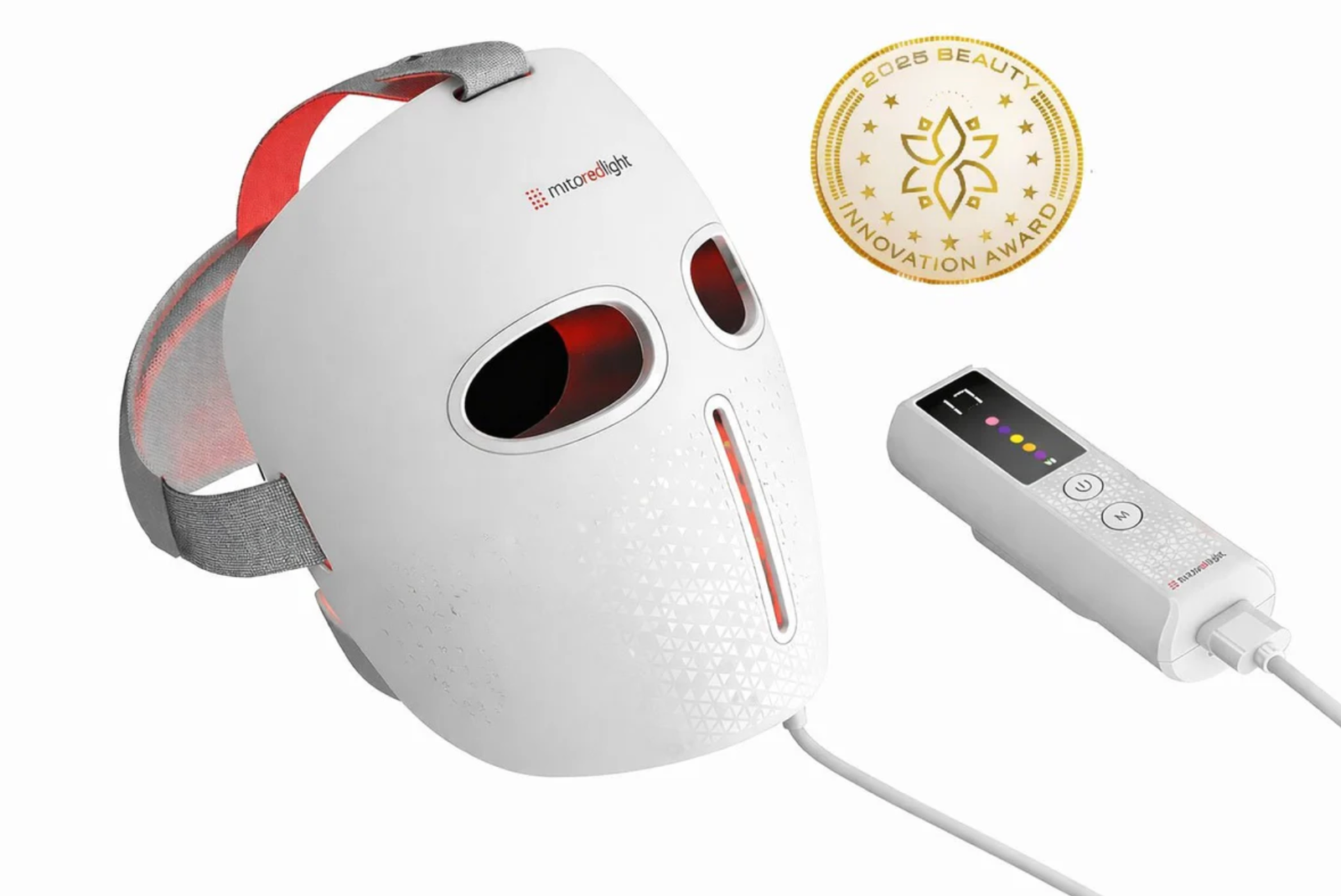
If you prefer a facial mask approach, that works too. Use a red light mask while you’re lying down or sitting comfortably, and pair it with slow breathing or a short meditation.
The combination of the gentle light and intentional relaxation can be really powerful for shifting your nervous system into rest mode.
Optional PEMF Stacking
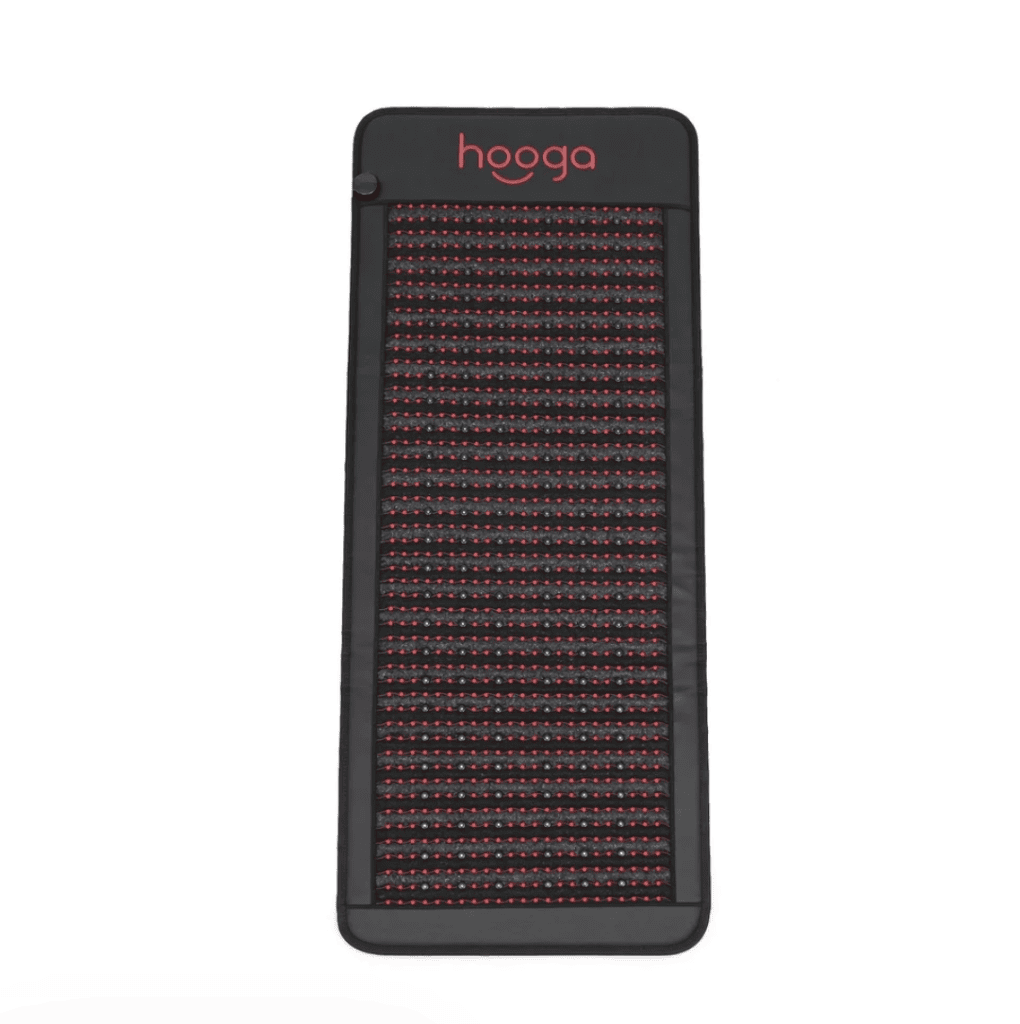
This is where things get interesting. Some PEMF mats, like the ones from Hooga, have programs specifically designed for deep relaxation.
These programs use low-frequency pulsed electromagnetic fields in the delta range, 1 to 4 hertz, which are associated with deep sleep and nervous system calming.
If you have access to one of these mats, you can lie on it for 10 to 20 minutes while your room is lit only by your dim red bulbs. Let the automatic PEMF cycle run without fiddling with settings.
Most mats default to 20 minutes on, 40 minutes off, which is perfect for a pre-sleep ritual.
The combination of gentle red ambient light and low-frequency PEMF creates a multi-layered approach that hits both the cellular level and the nervous system level.
It’s like giving your body permission to downshift in a way that just sitting on the couch scrolling your phone never will.
Go Fully Dark
This is the step people skip, and it’s the most important one. Once your red light session is done, turn everything off.
I mean everything.
No red bulbs left on, no nightlights, no standby LEDs glowing from your devices. Your bedroom should be as close to pitch black as possible when you’re actually sleeping.
Darkness is still the gold standard for sleep. Red light helps you get there, but it’s not a replacement for true darkness once you’re in bed. Use blackout curtains, cover any electronics, and if you need to, grab a good sleep mask.
This final step is what allows all the earlier work to pay off.
Choosing the Right Devices for Sleep-Focused Use
Not all red light devices are created equal, especially when it comes to sleep support. Let me walk you through what actually matters.
Full-Body Panels: MitoPRO Series
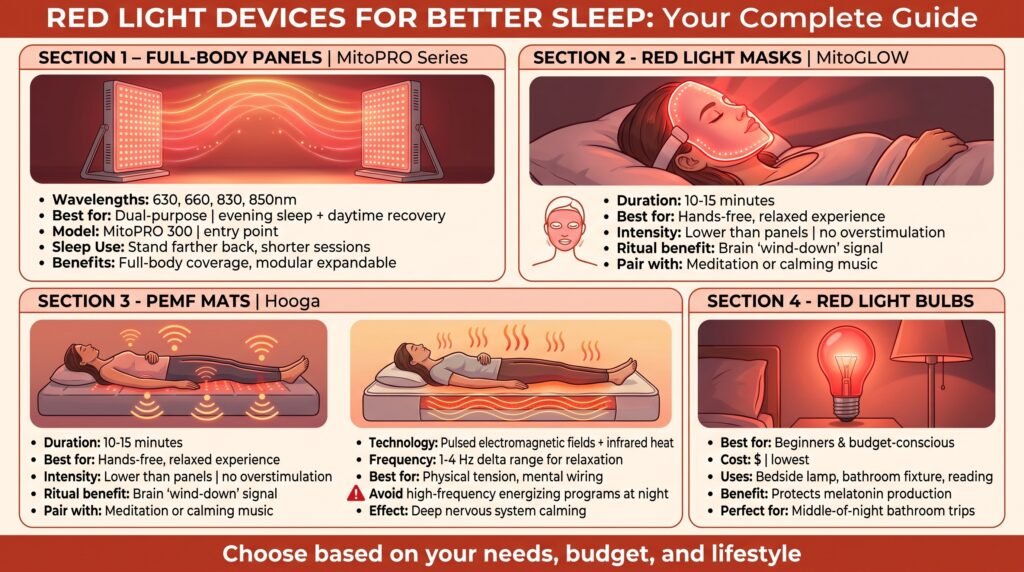
If you’re serious about red light therapy and want a device that can do double duty, support sleep in the evening and also provide recovery, skin, and pain benefits during the day, a multi-wavelength panel like the MitoPRO series is a solid choice.
These panels typically cover 630, 660, 830, and 850 nanometers, giving you both red and near-infrared coverage.
The MitoPRO 300 is a good entry point. It’s large enough to cover significant body area without being overwhelming, and the modular design means you can expand later if you want.
For sleep use specifically, the key is controlling distance and duration.
Stand farther back than you might for a daytime recovery session, and keep your evening sessions shorter and gentler. Click the button below to explore the MitoPRO panel for better sleep.
Red Light Masks
Facial masks, such as the MitoGLOW, are great for people who want a more relaxed, hands-free experience. You lie down, put the mask on, set a timer for 10 to 15 minutes, and just breathe.
The light intensity from most masks is lower than full panels, which actually makes them ideal for evening use.
They’re not going to over-stimulate you.
The psychological component here is underrated. Using a mask becomes this little self-care ritual that signals to your brain “okay, we’re winding down now.” Pair it with a guided meditation or some calm music, and you’ve got a mini spa experience that primes you for sleep. Click the button below to explore the MitoGLOW mask for better sleep.
PEMF Mats
PEMF mats are a different category entirely, but they’re worth mentioning because they complement red light therapy beautifully for sleep. The Hooga PEMF mats mix pulsed electromagnetic fields with infrared heat and sometimes photon elements.
The low-frequency programs, especially those in the 1 to 4 hertz delta range, are specifically designed to support deep relaxation and nervous system balance.
If you’re someone who struggles with feeling physically tense or mentally wired at night, adding a PEMF mat to your routine can be a game-changer. The grounding effect of lying on the mat while low-frequency pulses cycle through your body is hard to describe, but it’s deeply calming.
Just make sure you’re using a relaxation program, not an energizing one.
Some mats have higher-frequency settings meant for daytime alertness, and using those at night would obviously be counterproductive.
Red Light Lamps
Honestly, if you’re just starting or you’re on a budget, a simple red light therapy lamps is where you should begin. Swap it into your bedside lamp or your bathroom fixture, and you’ve instantly transformed your evening light environment. No complicated protocols, no expensive equipment, just a better spectrum of light that doesn’t wreck your melatonin.
You can read by them, you can use them while brushing your teeth, and they’re perfect for those middle-of-the-night bathroom trips where turning on a white light would completely wake you up.
Timing and Consistency
Here’s something I learned the hard way. Timing matters more than you’d think.
Early on, I was using my red light panel right before bed, like within 10 minutes of getting under the covers.
And I wasn’t sleeping better. In fact, I felt more alert.
Once I shifted to using it about 90 minutes before bed, everything changed. My body had time to process the session and settle into relaxation mode by the time I was actually trying to sleep. The research backs this up.
Most protocols recommend using therapeutic red light 30 to 120 minutes before bed, not immediately before.
That window gives your body time to respond without keeping you stimulated.
Consistency is the other piece. Red light therapy isn’t a one-and-done fix.
The studies that show sleep improvements typically involve daily or near-daily use over several weeks.
Your body needs time to adapt and respond. If you use it sporadically, you’re not going to see much benefit.
I aim for at least five evenings per week. Some weeks I hit all seven, some weeks it’s only three or four, but keeping that baseline consistency is what produces noticeable results over time.
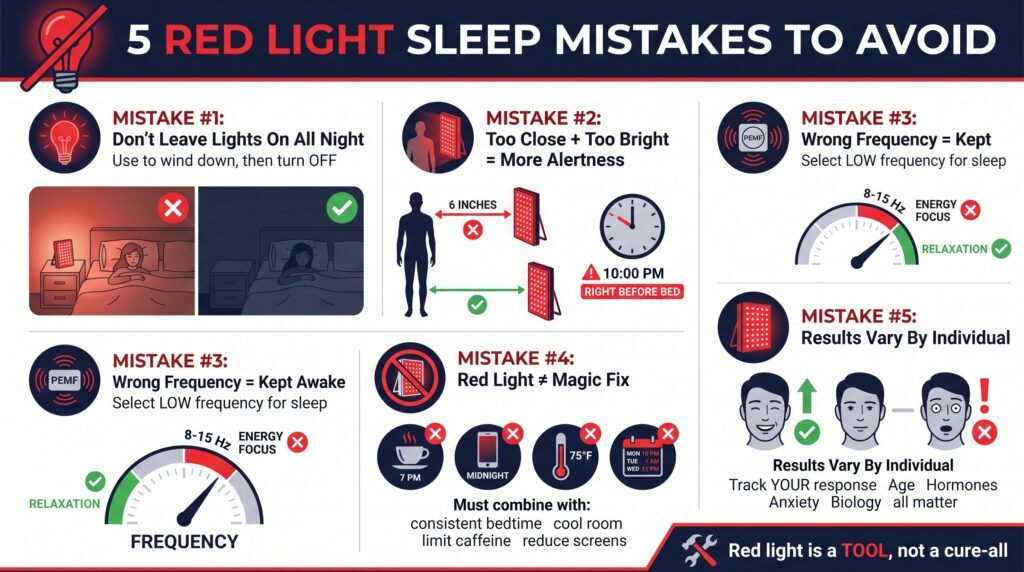
Avoiding the Most Common Red Light Sleep Mistakes
Let me save you some frustration by walking you through the mistakes I see constantly.
Leaving Red Lights On While You Sleep
Do not leave red lights on all night. Even red light, if it’s bright enough, can interfere with your sleep architecture.
Darkness is still the ideal state for sleeping.
Use red light to wind down, then turn it off:
Using High Intensity Too Close to Bedtime
If you’re standing six inches from a powerful panel for 20 minutes right before bed, you might actually increase alertness instead of promote relaxation. Keep a reasonable distance, dial down intensity for evening use, and finish your session well before you’re climbing into bed.
Ignoring PEMF Frequency Settings
If you’re using a PEMF mat, make sure you’re selecting a low-frequency relaxation program. Some mats have settings in the 8 to 15 hertz range designed for focus and energy.
Using those at night is going to keep you awake, not help you sleep.
Treating Red Light as a Substitute for Sleep Hygiene
Red light is a tool, not a cure-all. If you’re still drinking coffee at 7 PM, scrolling Instagram until midnight, and keeping your bedroom at 75 degrees, red light isn’t going to save you.
It works best as part of a comprehensive approach that includes all the basics: consistent bedtime, cool dark room, limited evening caffeine and alcohol, and minimal screen time.
Expecting Identical Results for Everyone
Some people respond beautifully to evening red light exposure. Others find it doesn’t move the needle much.
A small subset might even feel more alert or experience mood changes.
Your age, hormonal status, baseline anxiety, and personal biology all influence how you respond. Track your own experience honestly instead of assuming you’ll get the exact results someone else did.
Key Takeaways
Red light therapy supports sleep by helping your body transition into rest mode without suppressing melatonin like blue light does. Use it to replace harsh evening lighting, reduce pain and tension, and create a consistent wind-down ritual.
Keep sessions moderate in intensity and duration, finish them 60 to 90 minutes before bed, and always prioritize complete darkness once you’re actually trying to sleep. Track your results, adjust your protocol based on what you observe, and combine red light into a broader sleep hygiene strategy instead of treating it as a standalone fix.
Want to explore more devices? See our full list of red light therapy devices for at-home use on our review page here.
Frequently Asked Questions
Does red light therapy really help you sleep?
Red light therapy can support better sleep by helping you wind down in the evening without suppressing melatonin like blue light does. It can also reduce pain and tension that might keep you awake.
The key is using it at the right time, typically 60 to 90 minutes before bed, and then sleeping in complete darkness.
Can I use red light therapy every night?
Yes, daily use is actually recommended for best results. Most studies showing sleep improvements involve consistent use over several weeks.
Aim for at least five evenings per week to see noticeable benefits.
What red light wavelength is best for sleep?
Red wavelengths in the 630 to 660 nanometer range and near-infrared in the 830 to 850 nanometer range are both effective. Most quality panels use a combination of these wavelengths to provide comprehensive benefits.
Should I leave a red light on all night?
No. This is a common mistake. Red light should be used during your wind-down routine before bed, then turned off completely.
Sleep should happen in total darkness for best results.
How far should I sit from a red light panel?
For evening use, sit or stand about 12 to 18 inches away from the panel. This is farther than you might use for daytime recovery sessions, which helps keep the stimulation gentle and supportive of relaxation.
Can red light therapy help with insomnia?
Red light therapy can help address some causes of insomnia, like pain, tension, and circadian rhythm disruption. However, it works best as part of a comprehensive sleep hygiene approach rather than as a standalone treatment for chronic insomnia.
Is PEMF or red light better for sleep?
They work differently and can be used together. Red light helps with pain relief and gentle evening stimulation that doesn’t suppress melatonin. PEMF mats using low-frequency settings (1-4 Hz) can help calm the nervous system.
Many people find combining both produces the best results.
Can I use red light therapy if I have a sleep disorder?
Red light therapy is generally safe and may help support better sleep patterns. However, if you have a diagnosed sleep disorder, work with your healthcare provider to develop a comprehensive treatment plan that may include red light as one component.
This article includes affiliate links. If you click through and make a purchase, I may receive a small commission. This helps support the site and allows me to keep creating helpful content at no extra cost to you.