📌 Quick Summary
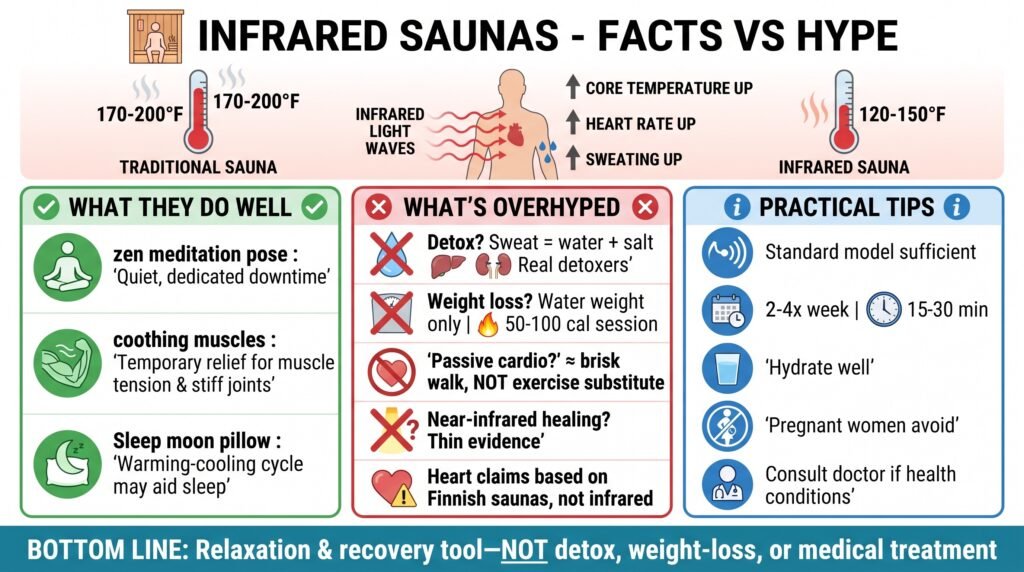
Infrared saunas heat your body directly with light-based energy, so the air stays cooler (120-150°F) than in traditional saunas (170-200°F). Your core temperature, heart rate, and sweating still rise as they would in any hot environment.
What they do well
- Relaxation: The quiet, dedicated downtime is often the biggest benefit.
- Comfort: Heat can temporarily ease muscle tension and joint stiffness, but it’s a comfort measure, not a treatment.
- Sleep: Warming up and cooling down may help signal your body to wind down, though it’s no cure for insomnia.
What’s overhyped
- Detox: Sweat is mostly water and salt. Your liver and kidneys do the real detoxing.
- Weight loss: The pounds lost are water and come back when you rehydrate. A session burns only about 50-100 extra calories.
- “Passive cardio”: Your heart rate rises like a brisk walk, but it’s not a substitute for exercise.
- Near-infrared claims: Evidence for special healing benefits is thin.
Heart health: Most heart-related research is on traditional Finnish saunas, not infrared, so don’t assume the findings carry over. People with unstable angina, a recent heart attack, severe valve disease, or uncontrolled hypertension should be cautious.
Practical tips
- A standard far-infrared unit is fine for most people. Full-spectrum costs more without clearly better results.
- Aim for 2-4 sessions per week, 15-30 minutes each, and stay hydrated.
- Pregnant women should avoid saunas, and anyone with health conditions should check with a doctor first.
Bottom line: Infrared saunas are a pleasant relaxation and recovery tool, not a detox, weight-loss, or medical treatment.
🧾 Table of Contents
- Quick Summary
- Introduction
- How Infrared Saunas Actually Work
- The Sweat Question and Detox Claims
- Circulation, Blood Pressure, and Heart Health
- Muscle Soreness, Joint Stiffness, and Pain Relief
- Weight Loss and Metabolic Effects
- Infrared Sauna Suggestions
- Frequently Asked Questions
Introduction
For years I’ve watched friends and clients swear by their infrared saunas, raving about feeling lighter, sleeping better, or just melting away stress after a long day. I’ll be honest, I was skeptical at first.
The marketing can sound like pure hype, but after digging into what these units actually do versus what they claim to do, I’ve landed on a balanced view that I think will help you decide whether one makes sense for your life.
There are plenty of factors that affect how your body responds to infrared heat. Things like session length, hydration, your baseline health, and even the type of unit you choose all matter more than most people realize.
With just a few insights into how these saunas work and what the evidence really says, you can use them safely and get the most out of the experience without falling for overblown promises.
How Infrared Saunas Actually Work
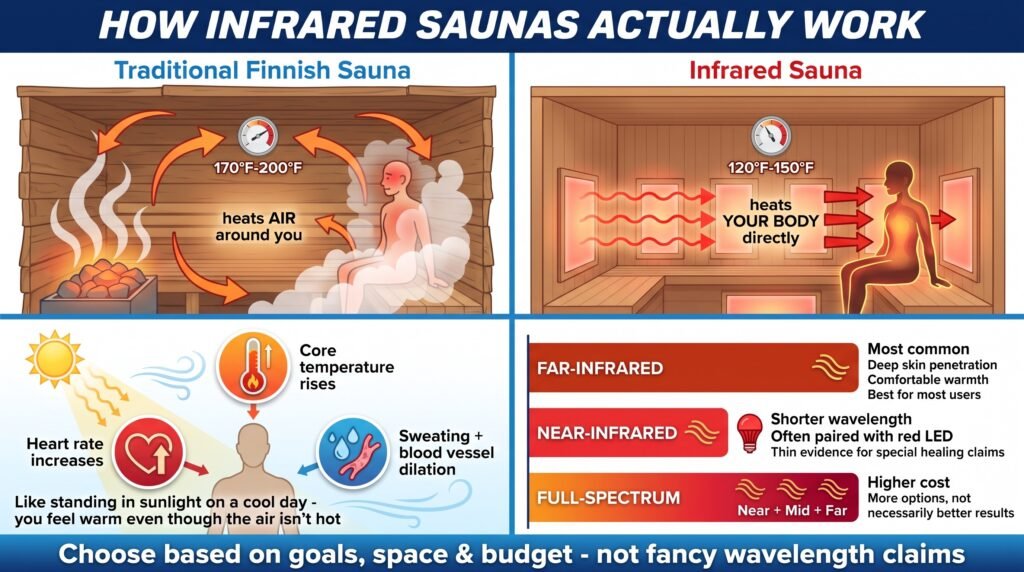
An infrared sauna operates differently from the traditional Finnish-style sauna you might picture at the gym. Instead of heating the air around you to extremely high temperatures, infrared units use light-based energy to warm your body more directly.
Think of it like standing in sunlight on a cool day. You feel warm even though the air temperature isn’t scorching.
This direct heating method means the ambient air inside an infrared cabin usually stays between 120°F and 150°F, compared to the 170°F to 200°F range common in traditional saunas. That lower air temperature can make the experience more tolerable if you’re sensitive to intense heat, but it doesn’t mean you’re immune to overheating or dehydration.
Your core temperature still rises, your heart rate increases, and your body starts the same sweating and blood-vessel-dilation responses it would in any hot environment.
The wavelengths matter, too. Far-infrared is the most common type in consumer cabins and penetrates the skin to create a deep, comfortable warmth that reaches beneath the surface layers.
Near-infrared operates at shorter wavelengths and is sometimes combined with visible red-light LEDs, which appeals to buyers interested in light therapy alongside heat.
Some manufacturers claim near-infrared has unique wound-healing or cellular benefits, but the evidence supporting those specific claims stays thin when you’re talking about sauna use as opposed to targeted medical-grade light therapy.
Full-spectrum units blend near, mid, and far wavelengths, offering variety but at a higher price point. The real question isn’t which wavelength sounds fanciest.
The real question is which setup fits your goals, space, and budget while delivering consistent, safe heat.
Most people will do perfectly fine with a standard far-infrared unit. The added expense of full-spectrum might give you more options to play with, but it won’t necessarily translate into better results unless you have very specific goals that align with near- or mid-infrared wavelengths.
What Happens Inside Your Body During a Session
When you settle onto the bench and the infrared panels begin to glow, your skin temperature starts climbing within the first couple of minutes. Blood vessels near the surface dilate to help dissipate heat, which increases circulation in those areas.
Your heart works harder to pump blood through this expanded network, and your sweat glands kick into high gear.
Within five to ten minutes, you’re likely to feel warmth spreading across your shoulders, back, and legs, followed by beads of perspiration forming on your forehead, chest, and arms.
This cardiovascular response resembles what happens during light physical activity. Your heart rate might climb by 20 or 30 beats per minute, which roughly mimics a brisk walk around the neighborhood.
Some people describe it as a passive cardio workout, but that comparison has real limits.
You’re not loading your muscles, challenging your balance, or building the kind of fitness adaptations that come from actual exercise. The heat stress is real, but calling it a workout replacement oversells what’s happening.
Your heart is working harder, yes, but without the muscular, metabolic, and neurological demands that exercise provides.
Your body also shifts into a relaxation mode if you allow it. Sitting quietly in a warm, dimly lit space can lower your perceived stress, slow your breathing, and give your mind a break from screens and notifications.
For many users, this mental reprieve turns out to be the most valuable benefit. This happens not because infrared light has magical properties, but because the ritual creates space for stillness.
In a culture where we’re constantly plugged in and rushing from one task to the next, having a dedicated twenty-minute window where you do nothing but sit and breathe can feel transformative.
The Sweat Question and Detox Claims
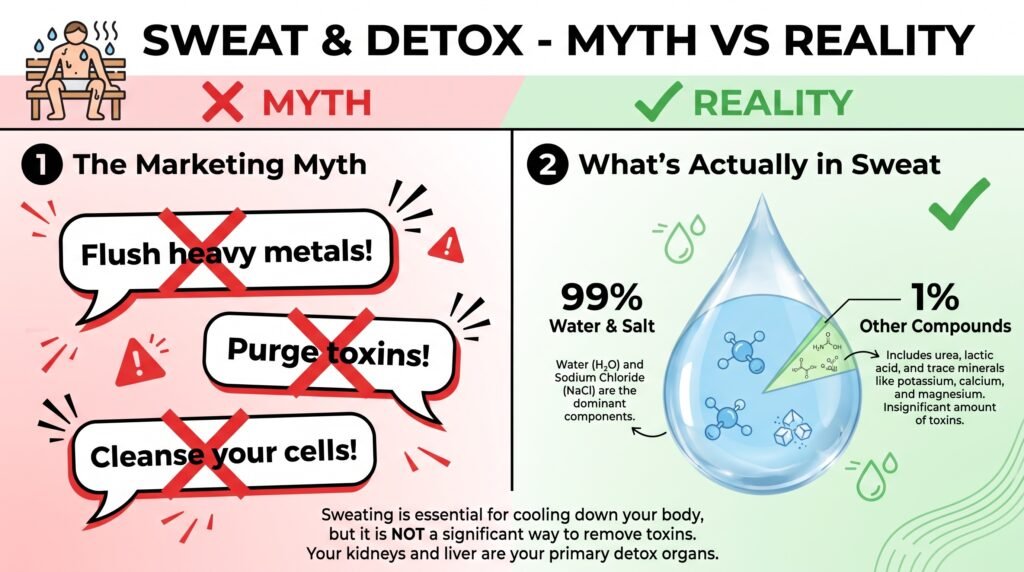
One of the most persistent myths around infrared saunas is that they’re powerful detoxification machines. You’ll see marketing copy promising to “flush heavy metals,” “purge environmental toxins,” or “cleanse your cells.” The truth is far less dramatic.
Sweat is mostly water and salt, with trace amounts of urea, lactate, and tiny quantities of other substances. Your liver, kidneys, lungs, and digestive system handle the large majority of waste processing.
A sauna session can make you sweat heavily, sometimes a pint or more, but the volume of sweat doesn’t correlate neatly with toxin removal.
If you’re hoping to eliminate lead, mercury, or pesticide residues through your pores, you’re going to be disappointed. The research on sweat composition simply doesn’t support those sweeping claims. Some studies have detected trace amounts of certain substances in sweat, but the quantities are so small that they’re physiologically irrelevant when compared to what your kidneys and liver handle daily.
That doesn’t mean sweating is useless. Sweating cools your body, helps regulate your core temperature, and can feel really satisfying after you towel off and take a cool shower.
Some people report feeling lighter or clearer afterward, which might reflect temporary fluid loss, relaxation, reduced muscle tension, or the placebo effect.
All of those are fine outcomes.
They can make your day better and help you feel more grounded. But they’re not the same as detoxification in any clinical sense, and pretending otherwise sets up false expectations that lead to disappointment.
Circulation, Blood Pressure, and Heart Health
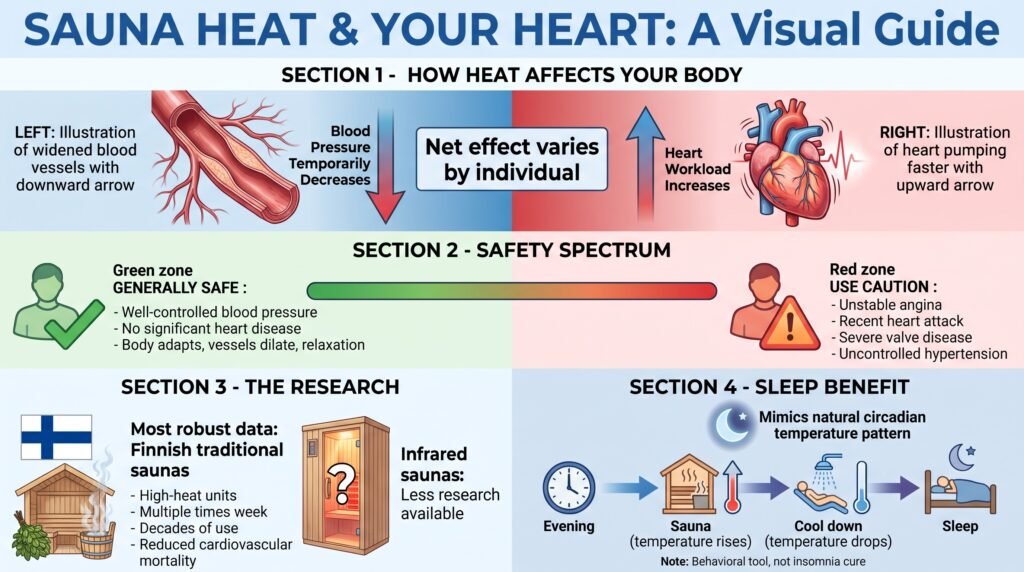
Heat causes your blood vessels to widen, which can temporarily lower blood pressure in some people. This effect might feel pleasant and is part of why sauna bathing is associated with cardiovascular benefits in observational studies conducted in Finland and other Scandinavian countries.
However, the same heat exposure also increases the workload on your heart, so the net effect varies from person to person.
If you have well-controlled blood pressure and no significant heart disease, moderate sauna use is generally well tolerated. Your body adapts to the heat stress, your vessels dilate, and you might even feel a pleasant sense of relaxation wash over you as your blood pressure dips slightly.
But if you have unstable angina, a recent heart attack, severe valve disease, or uncontrolled hypertension, the added cardiovascular demand could be risky. The increased heart rate and circulatory changes might push your system beyond what it can safely handle, especially if you’re not used to heat exposure or if your condition is poorly managed.
The most robust long-term data on saunas and heart health come from studies of traditional Finnish saunas, not infrared models, so it’s important not to assume that every finding applies equally to every type of unit. The Finnish studies show impressive correlations between frequent sauna use and reduced cardiovascular mortality, but those participants were using high-heat traditional saunas many times per week for decades.
Infrared saunas might offer similar benefits, but we don’t have the same depth of research yet.
One thing I find really interesting is how some people use infrared heat to support their evening routine. Warming up and then cooling down can help signal to your body that it’s time to wind down, which may improve sleep quality.
This follows the natural circadian pattern where your core temperature drops in the evening as you prepare for sleep. By artificially raising your temperature in the sauna and then allowing it to fall afterward, you’re mimicking that biological signal.
This isn’t a cure for insomnia, but it’s a practical behavioral tool that works for some people who struggle to transition from the chaos of their day into a restful state.
Muscle Soreness, Joint Stiffness, and Pain Relief
Heat has long been used to ease tight muscles and stiff joints. An infrared sauna delivers that warmth in a way that feels gentle and enveloping, which can make it appealing after a tough workout or a long day on your feet.
Some small studies have looked at infrared therapy for chronic pain conditions like rheumatoid arthritis, fibromyalgia, and lower back pain, with mixed but occasionally promising results.
The challenge is that the evidence stays thin. Many studies are small, short-term, or lack rigorous controls. The relief people feel might come from the heat itself, the relaxation response, reduced stress hormones, or simply lying still in a quiet space for twenty minutes without interruption.
That doesn’t make the relief less real. If you walk into a sauna with tense shoulders and walk out feeling looser and more comfortable, that’s a legitimate benefit.
But it does mean you shouldn’t expect infrared heat to replace physical therapy, medication, or a proper diagnosis.
I think of infrared saunas as a comfort measure as opposed to a treatment. If you have chronic joint pain from arthritis or old injuries, a 20-minute session might help you feel looser and more comfortable for a few hours.
The warmth increases blood flow to the affected area, which can temporarily reduce stiffness and make movement easier. You might find that you can stretch more comfortably after a session or that you sleep better because you’re not waking up every time you shift positions.
But the sauna won’t heal damaged cartilage, reverse arthritis, or fix structural problems in your spine. It might give you a window of relief that makes movement easier, and that window can be valuable.
Just don’t mistake temporary comfort for a cure.
Weight Loss and Metabolic Effects
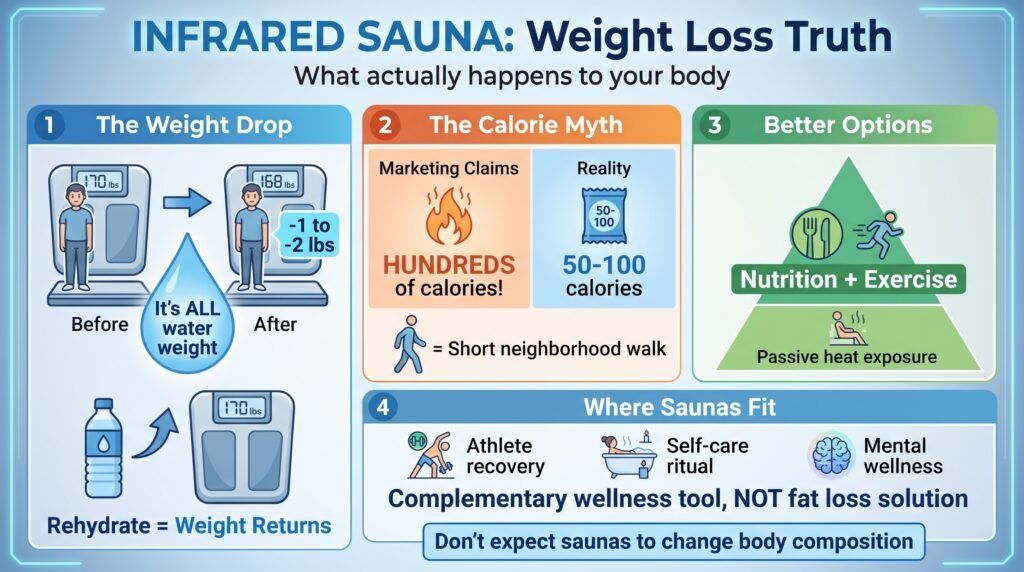
You’ll lose weight after a sauna session, but almost all of it is water. Step on the scale before and after, and you might see a drop of one or two pounds.
Rehydrate properly, and that weight comes right back.
This temporary fluid loss is not fat loss, and treating it as such sets up false expectations that lead to frustration. Your body needs that water.
Replacing it is not optional.
Some infrared sauna companies promote the idea that a session burns hundreds of calories because your heart rate increases. While your metabolic rate does rise slightly, the calorie expenditure is modest compared to actual exercise.
A 30-minute session might burn an extra 50 to 100 calories, which is roughly equivalent to a short walk around your neighborhood. That’s not nothing, but it’s also not a meaningful contribution to fat loss if you’re comparing it to real physical activity.
If your primary goal is weight management, you’re better off focusing on nutrition and regular physical activity as opposed to relying on passive heat exposure.
That said, infrared saunas can fit into a broader wellness routine without being the centerpiece. Athletes sometimes use them as part of their recovery protocol, and people trying to build healthier habits might find that a sauna session reinforces their commitment to self-care.
The ritual of setting aside time for yourself, creating a quiet space, and doing something that feels restorative can have psychological benefits that support your overall health goals. Just don’t expect the sauna to do the heavy lifting when it comes to changing your body composition.
Infrared Sauna Suggestions

Sunlighten’s Lineup
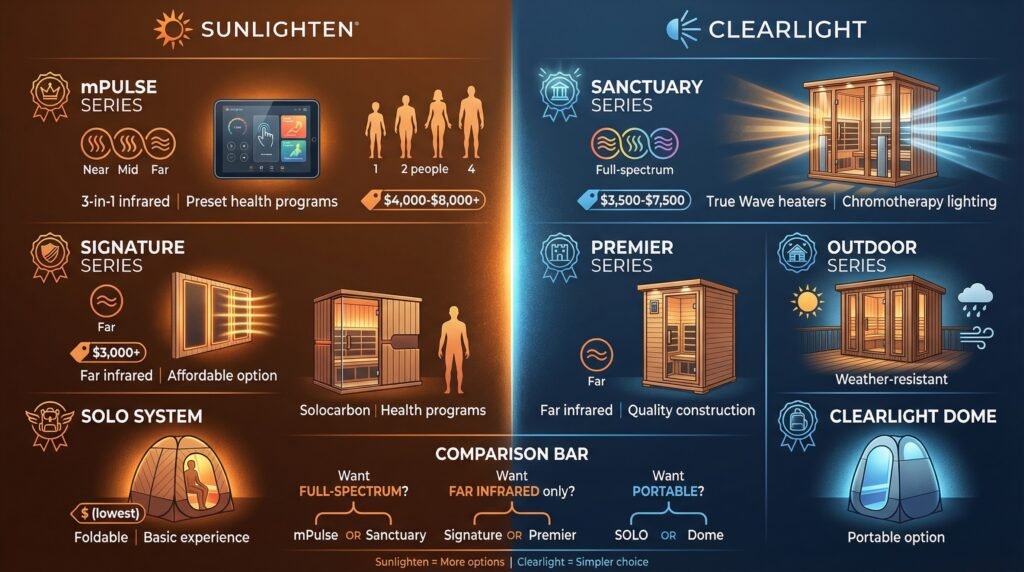
Sunlighten offers three main collections, and honestly, it can get confusing pretty fast.
The mPulse series is their flagship line. These units have the 3-in-1 infrared technology with near, mid, and far wavelengths.
You get tablet controls where you can pick preset health programs (like “detox” or “relaxation,” or “cardiovascular”).
They come in different sizes, from the Solo (one person) up to the Amplify 4 (four people).
The Signature series uses far infrared only. It’s positioned as their more affordable option, but it still has decent build quality.
The heaters are their Solocarbon panels.
Then there’s the SOLO system, which is basically a portable sauna tent setup. It’s way cheaper, and you can fold it up, but it’s obviously not the same experience as a full wooden cabin.
Price-wise, the mPulse models run anywhere from around $4,000 to $8,000+, depending on size. The Signature models start lower, maybe $3,000-ish for smaller units.
Clearlight’s Lineup
Clearlight keeps things a bit more straightforward with their naming (thank god).
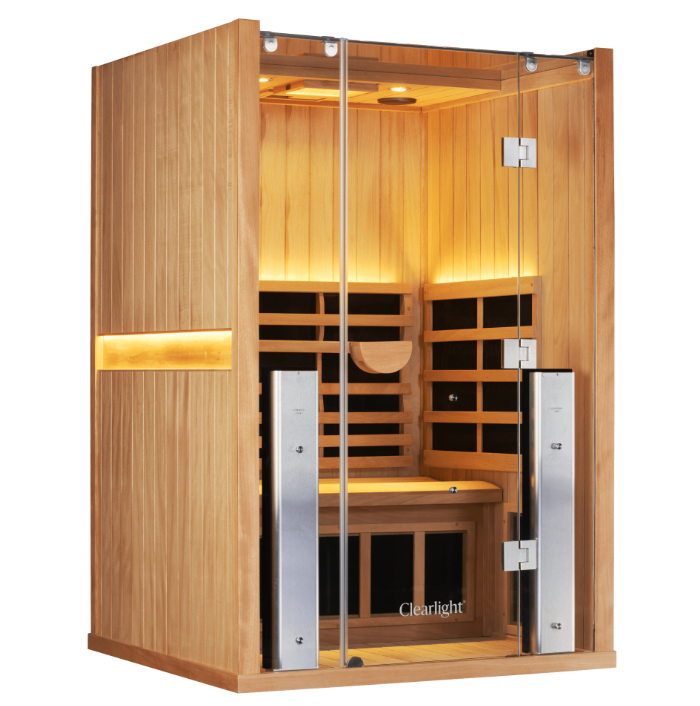
The Sanctuary series is their top-tier line. These are full-spectrum saunas (near, mid, and far infrared) with their True Wave Full Spectrum heaters.
The cabins look really nice, with solid wood construction, and they emphasize the medical-grade chromotherapy lighting.
The Premier series uses far infrared only with True Wave far infrared heaters. Still quality construction, but without the near and mid wavelengths.
They also offer the Outdoor series, which are weather-resistant models you can actually put on your deck or patio. That’s pretty cool if you have the space and want to use it outside.
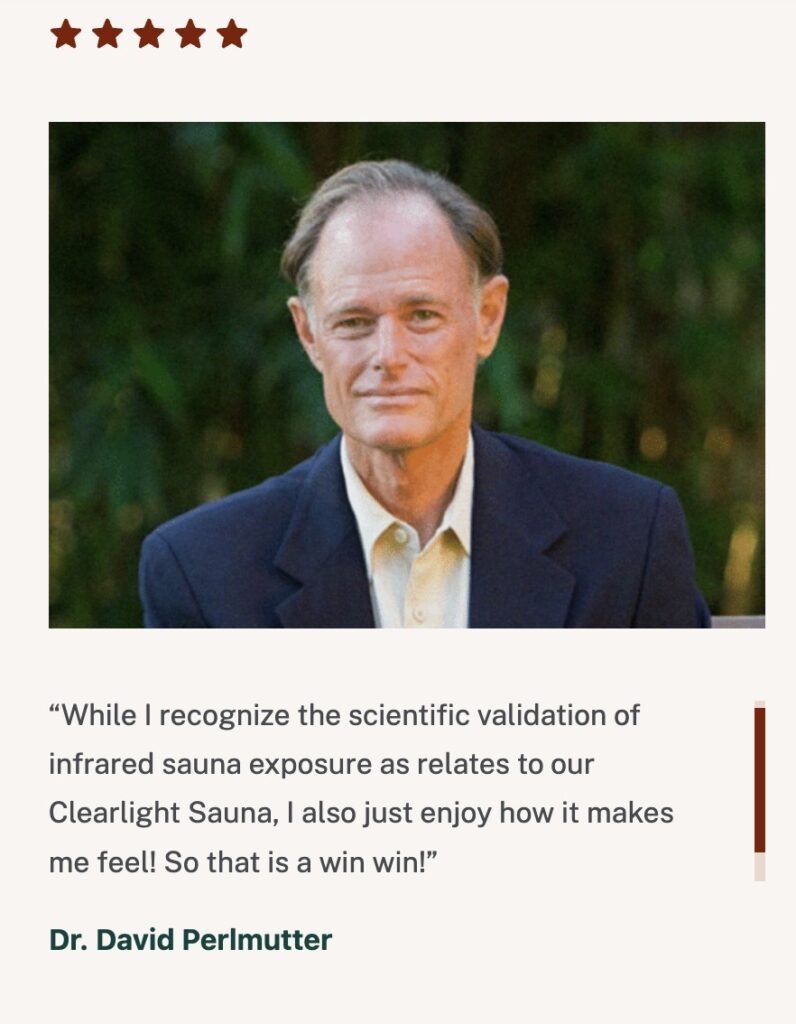
Clearlight Saunas – Doctor & Wellness Experts Approved
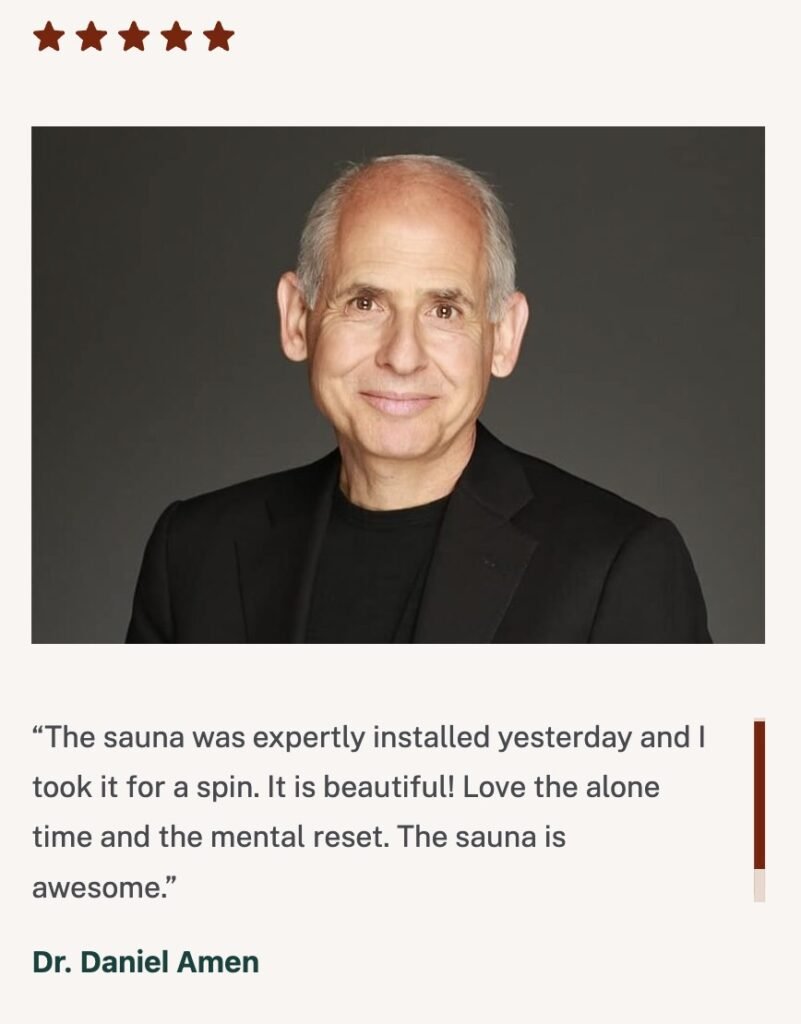

Sunlighten’s Trusted by 200+ wellness experts



Final Recommendation
The Clearlight Sauna vs Sunlighten decision comes down to what you actually care about.
Go with Clearlight if ultra-low EMF exposure is your priority. To save a few hundred bucks on a comparable model, Clearlight usually wins.
Their customer service appears more consistent.
The Sanctuary full-spectrum models give you all three wavelength types at a slightly better price than mPulse.
The Clearlight Sanctuary 2 (two-person model) sits in a sweet spot for most people, with enough room to stretch out, full-spectrum heating, solid build quality, and typically under $ 6,000.
You can see the full Clearlight Sanctuary lineup and current pricing here, worth checking because they discount different models throughout the year.
Go with Sunlighten if you want the most control over your infrared wavelengths. The mPulse tablet interface lets you geek out on specific programs for different health goals.
If you like having more tech and customization options, Sunlighten delivers.
The Sunlighten mPulse Believe (their 2-person model) competes directly with the Clearlight Sanctuary 2. You’ll pay a bit more but get more wavelength control.
For most people, though, the practical differences in results between these two brands are probably minimal. Both make quality infrared saunas that work.
The far infrared does what it’s supposed to do: makes you sweat, helps with muscle recovery, and feels relaxing.
If you’re on a tighter budget, look at the far-infrared-only models from either brand. The Clearlight Premier series or Sunlighten Signature series will run you $1,500-$2,500 less than the full-spectrum versions.
You lose the near and mid wavelengths but still get the core benefits.
For general wellness, muscle recovery after workouts, and that post-sauna relaxed feeling, both brands deliver. Clearlight edges ahead on value and EMF levels.
Sunlighten edges ahead on tech features and wavelength control.
If you’re recovering from chronic health issues or really want to improve specific wavelengths for skin conditions or pain management, Sunlighten’s mPulse might be worth the extra cost for that added control.
Either way, you’re getting a solid infrared sauna that should last for years. The hardest part is just picking one and ordering it.
Compare current models and pricing from both brands here; prices fluctuate, and both companies run sales, so it’s worth checking before you buy. See the links below to get started.
Frequently Asked Questions
Are infrared saunas better than traditional saunas?
Neither type is objectively better. Traditional saunas operate at higher temperatures and often include humidity, which creates a more intense experience.
Infrared saunas use lower air temperatures and direct heat, which some people find more comfortable.
The choice depends on your heat tolerance, health status, and personal preference.
How often should I use an infrared sauna?
Most people benefit from two to four sessions per week, each lasting 15 to 30 minutes. Daily use is possible if you keep sessions short and stay well hydrated, but there’s no evidence that more frequent use delivers better results.
Listen to your body and adjust based on how you feel.
Can infrared saunas help with arthritis pain?
Some people with arthritis report temporary relief from joint stiffness and discomfort after infrared sauna sessions. The warmth increases blood flow and can move feel easier for a few hours.
However, saunas do not treat the underlying cause of arthritis and should be used as a comfort measure alongside medical treatment, physical therapy, and exercise.
Do infrared saunas actually detox your body?
No. Sweat contains mostly water and salt, with trace amounts of other substances. Your liver and kidneys handle the large majority of waste processing and toxin removal.
While sweating is a normal bodily function, it does not meaningfully eliminate toxins or heavy metals.
Will using an infrared sauna help me lose weight?
Weight loss from a sauna session is almost entirely water, which returns as soon as you rehydrate. Calorie burn from an increased heart rate is modest, usually 50 to 100 calories per session.
Infrared saunas are not effective tools for fat loss and should not replace diet and exercise.
Are infrared saunas safe during pregnancy?
Pregnant women should avoid saunas in general because elevated core temperature, especially during the first trimester, can pose risks to fetal development. Consult with your doctor before using any sauna if you are pregnant or trying to conceive.
This article includes affiliate links. If you click through and make a purchase, I may receive a small commission. This helps support the site and allows me to keep creating helpful content at no extra cost to you.