Quick Summary
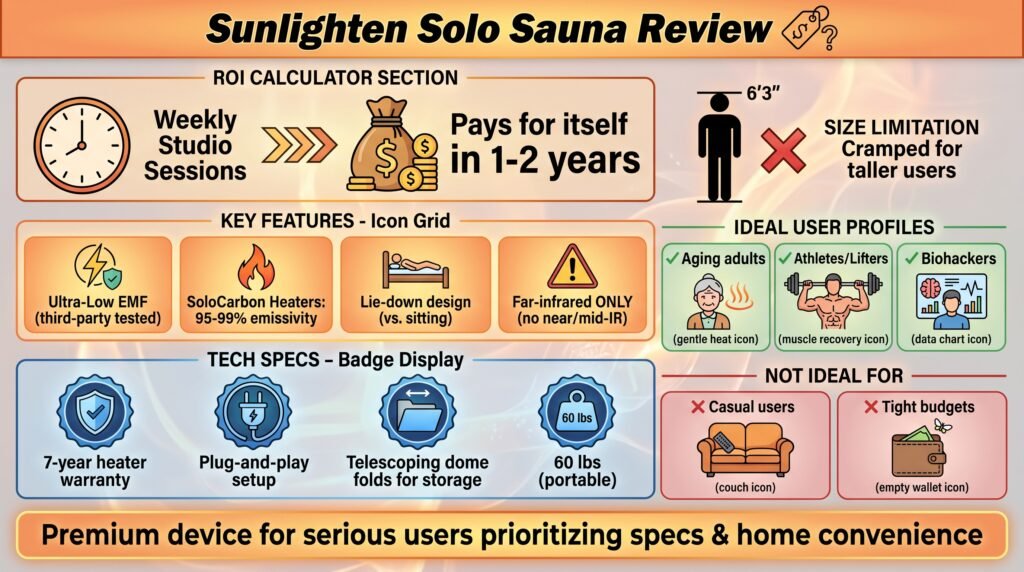
The Sunlighten Solo Sauna makes sense for specific situations. If you’re already doing weekly infrared sessions at a studio and you’re sick of the hassle and cost, this could pay for itself within a year or two.
The big selling points seem to be the ultra-low EMF testing, the SoloCarbon heater panels with high emissivity ratings, and the fact that you lie down instead of sitting.
But it’s far infrared only, so if you want near/mid infrared or red light in the same device, you’d need to look at Sunlighten’s cabin models or other brands entirely.
The Solo uses their patented SoloCarbon heaters with 95-99% emissivity, has third-party EMF testing showing ultra-low levels, and comes with a 7-year heater warranty. Setup is plug-and-play with no installation needed, and the telescoping dome folds down for storage.
People over about 6’3″ report feeling cramped. The combined weight is around 60 pounds, so it’s portable but not exactly lightweight if you’re moving it around constantly.
For aging adults wanting gentle heat routines at home, lifters focused on recovery protocols, or biohackers who prioritize specs and testing data, the Solo fits pretty well. For casual users or people on tight budgets, it’s probably overkill.
If you’re thinking about buying one, check for current promotions before paying full price. Fill out their short contact form to get pricing. Click the button below to get started.
Table of Contents
- Quick Answer
- Brand Overview
- Quality and Performance Testing
- Pricing and Value Assessment
- How Does the Sunlighten Solo Sauna Compare to Alternatives?
- Pros and Cons Summary
- Final Recommendation
- Frequently Asked Questions
Brand Overview
Sunlighten has been around since 1998, and they basically only do infrared saunas. They hold a bunch of global patents, including their SoloCarbon heater technology.
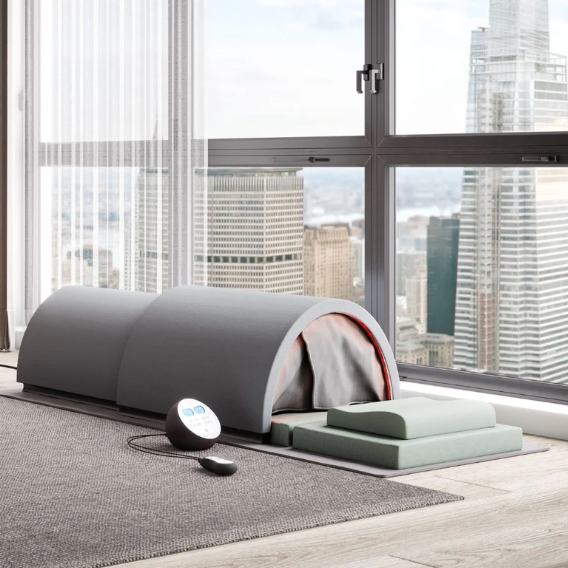
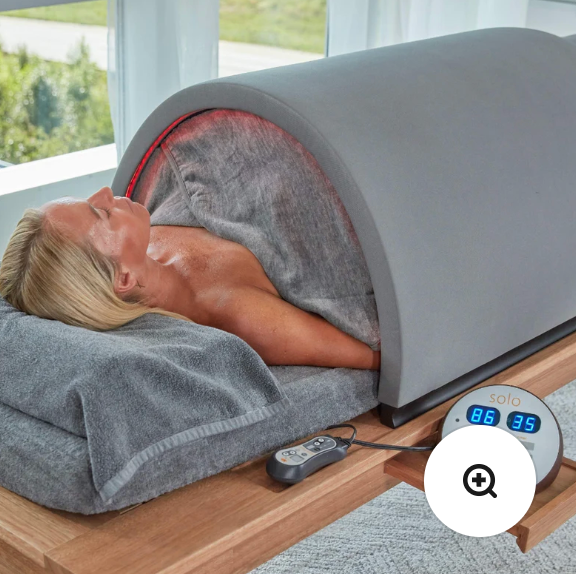
The Solo System is their portable, one-person option. You lie on a padded mat (the SoloPad) and pull the dome over your body up to your neck.
The dome has 5 SoloCarbon heaters, and if you get the SoloPad, it has 4 more, giving you 9 zones of coverage.
Max temperature hits 150°F. The dome is made from bamboo carbon material with Celliant/cotton fabrics.
Everything is supposed to be non-toxic and low-VOC, and they’ve got third-party EMF testing showing levels lower than most household devices.
The unit includes chromotherapy lighting with 16 colors, 4 modes, and adjustable brightness. Warranty is typically 7 years on heaters, 3 years on controllers, and 1 year on fabric and foam.
Sunlighten also makes full-sized cabin saunas like the mPulse, Signature, and Amplify lines. Those add mid- and near-infrared, and some models include red light therapy.
The Solo is the compact, far infrared-only option for people with space constraints or who want a lower entry price.
The key thing to understand is that the Sunlighten Solo Sauna uses far infrared exclusively. It doesn’t give you the full spectrum that some of their cabin models offer.
Quality and Performance Testing
Build quality and design
From what many independent reviewers say, the Solo feels more like a shrunken cabin sauna than a typical folding tent. The build quality is noticeably higher than budget options.
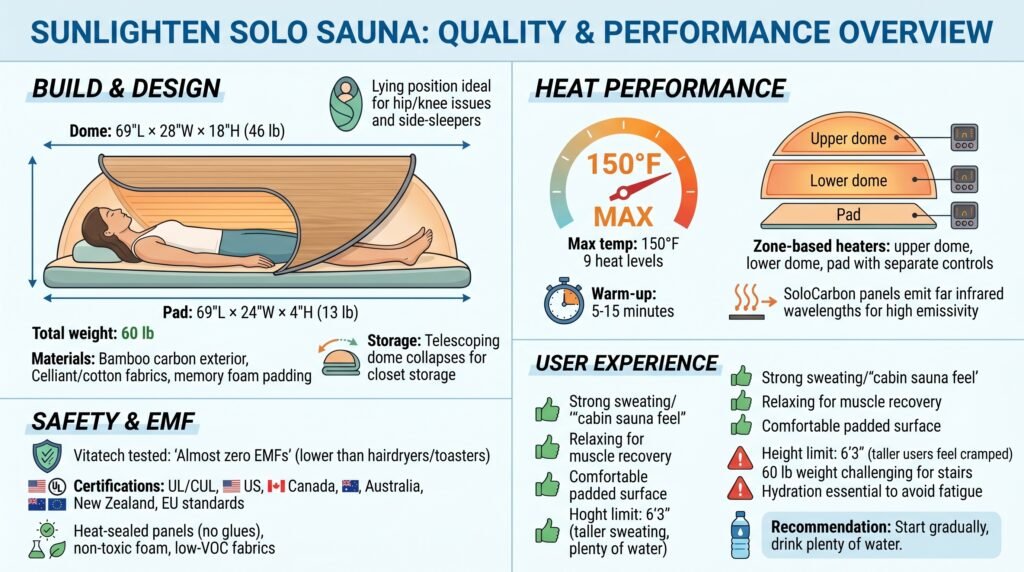
The dome measures roughly 69″ long x 28″ wide x 18″ high. The SoloPad is about 69″ x 24″ x 4″. Total weight is just under 60 pounds (dome around 46 lb, pad around 13 lb).
Materials include bamboo carbon exterior, Celliant/cotton fabrics, and memory-foam-style padding. Everything is supposed to be non-toxic with low off-gassing.
The telescoping dome nests into itself for storage in a closet or corner.
The design is basically a cocoon. You lie on the pad, pull the dome over you up to your neck, and close the curtain. For people with hip or knee issues, lying down beats sitting on a hard wooden bench.
Side-sleepers seem to appreciate the padded surface.
Heat performance
Three things matter for most buyers when it comes to heat:
How hot it gets: The dome heaters reach about 150°F. The control panel has 9 levels, and Sunlighten recommends starting lower if you’re new to infrared sessions.
How fast it heats: Sunlighten’s manual says 5-15 minutes warm-up depending on your temperature setting. Reviewers mention it heats faster than full cabin saunas, which makes sense given the smaller space.
How even the heat feels: The Solo uses zone-based heaters for the upper dome, lower dome, and pad, with separate controls. You can keep your legs cooler and torso warmer, which matters if you’re heat-sensitive or new to sauna sessions.
The SoloCarbon panels are engineered for high emissivity, meaning most of the energy comes out as far-infrared wavelengths as opposed to just hot air. Some people care about this more than raw temperature, though the clinical research on how much that difference matters is still developing.
Safety and EMF
EMF concerns come up constantly in forums and comment sections about infrared saunas. The Solo addresses this directly with third-party testing.
EMF specialist Vitatech tested the unit and reported “almost zero EMFs,” lower than common household items like hairdryers or toasters. The Solo has UL/CUL certification and meets electrical safety standards for US, Canada, Australia, New Zealand, and the EU.
Materials use heat-sealed SoloCarbon panels with no glue on the heater surface, non-toxic memory foam, and low-VOC fabrics.
For people who already watch chemical and EMF exposure carefully, this is one area where Sunlighten stands apart from cheaper portable options that rarely publish detailed testing data.
User experience and comfort
Third-party reviews highlight several practical points:
Many users report strong sweating and a “cabin sauna feel” even though the unit is smaller and uses lower power than full cabins. The lying-down position gets described as relaxing and helpful for muscle release after workouts.
Some users notice mild fatigue when they do frequent, long sessions without enough hydration. Sunlighten’s guidance is to start gradually and drink plenty of water before and after.
Downsides noted by testers include size constraints for taller people. Anyone over about 6’3″ may feel cramped or have their feet pressing against the dome end.
The combined 60-pound weight makes it portable but not ultralight. Carrying it up and down stairs regularly can get old fast for some users.
If you’re comparing at-home options to clinic sessions, see how different devices stack up before you commit. Click the button below and fill out their short form to get started.
Pricing and Value Assessment
Up-front price
The Sunlighten Solo Sauna usually starts around $2,600-2,700 USD depending on region and any active promotions. That puts it in an interesting middle zone.
It’s much more expensive than most portable tent saunas and infrared blankets. But it’s significantly cheaper than full-size infrared cabins, which often run $5,000+ after delivery and installation.
Operating cost and energy use
The dome draws about 1260W, and the SoloPad draws about 300W, for roughly 1560W total at 120V.
One reviewer estimated electricity cost of about $0.20-0.25 per session in typical US utility markets, assuming 30-45 minutes of use. That’s similar to running a hairdryer or small space heater for the same time.
Value relative to spa or clinic sessions
A common comparison pattern shows up in reviews:
Local infrared sauna or red light session typically runs $30-60 per visit in most cities. The Solo costs mid-$2,000 one-time, plus modest ongoing electricity costs.
For someone using a sauna two to three times per week, the cost of regular spa sessions can surpass the Solo price within a year or two. That’s the logic many biohackers and serious recovery-focused athletes use to justify the up-front cost.
The trade-off is that the Solo demands space, heat tolerance, and consistency. Spa visits need no setup and no storage but involve travel time, scheduling, and reliance on business hours.
Click below to check for current promotions if you’re planning to replace weekly spa visits with at-home sessions. Fill out their short contact form to get pricing.
How Does the Sunlighten Solo Sauna Compare to Alternatives?
Versus other Sunlighten saunas
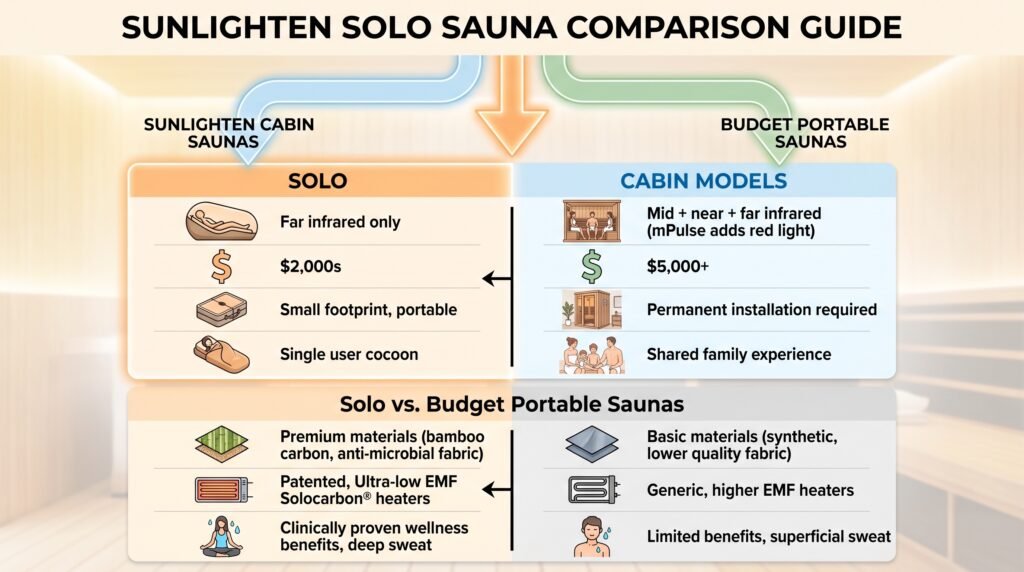
The Solo gives you far infrared only, while Sunlighten’s cabin lines (Signature, Amplify, mPulse) add mid and near infrared. The mPulse line also includes red light therapy.
Position is totally different. You lie down in the Solo versus sitting on benches in the cabins.
Footprint is way smaller with the Solo since there’s no permanent installation needed.
Price is the obvious difference. The Solo runs mid-$2,000s while cabins often start at $5,000+ depending on the model.
Experience-wise, the Solo is a personal cocoon with no option for shared use at the same time. Cabins fit 1-3 people depending on size, so families or couples who want to sit and chat during sessions prefer those.
For aging users with smaller homes or those who prefer lying down because of back or hip issues, the Solo makes more sense. For families wanting shared usage or in-home spa rooms, cabin models fit better.
Versus cheaper portable saunas and blankets
Many portable saunas under $700 use heated wires or carbon panels without detailed emissivity specs. They typically have higher EMF outputs with little or no third-party reporting.
Thin fabrics that off-gas more when heated are common.
Sunlighten positions the Solo against those on several fronts:
Emissivity: SoloCarbon coating validated around 99% emissivity versus no data for most budget options.
EMF: Third-party ultra-low EMF testing versus nothing published for most competitors.
Materials and build: Bamboo carbon shell, structured dome, memory-foam pad, and chromotherapy lighting included as opposed to cheap tent fabric stretched over wire frames.
In reviews, some users comment that cheaper devices can provide strong sweating but feel more like a hot tent. The Solo feels closer to a smaller, more controlled cabin. That difference matters more to people planning daily long-term use as opposed to occasional sweat sessions.
For specific audiences
Aging adults (45-65) concerned about healthy aging: Many people in this group look for gentle, non-invasive routines they can repeat regularly. The Solo’s lying posture, lower EMF, and moderate power draw suit this style of habit building.
It still needs caution for anyone with cardiovascular or heat-sensitivity issues, and medical consultation is important before starting intense heat practices.
Evidence on wrinkles and visible aging is still evolving and doesn’t justify any guarantee.
Fitness enthusiasts (25-45) focused on recovery: Reviewers often report feeling looser and more relaxed in muscles and joints after sessions. Some mention better perceived recovery after heavy training blocks.
These are subjective experiences as opposed to proof of specific performance gains, but they’re common themes in independent reviews.
Individuals with chronic skin concerns: Some users with acne or other skin issues report changes in sweat, congestion, and perceived clarity, though experiences vary widely. Heat and sweat can aggravate some skin conditions, so there’s no guarantee that an infrared sauna will help.
Medical advice for specific conditions is important.
Biohackers and wellness optimizers: For this group, the Solo’s detailed specs, EMF testing, and brand reputation carry weight. The unit’s ability to deliver consistent, controlled far infrared exposure gets valued more than adding many separate gadgets and cheaper saunas that lack detailed data.
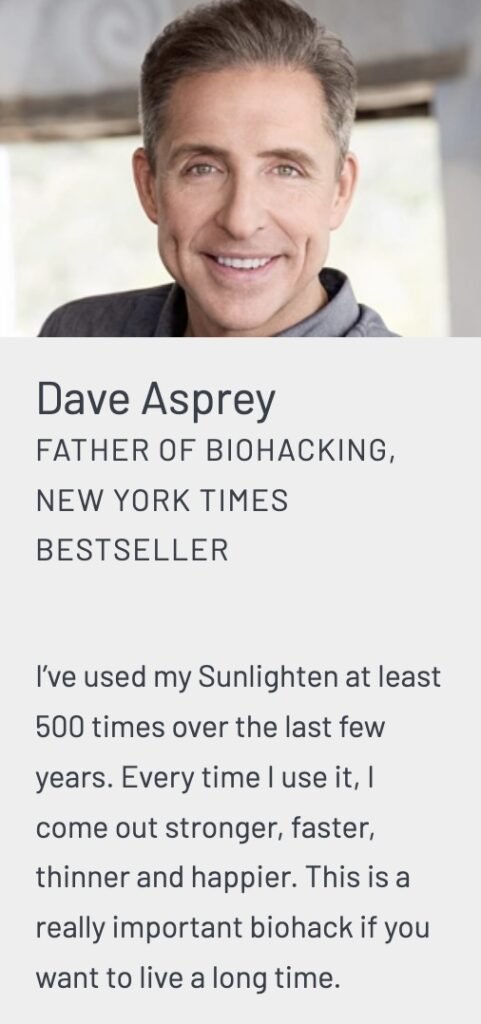
Trusted by 200+ wellness experts


Pros and Cons Summary
Pros
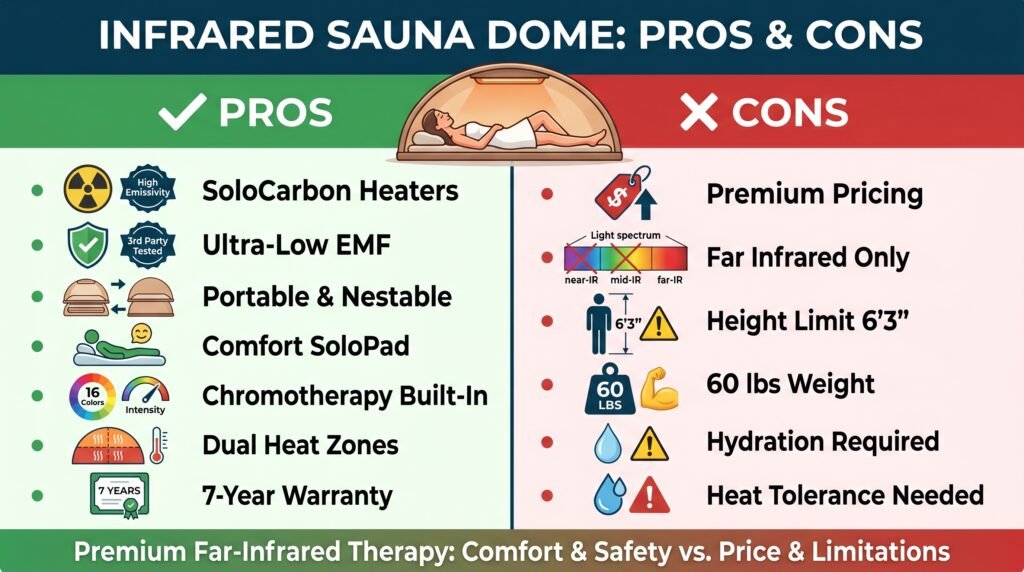
High-quality far infrared heaters (SoloCarbon) with high emissivity for focused far infrared exposure.
Ultra-low EMF design tested by third-party labs, with detailed safety documentation.
Portable dome design that nests for easier storage than any cabin sauna.
Comfortable lying position on a padded SoloPad, which many users find easier on joints than hard benches.
Built-in chromotherapy with 16 colors and adjustable intensity, included as opposed to sold as an add-on.
Independent heat zones for the upper and lower dome and pad, allowing more personalized settings.
Long heater warranty (up to 7 years residential), which signals confidence in the core components.
Cons
High purchase price compared to portable tents and blankets. This is a premium device.
Far infrared only. Buyers wanting near/mid infrared and red light in one device would need a different Sunlighten model or other equipment.
Not ideal for very tall users. People over about 6’3″ can feel cramped in the dome.
Still fairly heavy. The 60-pound combined weight may be awkward to move often for some users.
Heat tolerance required. Some users report fatigue or feeling depleted when they overdo session length or frequency without adequate hydration and medical guidance.
Final Recommendation
For someone who goes to infrared sauna studios regularly and wants similar sessions at home, cares about low EMF and non-toxic materials with documented safety, and has limited space for a permanent cabin, the Sunlighten Solo Sauna stands out as one of the stronger portable options on the market.
This Sunlighten Solo Sauna Review also needs to underline the trade-offs clearly.
The price is high compared to budget portable saunas. The Solo only covers far infrared, so you don’t get full-spectrum wavelengths.
Evidence for specific health outcomes remains incomplete, and no responsible brand or reviewer can promise anti-aging, disease prevention, or defined medical results.
For aging adults who want a consistent, gentle heat routine at home, for lifters and runners who want a structured recovery ritual, and for biohackers who prioritize engineering and testing, the Solo fits well if the budget allows it.
For people just curious about occasional sauna use, or those with very tight budgets, a less expensive portable unit or a pay-per-session studio may make more sense.
See current promotions from Sunlighten or authorized retailers before you finish a purchase. Click the button below and fill out their short form.
Frequently Asked Questions
Is the Sunlighten Solo Sauna full spectrum?
No. The Sunlighten Solo Sauna uses far infrared only through SoloCarbon heaters. Sunlighten’s mPulse and some other cabin models add mid- and near-infrared and visible red light, but the Solo focuses on far infrared exclusively.
How hot does the Sunlighten Solo get?
The Solo dome heaters are rated for a maximum of about 150°F (65°C). The control box allows you to choose among several temperature levels, and Sunlighten recommends starting at lower settings, especially for beginners.
How long should a session be?
The Sunlighten manual typically suggests starting around 10-15 minutes at moderate temperatures and working up as tolerated, with a general guideline of up to 40 minutes per day for most users. Hydration and medical clearance are important, especially for people with cardiovascular issues, blood pressure concerns, or chronic illness.
Is the Solo Sauna safe for older adults?
The Solo is designed with safety features, low EMF, and controlled temperatures, and it has UL/CUL certifications. However, heat exposure affects people differently.
Anyone with heart disease, blood pressure problems, medication use that affects circulation, or other chronic conditions should speak with a healthcare professional before using any sauna.
Can the Solo Sauna help skin issues like acne or psoriasis?
Some people with skin concerns report perceived improvements, while others notice irritation from sweat or heat. Research on infrared and specific skin diagnoses is still limited. The Solo is not an approved medical treatment for skin conditions, and no outcome can be guaranteed. Medical advice for personal conditions is essential.
How much space do I need for the Solo?
You need enough floor space for the dome and pad, roughly 69″ long and 28″ wide, plus some room to slide the dome back and step in and out. The dome nests down when not in use, so it can often be stored in a closet or against a wall.
Does the Solo Sauna need professional installation?
No. The Solo System is designed for plug-and-play setup with standard voltage (120V in North America, 240V in some regions). Most reviewers report assembly as straightforward, with no tools required.
Before you buy, check current promotions and compare the Sunlighten Solo Sauna to your local clinic session costs and your space constraints. Click the button below to visit Sunlighten’s official site and fill out their short contact form to get started.
This article includes affiliate links. If you click through and make a purchase, I may receive a small commission. This helps support the site and allows me to keep creating helpful content at no extra cost to you.