Latest posts
-
What Does the Mayo Clinic Say About Red Light Therapy?
Quick Summary You have enthusiastic biohackers on one side, swearing by their red light panels, claiming transformed skin and superhuman recovery. On the other side, you have the white coats at prestigious medical institutions carefully examining evidence through their research-grade microscopes. So what does the Mayo Clinic say about red light therapy? The Mayo Clinic
-
What Does Red Light Therapy Do for Your Face?
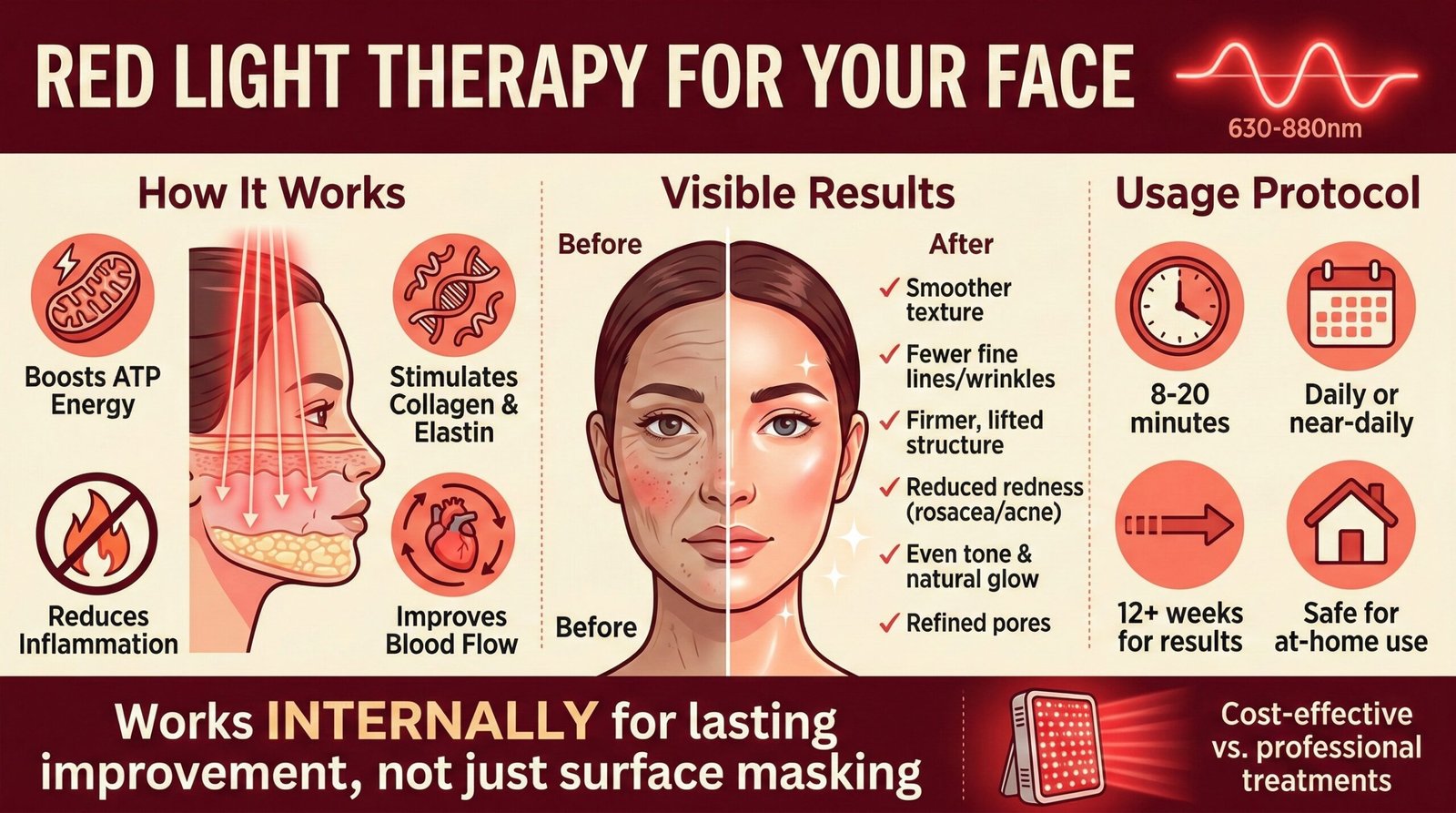
Quick Summary Red light therapy (using 630-880 nm wavelengths) supercharges facial skin cells by boosting mitochondrial ATP production, stimulating collagen/elastin synthesis, reducing inflammation, and improving circulation. This leads to smoother texture, fewer fine lines/wrinkles, firmer structure, reduced redness (helpful for rosacea/acne), better tone/glow, and refined pores over time. It’s safe for consistent at-home use (8-20
-
Why Don’t Doctors Recommend Red Light Therapy?
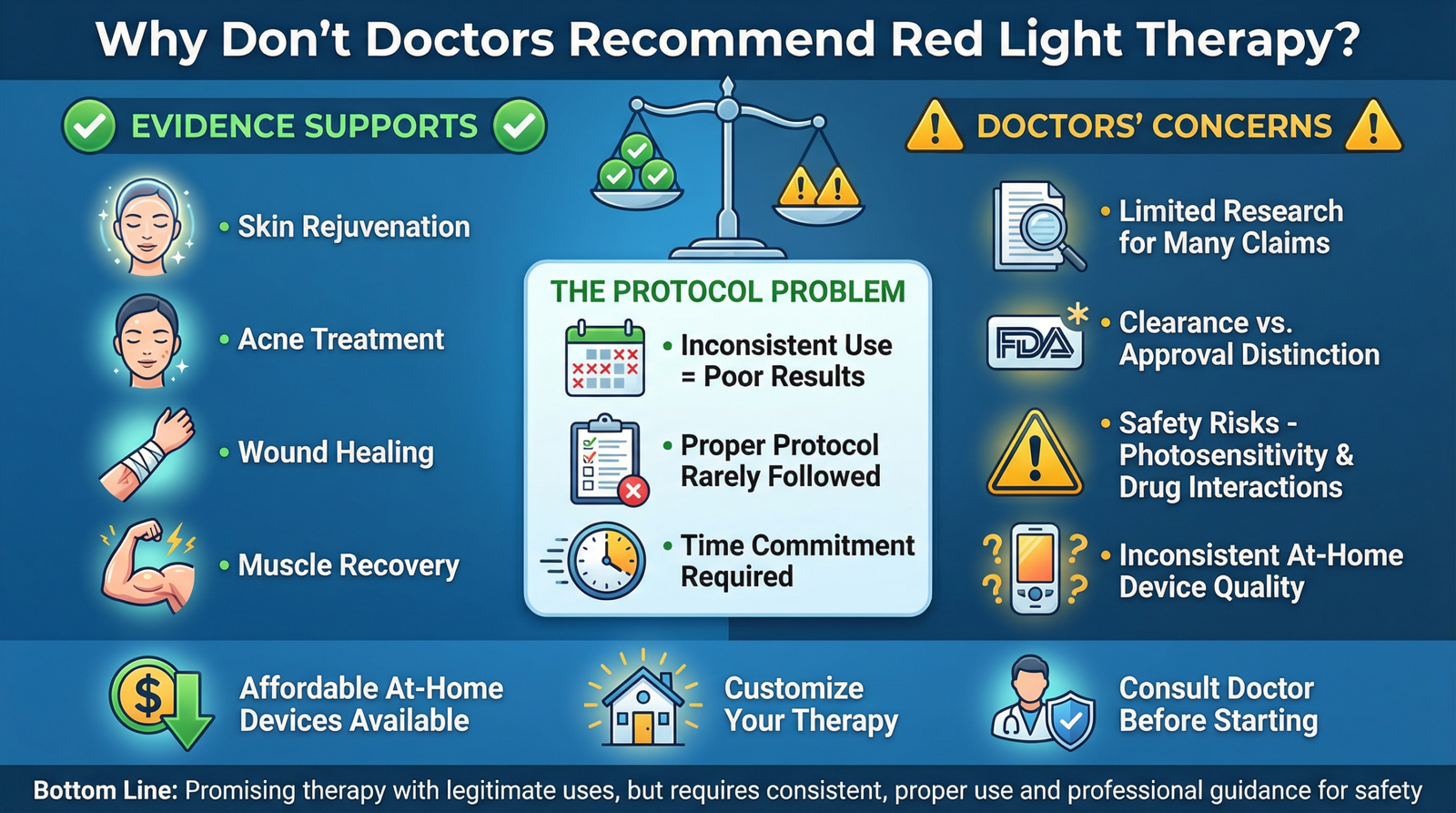
Quick Summary Doctors do recommend red light therapy,, but only for specific, evidence-backed uses rather than as a universal treatment. The main reasons physicians are cautious include regulatory confusion (FDA clearance doesn’t equal approval), limited high-quality research for many claims, legitimate safety considerations, and variable device quality (especially home devices). Dermatologists and clinicians will discuss
-
What Does Red Light Therapy Actually Do?
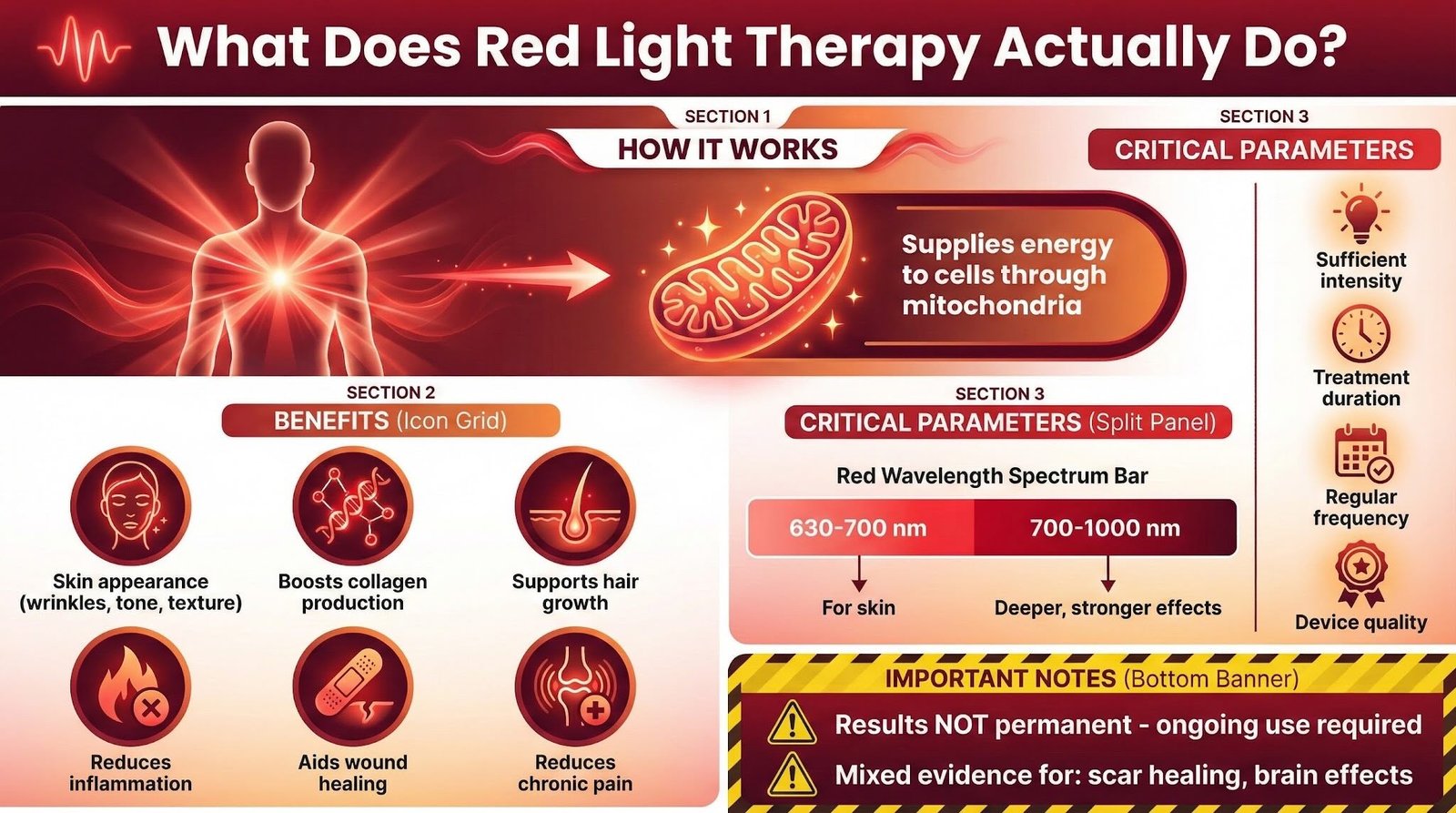
Quick Summary Red Light Therapy (RLT), using red/near-infrared light on the body, works by supplying energy to cells (via mitochondria), which can help skin, hair, pain, and tissue health. Popular applications include improving skin appearance (wrinkles, tone, texture), boosting collagen production, supporting hair growth, reducing inflammation and chronic pain, and aiding wound healing. But outcomes depend