Quick Summary
Red light therapy (using 630–850 nm wavelengths) is generally considered safe during pregnancy, as it is non-ionizing, boosts cellular energy (ATP), reduces inflammation, and helps with common issues like pain and swelling, without evidence of harm to the fetus.
Benefits are encouraging, but research is limited; avoid direct abdominal exposure (especially in the first trimester), start conservatively, and consult a doctor. It’s particularly useful for back pain, stretch marks, swelling, and sleep in the second/third trimesters.
Table of Contents
1. Introduction
Overview of red light therapy and its general safety during pregnancy.
2. The Science Behind Safety During Pregnancy
Explanation of how it works, limited research, and biological reasons for safety.
3. Trimester-Specific Considerations
Guidance for first, second, and third trimesters, including cautious approaches early on.
4. Practical Implementation for Pregnant Women
Tips on devices, session length, distance, timing, hydration, and positioning.
5. Specific Applications That Support Pregnancy Health
Uses for lower back pain, stretch mark prevention, sleep improvement, and carpal tunnel relief.
6. Safety Protocols You Should Follow
Key precautions include avoiding abdominal exposure and monitoring temperature.
7. Conclusion & Key Takeaways
Summary of benefits, usage recommendations, and overall safety.
8. FAQ’s – People Also Asked
Answers to common questions (e.g., back pain relief, stretch marks, swelling).
Introduction
Pregnancy brings countless questions about what’s safe and what’s not. Red light therapy sits in that uncertain middle ground for many expecting mothers. So, it begs the question: ‘Can I use red light therapy in pregnancy?’
Yes, red light therapy, also called photobiomodulation, is generally considered safe and potentially beneficial during pregnancy by reducing inflammation and pain. Red light therapy uses specific wavelengths of light between 630 and 850 nanometers to stimulate your cells. Unlike UV light that damages DNA and should absolutely be avoided during pregnancy, red and near-infrared light penetrates your skin without harming cellular structures.
Understanding how this treatment works at the cellular level removes much of the mystery and helps you make confident decisions about your health and your baby’s development.
The wavelengths are non-ionizing, meaning they lack the energy to damage DNA or cause mutations.
When these specific wavelengths reach your cells, they get absorbed by mitochondria, the energy-producing structures in every cell.
This absorption triggers increased production of ATP (adenosine triphosphate), which serves as cellular fuel.
During pregnancy, your body works incredibly hard to support two lives. This cellular energy boost from red light therapy translates into reduced inflammation, improved circulation, enhanced tissue repair, and better overall cellular function.
Of course, this article is for educational purposes and should not be construed as medical advice. Please consult your physician if you have further concerns about the practice of red light therapy during pregnancy.
The Science Behind Safety During Pregnancy
Research on red light therapy during pregnancy remains limited, but existing studies are encouraging. Red and near-infrared light therapy doesn’t produce the harmful effects associated with ionizing radiation or UV exposure.
Several clinical observations have documented pregnant women using red light therapy without adverse effects.
In some European countries, red light therapy has been part of prenatal care protocols for decades, particularly for managing pregnancy-related discomfort and preparing the perineal area for delivery.
The biological basis for safety comes from penetration depth. Red light at around 630 to 680 nanometers penetrates about 8 to 10 millimeters into tissue, affecting skin and superficial muscle layers.
Near-infrared light at 810 to 850 nanometers can penetrate deeper, reaching up to several centimeters.
This penetration stays superficial enough that when applied to areas away from the abdomen, it doesn’t reach the developing fetus.
Your body during pregnancy has increased blood flow and metabolic activity, which actually makes it particularly responsive to therapies that support cellular function.
The increased circulation means the benefits from improved cellular energy production get distributed more efficiently throughout your system.
Many pregnant women report noticeable improvements in energy levels and pain reduction after red light therapy sessions.
Trimester-Specific Considerations
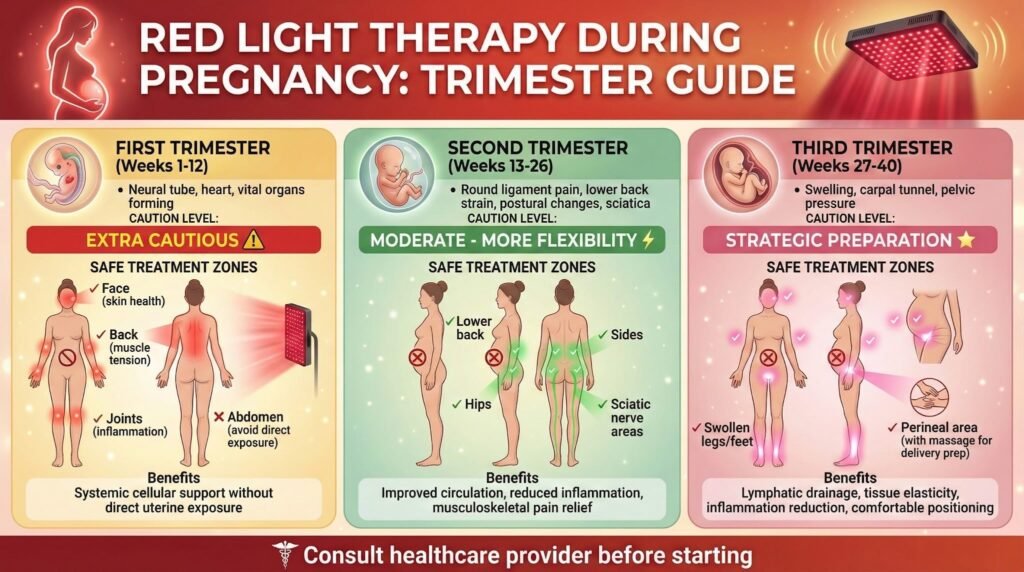
The first trimester sees most major organ development occur, making this the time when pregnant women are understandably most cautious about any intervention.
During weeks one through twelve, the embryo develops its neural tube, heart, and other vital structures.
While red light therapy hasn’t been shown to cause harm, many practitioners recommend extra caution during this period, particularly regarding direct abdominal exposure.
If you’re in your first trimester and considering red light therapy, focusing on areas away from your abdomen represents the most conservative approach.
Using red light therapy on your face for skin health, on your back for muscle tension, or on your joints for inflammation provides benefits without any theoretical risk to the developing embryo.
The systemic benefits of improved cellular function still support your overall health without direct exposure to the uterine area.
The second trimester typically brings more energy and fewer restrictions for most activities. Pregnancy discomfort starts appearing in the form of round ligament pain, lower back strain, and the beginning of postural changes.
Red light therapy becomes particularly valuable during weeks thirteen through twenty-six for managing these musculoskeletal issues that develop as your body adapts to carrying additional weight.
During this phase, your abdomen is growing, but many practitioners feel comfortable using red light therapy on surrounding areas like the lower back, hips, and sides.
The improved circulation and reduced inflammation can help tremendously with the aches that start appearing.
I’ve seen women use red light therapy successfully during their second trimester for sciatic nerve pain, which can be absolutely debilitating and has limited safe treatment options during pregnancy.
The third trimester brings your body into preparation mode for delivery. From week twenty-seven until delivery, you can use red light therapy strategically to prepare your body for the physical demands of childbirth.
Perineal massage combined with red light therapy has been studied in some clinical settings as a way to improve tissue elasticity and potentially reduce tearing during delivery.
The final weeks of pregnancy often bring swelling in the legs and feet, carpal tunnel symptoms from fluid retention, and significant pelvic pressure.
Red light therapy applied to swollen areas can help improve lymphatic drainage and reduce inflammation without the risks associated with certain topical treatments or medications.
The ability to lie comfortably during a red light therapy session can itself be therapeutic during the third trimester when finding comfortable positions becomes challenging.
Practical Implementation for Pregnant Women
Starting red light therapy during pregnancy requires a thoughtful approach that prioritizes safety while maximizing potential benefits. The first consideration involves choosing the right device and settings.
If you’re using an at-home device, look for one that specifies wavelengths between 630 and 850 nanometers and has adjustable intensity settings.
Begin with shorter sessions of around five to ten minutes per area, particularly if you’re new to red light therapy. Your skin may be more sensitive during pregnancy because of hormonal changes, and starting conservatively allows you to assess your personal response.
Many women find that sessions of ten to fifteen minutes three to four times per week provide noticeable benefits without overwhelming their system.
Distance from the light source matters significantly. Most devices are designed for use at a distance of six to twelve inches from the skin. During pregnancy, you might choose to start at the farther end of this range, especially when treating areas closer to your abdomen.
The intensity of light decreases with distance following the inverse square law, so positioning yourself a bit farther away reduces intensity while still providing therapeutic benefits.
Timing your sessions can enhance their effectiveness. Using red light therapy in the morning can help boost energy levels for the day ahead, which proves particularly valuable if you’re dealing with pregnancy fatigue.
Evening sessions can support relaxation and potentially improve sleep quality, which many pregnant women struggle with, especially in later trimesters.
Some women split their routine, using brief morning sessions for energy and longer evening sessions for pain relief and relaxation.
Hydration before and after red light therapy sessions matters during pregnancy. The therapy can enhance cellular metabolism and circulation, and adequate hydration supports these processes.
Drinking water before your session and continuing to hydrate afterward helps your body process metabolic waste products more efficiently and can reduce any temporary fatigue that sometimes follows treatment.
Positioning during treatment needs careful consideration, especially as pregnancy progresses. In the first and second trimesters, you can typically lie comfortably on your back for sessions.
By the third trimester, lying flat on your back can compress the vena cava and reduce blood flow, so side-lying or semi-reclined positions become necessary.
Many women find that treating specific areas while seated or standing works better in late pregnancy.
Specific Applications That Support Pregnancy Health
Managing lower back pain during pregnancy has limited safe options, which makes red light therapy particularly valuable. As your center of gravity shifts forward, your lower back muscles work harder to maintain posture.
The resulting muscle strain and inflammation respond remarkably well to near-infrared light therapy.
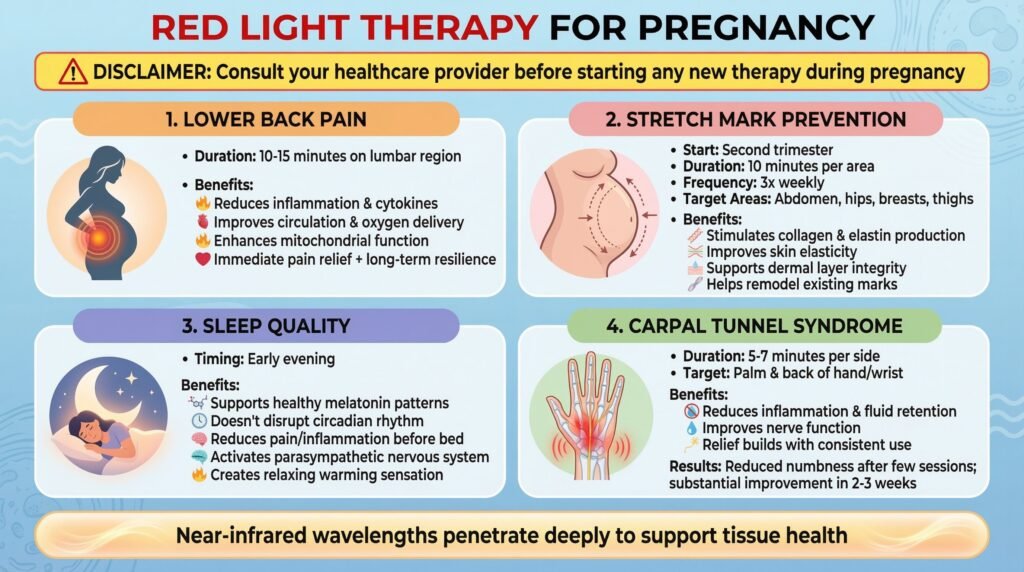
Applying red light to the lumbar region for ten to fifteen minutes can reduce inflammation in the muscles and improve local circulation, bringing fresh oxygen and nutrients to fatigued tissues.
The mechanics involve both immediate effects on pain signaling and longer-term improvements in tissue health. Red light therapy has been shown to reduce levels of inflammatory cytokines, the chemical messengers that contribute to pain sensation.
Simultaneously, it enhances mitochondrial function in muscle cells, improving their ability to repair micro-damage that occurs from constant strain.
Over several sessions, many women notice immediate pain relief and improved resilience, meaning their backs don’t hurt as quickly or intensely with activity.
Stretch mark prevention and treatment represent another practical application during pregnancy. While genetics play a significant role in whether you’ll develop stretch marks, supporting your skin’s collagen production can improve elasticity and potentially minimize their appearance.
Red light therapy stimulates fibroblasts, the cells responsible for producing collagen and elastin, the proteins that keep skin supple and strong.
For stretch mark prevention, beginning red light therapy in the second trimester when your belly starts expanding rapidly makes strategic sense.
Treating your abdomen, hips, breasts, and thighs with red light for about ten minutes per area three times weekly can support your skin’s ability to stretch without tearing the dermal layer.
Even if stretch marks do form, continuing red light therapy can improve their appearance over time by supporting the remodeling phase of scar tissue formation.
Sleep quality often deteriorates during pregnancy for many reasons, including hormonal fluctuations, physical discomfort, and frequent bathroom trips.
Red light therapy has been studied for its effects on circadian rhythm regulation and melatonin production.
While blue light exposure in the evening suppresses melatonin and disrupts sleep, red light doesn’t have this effect and may actually support healthy melatonin patterns.
Using red light therapy in the early evening, perhaps combined with relaxation practices, can be part of a sleep hygiene routine.
The reduction in pain and inflammation from treating sore areas before bed contributes to better sleep quality.
Additionally, the warming sensation that many people feel during red light therapy sessions can be deeply relaxing, activating the parasympathetic nervous system and preparing your body for rest.
Carpal tunnel syndrome affects a surprising number of pregnant women, typically because of fluid retention that puts pressure on the median nerve in the wrist.
Traditional treatments are limited because you want to avoid anti-inflammatory medications, and wrist splints only provide modest relief.
Red light therapy applied to the wrists and forearms can reduce inflammation in the carpal tunnel and improve nerve function.
The protocol for pregnancy-related carpal tunnel involves treating both the palm side and back of the hand and wrist for about five to seven minutes per side.
The near-infrared wavelengths penetrate deeply enough to reach the carpal tunnel structure, and the anti-inflammatory effects can provide relief that builds with consistent use.
Many women notice reduced numbness and tingling after just a few sessions, with more substantial improvement after two to three weeks of regular treatment.
Safety Protocols You Should Follow
Avoiding direct abdominal exposure during the first trimester represents the most conservative approach, even though there’s no evidence that red light therapy harms fetal development.
The precautionary principle suggests that when the risk is unknown, even if theoretically very low, avoiding unnecessary exposure to the developing embryo during its most vulnerable phase makes sense.
Monitoring your core body temperature during sessions matters because overheating during pregnancy, particularly in the first trimester, has been associated with neural tube defects.
While red light therapy doesn’t significantly raise core body temperature the way hot tubs or saunas do, being mindful of this remains prudent.
There are occasionally mild and temporary side effects when starting red light therapy, such as hyperpigmentation.
If you feel uncomfortably warm during a session, increase the distance from the light source or reduce the session duration.
The sensation during red light therapy should be pleasantly warm, never uncomfortably hot. If your skin feels like it’s getting too warm, you’re either too close to the device or the intensity is set too high.
Adjusting these factors confirms you’re within the therapeutic window without risking any temperature-related concerns.
Using red light therapy in a well-ventilated, comfortable environment helps maintain a suitable body temperature.
Conclusion & Key Takeaways
Red light therapy uses wavelengths between 630 and 850 nanometers to enhance cellular energy production through mitochondrial stimulation, providing a safe, non-invasive approach to supporting health during pregnancy when used appropriately.
The therapy works by increasing ATP production in your cells, which translates into reduced inflammation, improved circulation, enhanced tissue repair, and better overall cellular function during a time when your body is working incredibly hard.
Practical applications include managing lower back pain, reducing inflammation, supporting skin health and preventing stretch marks, improving circulation and reducing swelling, and preparing the perineum for delivery in the final weeks before birth.
Start with conservative sessions of five to ten minutes three to four times weekly, focusing on areas away from your abdomen during the first trimester and avoiding direct uterine exposure throughout pregnancy for maximum safety.
The cumulative effects of consistent red light therapy provide the greatest benefits, with improvements in energy, pain reduction, tissue health, and overall cellular function building over weeks of regular use throughout your pregnancy.
Monitoring your body’s response through mindful awareness helps improve your routine to address your specific needs as they evolve from trimester to trimester, allowing you to adjust positioning, duration, and treatment areas as necessary.
If you are considering the cost-effective route of red light therapy at home and want a guide to some of the most affordable and effective devices, see our review page via the button below.
FAQ’s – People Also Asked
Does red light therapy help with pregnancy back pain?
Red light therapy can significantly help with pregnancy back pain by reducing inflammation in strained muscles and improving local circulation. The near-infrared wavelengths penetrate deeply enough to reach muscle tissue that’s working overtime to support your changing posture.
Most women notice improvement after consistent sessions of ten to fifteen minutes, three to four times per week.
Can red light therapy prevent stretch marks during pregnancy?
Red light therapy may help prevent or minimize stretch marks by stimulating collagen and elastin production in your skin.
Starting treatments in the second trimester, when your belly begins expanding rapidly, gives your skin better elastic support. While genetics plays a major role in stretch mark development, supporting your skin’s structural proteins can make a difference.
Is near-infrared light safe during pregnancy?
Near-infrared light at wavelengths between 810 and 850 nanometers is considered safe during pregnancy when used appropriately. These wavelengths are non-ionizing and don’t have the energy to damage DNA.
The key is avoiding direct abdominal exposure during the first trimester and focusing treatments on areas away from the uterus throughout pregnancy.
What trimester is safest for red light therapy?
The second and third trimesters are generally considered safest for red light therapy because major organ development is finish.
However, you can safely use red light therapy in the first trimester by treating areas away from your abdomen, such as your face, neck, shoulders, back, and legs.
Can red light therapy help with pregnancy swelling?
Red light therapy can help reduce pregnancy swelling by improving lymphatic drainage and reducing inflammation.
Treating swollen legs, feet, and hands with red light for ten to fifteen minutes can enhance circulation and help your body process excess fluid more efficiently.
Many women notice reduced swelling after consistent use.
Does red light therapy increase blood flow during pregnancy?
Red light therapy does increase blood flow by stimulating nitric oxide production in blood vessel walls, which causes vasodilation.
During pregnancy, this improved circulation helps deliver oxygen and nutrients more effectively throughout your body and potentially reduces swelling in your extremities.
Can I use red light therapy on my face while pregnant?
Facial red light therapy is completely safe during pregnancy and can help manage hormonal skin changes like acne or melasma.
Your face is far removed from your uterus, making this one of the safest applications throughout all trimesters.
Sessions of ten to fifteen minutes, three to four times weekly, can improve skin tone and collagen production.
This article includes affiliate links. If you click through and make a purchase, I may receive a small commission. This helps support the site and allows me to keep creating helpful content at no extra cost to you.