Quick Summary
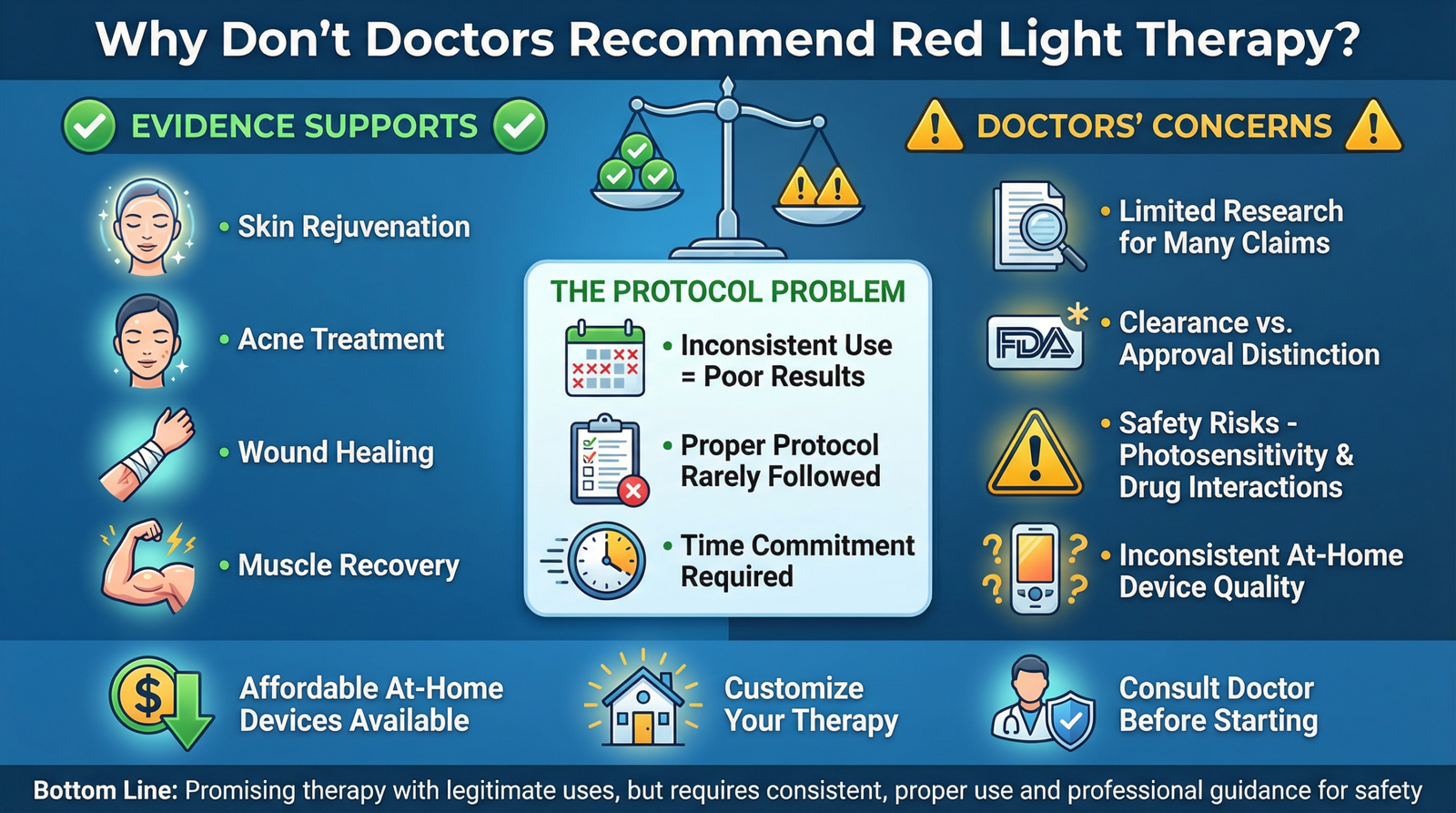
Doctors do recommend red light therapy,, but only for specific, evidence-backed uses rather than as a universal treatment. The main reasons physicians are cautious include regulatory confusion (FDA clearance doesn’t equal approval), limited high-quality research for many claims, legitimate safety considerations, and variable device quality (especially home devices).
Dermatologists and clinicians will discuss RLT when the evidence supports its use (e.g., certain skin conditions, wound healing, muscle recovery) but are hesitant to endorse broad or unproven claims like dramatic anti-aging, weight loss, or hormone optimization.
🗂️ Table of Contents
- Introduction
- The FDA Clearance Situation That Nobody Really Understands
- The Evidence Exists for Specific Applications
- The Safety Concerns That Actually Matter
- When Professional Judgment Matters Most
- The Technical Specifications That Determine Effectiveness
- The Skin Tone Consideration Nobody Talks About
- The Real Cost-Benefit Analysis
- The Protocol Precision That Makes or Breaks Results
- The Marketing Problem That Creates Medical Skepticism
- Building a Productive Dialogue With Your Doctor
Key Takeaways You Need to
Introduction
So why don’t doctors recommend red light therapy? When I first started looking into red light therapy a few years back, I kept running into this weird contradiction. Online forums were full of people raving about younger-looking skin, faster muscle recovery, and disappearing chronic pain.
Then I’d bring it up with my dermatologist and get this vague, noncommittal response that left me more confused than before I asked.
I spent months digging into this question, and what I uncovered was actually really interesting. The straightforward answer is that doctors do recommend red light therapy, but only for specific conditions with solid research behind them, and definitely not for everyone who asks about it.
There’s this complex mix of FDA regulations, gaps in the research, legitimate safety concerns, and some truly misleading marketing that’s created this idea that doctors are somehow against red light therapy. They’re really not.
They’re just being appropriately cautious about when and how they recommend it. Contrary to what people think about conventional medicine, the establishment medical community does not view red light therapy as some ‘woo-woo biohacker trend’.
Understanding these details completely changed how I approached red light therapy myself, and it’ll probably change how you interpret those careful responses from your healthcare providers, too.
The FDA Clearance Situation That Nobody Really Understands
This is where most of the confusion starts. When you see a red light therapy device marketed as “FDA-cleared,” your brain probably processes that the same way it would “FDA-approved.” Mine certainly did.
These are actually completely different regulatory pathways, and doctors understand this distinction in ways that most consumers don’t.
FDA approval is the gold standard of regulatory review. Pharmaceutical companies pursue it for new drugs, and it needs extensive clinical trials proving both safety and effectiveness for specific conditions.
We’re talking years of research, thousands of participants, rigorous statistical analysis.
FDA clearance uses what’s called a 510(k) process. Manufacturers demonstrate that their device is “substantially equivalent” to something already on the market. The bar is lower.
While it confirms certain safety and quality standards are met, it doesn’t confirm every health claim a company might make about its product.
This matters tremendously when you’re sitting in your doctor’s office asking if you should buy that $500 red light panel you saw advertised online.
Your doctor knows that while the device itself has passed safety standards, those bold claims about reversing aging or curing chronic conditions haven’t necessarily been proven through the rigorous clinical trials they’d like to see before making a recommendation.
They’re being appropriately cautious about the evidence, not difficult.
I’ve found that when you approach your doctor with this understanding and ask specific questions like, “What does the research show for red light therapy specifically for wound healing?” rather than “Does red light therapy work?”, you get much more useful answers. The first question can actually be answered. The second is too vague to be meaningful.
QuasarMD is a U.S. beauty-tech brand creating FDA-cleared red light therapy devices for skin and wellness. Discover Quasar’s extensive range of cost-effective and effective red light therapy products via the link below.
The Evidence Exists for Specific Applications
There’s solid clinical evidence for red light therapy in certain specific applications. Dermatologists regularly recommend it for wrinkle reduction, acne management, and post-inflammatory hyperpigmentation.
The research backing for wound healing is decent. NASA literally included red light therapy in their space shuttle medical kits because of its healing properties. Oncology centers like MD Anderson use it to reduce chemotherapy-induced mouth sores.
So doctors absolutely do recommend it, but for specific, evidence-supported conditions. The hesitation comes when people start asking about applications where the research is still preliminary or mixed.
Anti-aging benefits beyond basic skin appearance? The data’s emerging, but not definitive.
Significant fat loss? Questionable.
Dramatic hormone optimization? We need more human studies.
Doctors practice within an evidence-based framework. They’re not going to enthusiastically endorse something that has three small studies and a bunch of anecdotal testimonials when they could recommend something with decades of clinical research behind it.
That’s them doing their job responsibly, not being close-minded.
The most successful approach I’ve seen is when people come to their doctors with specific, evidence-supported applications in mind. Instead of saying, “I want to try red light therapy for everything,” try, “I’ve read research suggesting red light therapy might help with muscle recovery after workouts, and I’m interested in trying it for that specific purpose.” You’ll get a much more engaged response.
The Safety Concerns That Actually Matter
There are genuine reasons why blanket recommendations would be irresponsible, and understanding these helps you figure out if you’re actually a good candidate for red light therapy.
Certain patient populations face real risks with red light therapy, even though it’s generally safe. If you have active skin cancer or a history of it, doctors need to be extremely careful.
There’s a 2012 preclinical study that suggested potential tumor stimulation in specific contexts.
While it’s not definitive, it’s enough to warrant serious caution.
People with photosensitive conditions like lupus or porphyria can have unpredictable reactions. Your immune system is already hyperreactive with lupus, and introducing light stimulus, even non-UV wavelengths, could potentially worsen symptoms.
The medication interactions really surprised me. Over twenty percent of adults aged sixty-five and older take photosensitizing medications. We’re talking about certain antibiotics, some antipsychotics, retinoids, and even some blood pressure medications.
These drugs increase your skin’s sensitivity to visible light, which means red light therapy could cause redness, inflammation, or even burns that wouldn’t happen otherwise.
I have a friend who’s a family medicine physician, and she told me she once had a patient develop significant skin irritation from red light therapy because they were taking doxycycline for rosacea. The patient had read that red light therapy was good for skin conditions and assumed it would be fine. They didn’t connect that their antibiotic might interact with the light therapy.
This type of reaction and other temporary side effects can occur, so it is necessary to do one’s due diligence before beginning the practice of red light therapy.
That’s the kind of screening doctors do. They’re thinking about your final medical picture, not just the one condition you’re asking about.
Pregnant women also fall into this caution category, not because there’s evidence of harm, but because there’s limited safety data. Doctors operate under the principle of “first, do no harm,” so when adequate safety data doesn’t exist for a particular population, the conservative approach is to wait.
When Professional Judgment Matters Most
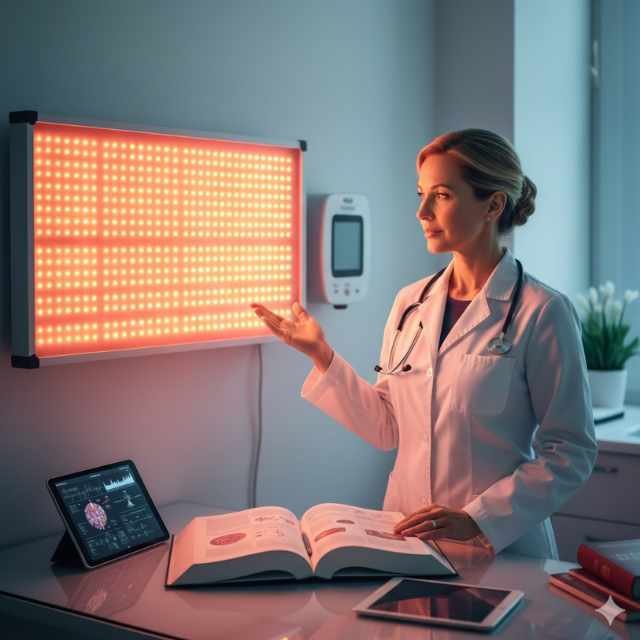
One of the most valuable insights I gained from talking to healthcare providers was understanding the difference between professional-grade clinical devices and at-home consumer products. This distinction really matters for safety and effectiveness.
Professional red light therapy administered in clinical settings offers several advantages. The wavelengths are controlled and verified, the power output is consistent and measured, there are clinical cleanliness protocols, and you’ve got professional supervision.
When you’re using an at-home device, especially on open wounds or during active infections, you’re introducing contamination risks that don’t exist in clinical settings.
I actually tried both approaches: professional sessions at a dermatology clinic and then an at-home panel. The experience was remarkably different.
The clinical sessions involved proper eye protection, skin assessment before and after, and specific protocols based on my personal skin type.
The at-home device came with generic instructions that didn’t account for personal variation.
This doesn’t mean at-home devices are useless. Far from it.
But it explains why your doctor might recommend professional sessions for something like active acne while being more hesitant about you treating yourself at home.
The medical context and oversight genuinely matter for certain conditions.
Also, finding an effective FDA-approved / cleared device is key. To find a reliable, safe, and affordable red light therapy device, read our reviews here.
The Technical Specifications That Determine Effectiveness
Not all red light therapy devices are created equal, and doctors know this in ways that really inform their recommendations.
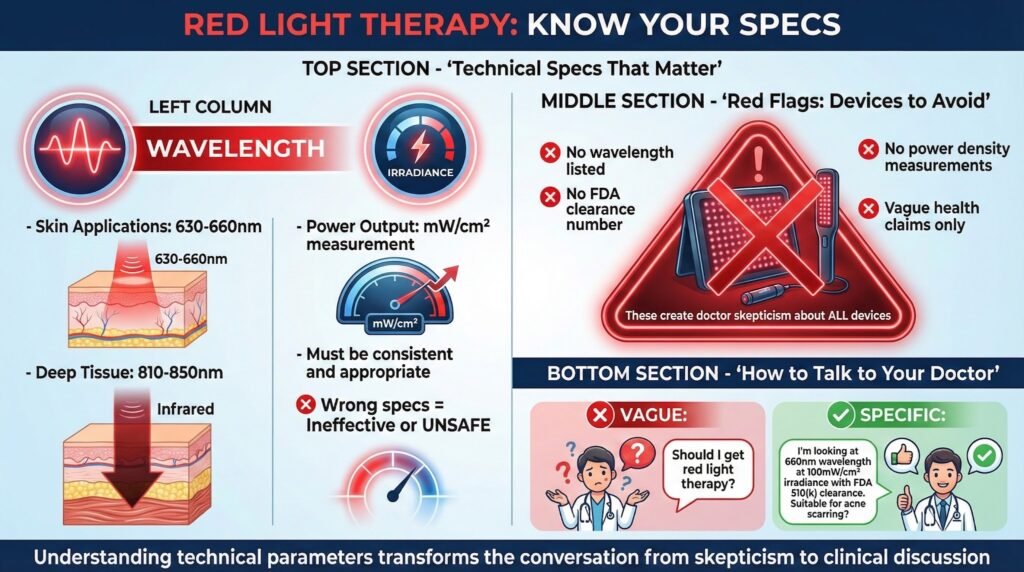
Therapeutic benefits depend on specific wavelengths. For skin applications, you need 630-660 nanometers. For deeper tissue penetration, you’re looking at 810-850 nanometers.
The device also needs to deliver suitable power output, measured as irradiance. A device that emits the wrong wavelengths or inconsistent power output isn’t just ineffective; it’s potentially unsafe.
When I was shopping for my own device, I found countless products making health claims without providing any actual specifications. No wavelength listed, no power density measurements, no FDA clearance number.
These are exactly the kinds of products that make doctors skeptical of the entire category.
The marketing inflation around poorly made devices creates wariness toward legitimate applications of properly manufactured equipment.
Hence, finding a FDA-cleared red light device that delivers the therapeutic benefits and cost savings is crucial. Learn more here.
What changed the conversation with my dermatologist was when I came in with specific technical questions. “I’m looking at a device that provides 660nm wavelength at 100mW/cm² irradiance with FDA 510(k) clearance. Would this be suitable for the mild acne scarring we discussed?”
That’s a completely different conversation than “Should I get red light therapy?” The first question shows you understand the technical parameters that matter. The second is too vague to answer meaningfully.

The Skin Tone Consideration Nobody Talks About
I had absolutely no idea about this until I attended a dermatology conference where a researcher presented data on red light therapy outcomes across different skin tones.
People with darker skin tones can be more prone to hyperpigmentation with red light therapy, requiring adjusted protocols or different device intensity settings.
This is a perfect example of why doctors can’t just give blanket recommendations. What works safely for someone with fair skin might need significant modification for someone with a deeper skin tone.
Physicians need to individualize recommendations rather than prescribe universal treatments, and that adds complexity to their guidance.
The research in this area is still developing, but it’s another reminder that “Does red light therapy work?” is fundamentally the wrong question.
The right question is “Does red light therapy work for my specific skin type, condition, and medical situation?” And that’s a question that needs professional assessment.
The Real Cost-Benefit Analysis
Professional clinical sessions can run anywhere from fifty to two hundred dollars per session, and you typically need many sessions per week for several weeks to see results. That adds up really quickly.
Quality at-home devices range from two hundred dollars for smaller panels to several thousand dollars for full-body setups. For many patients, that’s a significant investment, especially when insurance doesn’t typically cover it because it’s often classified as cosmetic or wellness rather than medical treatment.
However, I have compiled a list of reviews of credible, effective, affordable, FDA-cleared red light therapy devices for at-home use. Click here to see our reviews and find the right device that suits your finances and needs. Many of these devices are also HSA/FSA eligible, which can provide additional pre-tax savings.
Consistent results of red light therapy require consistent use. Usually, multiple sessions a week. It is an investment in one’s health. This can be costly when comparing regular sessions to buying effective red therapy devices for at-home treatment.
Also, I have created a Red Light Therapy Cost-Saving Calculator along with a reference to quality and effective at-home devices here.
Your doctor might have excellent evidence that red light therapy could help your condition, but if they know you’re on a fixed income or already struggling with medication costs, they might prioritize recommending treatments that are more accessible or covered by insurance. There might be more practical solutions for your situation.
I’ve found that being upfront about budget considerations helps doctors give better recommendations. If you say, “I’m interested in red light therapy, and I’m prepared to invest in a quality at-home device if you think it’s suitable,” that’s different than asking if they recommend it when they don’t know your financial situation.
The Protocol Precision That Makes or Breaks Results
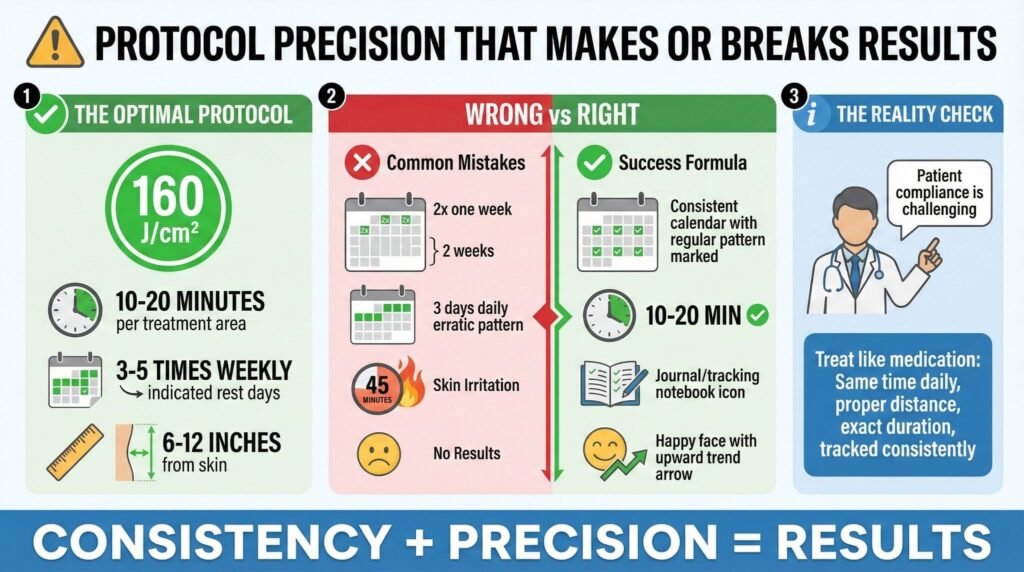
Consistency and proper protocol absolutely decide whether you see results. This is another area where doctors show suitable caution; they know that most people aren’t going to follow optimal protocols, and incomplete or incorrect use leads to disappointment and potentially safety issues.
Research establishing safe starting doses shows that the most recommended protocol is around 160 J/cm² based on previous LED studies showing safety without adverse events. In practical terms, this typically translates to ten to twenty minutes per treatment area, three to five times weekly, with rest days between sessions.
You need to position the device at the right distance from your skin, usually six to twelve inches, depending on the device’s power output.
What I see constantly in online forums is people who use their devices sporadically, maybe twice a week, then not at all for two weeks, then daily for three days, and then complain it doesn’t work. Or people who think more is better and use it for forty-five minutes daily, ending up with skin irritation.
Doctors understand that patient compliance with specific protocols is challenging, and that influences whether they recommend treatments that need that level of precision.
The most success I’ve had personally came when I treated it like medication: same time every day, proper distance, exact duration, tracked in a journal. That level of commitment isn’t realistic for everyone, and doctors factor that into their recommendations.
However, 2-3 professional red light therapy sessions, averaging $75 – 150, can add up. Crunch the real numbers with the calculator below, and read our reviews of the most affordable and customizable at-home devices that will save you money in the end.
Red Light Therapy Cost Savings Calculator
Discover how much you can save by investing in a Quasar device versus paying for professional red light therapy sessions. Calculate your savings over time and make an informed decision.
Start your red light therapy journey at home with professional-grade Quasar devices. Lifetime savings with one-time investment.
The Marketing Problem That Creates Medical Skepticism
The absolutely wild health claims that some red light therapy companies make really frustrate healthcare providers. I’ve seen devices marketed with claims that they cure arthritis, reverse hair loss, boost testosterone, eliminate cellulite, and improve fertility, often without a shred of clinical evidence supporting those specific claims.
When a product claims it can cure or treat serious medical conditions without suitable evidence, it raises enormous red flags for physicians.
Unfortunately, that marketing inflation creates skepticism that extends to the legitimate, well-researched applications of red light therapy. The questionable marketing around some devices makes doctors more cautious about the entire category.
What I learned is that the companies making the most extraordinary claims are often the ones with the least scientific backing. The manufacturers who focus on specific, evidence-supported applications, wound healing, certain skin conditions, and muscle recovery tend to be more reputable.
When you’re researching devices, look for companies that cite actual peer-reviewed research, provide technical specifications, and have FDA clearance numbers.
Those are signs of legitimate products that doctors will be more comfortable discussing with you.
Building a Productive Dialogue With Your Doctor
After years of navigating this landscape, I’ve figured out how to have actually useful conversations with healthcare providers about red light therapy. It completely changed from those early, frustrating appointments where I felt dismissed to now having collaborative discussions about whether it makes sense for specific applications.
Come prepared with specifics. Instead of asking, “What do you think about red light therapy?”, try, “I’ve been researching red light therapy for post-workout muscle recovery, and I found several studies showing reduced inflammation and faster recovery times with 850nm wavelength devices.
Given my training schedule and the chronic shoulder inflammation we’ve discussed, would you see any contraindications for trying this?” That’s a conversation a doctor can work with.
Also, bring information about the specific device you’re considering. If you can show your doctor the technical specifications, the FDA clearance information, and the published research on that wavelength for your particular condition, you’re giving them what they need to make an informed recommendation.
Be transparent about medications you’re taking, including over-the-counter supplements. Ask specifically if any of them are photosensitizing.
Be honest about any skin conditions, even ones that seem unrelated. The more finished picture your doctor has, the better guidance they can provide.
>>See our extensive list of reviews of the best red light devices for at-home use here<<
Key Takeaways You Need to Remember
Doctors do recommend red light therapy for specific evidence-supported applications like certain skin conditions, wound healing, and muscle recovery. They don’t recommend it as a universal treatment because the research doesn’t support that approach.
The FDA clearance that red light devices have is different from FDA approval, and that distinction matters for understanding why doctors are cautious about marketing claims versus actual clinical evidence.
Certain populations should absolutely avoid red light therapy or use it only under medical supervision: people with a history of skin cancer, photosensitive conditions, those taking photosensitizing medications, and pregnant women.
Technical specifications like wavelength and power output fundamentally decide both safety and effectiveness. Not all devices meet suitable standards regardless of marketing claims.
The most productive approach is treating your doctor as a collaborative partner by coming to appointments with specific questions about particular applications, bringing technical information about devices you’re considering, and being transparent about your full medical history, including all medications and supplements.
Frequently Asked Questions
Does red light therapy help with acne scars?
Red light therapy can help reduce the appearance of post-inflammatory hyperpigmentation and mild acne scarring. The 630-660nm wavelength range has shown effectiveness in clinical studies for improving skin texture and reducing discoloration.
You’ll typically need consistent sessions over several weeks to see noticeable improvement, and results vary depending on the severity and age of the scarring.
Can I use red light therapy if I take antibiotics?
Some antibiotics are photosensitizing, which means they increase your skin’s sensitivity to light, including red light wavelengths. Doxycycline, tetracycline, and certain fluoroquinolones fall into this category.
Before starting red light therapy, check with your doctor or pharmacist about whether any medications you’re taking might cause photosensitivity reactions.
How long does it take to see results from red light therapy?
The timeline varies depending on what you’re treating. For skin conditions like fine lines or mild acne, you might notice improvements after four to six weeks of consistent use.
Muscle recovery benefits can sometimes be felt within a few sessions.
Wound healing applications may show progress within one to two weeks. Consistency matters more than anything else.
Is red light therapy safe during pregnancy?
There isn’t enough safety data on red light therapy use during pregnancy, which is why most healthcare providers recommend avoiding it. The lack of evidence doesn’t mean it’s harmful, but the conservative medical approach is to wait until after pregnancy, when adequate safety studies don’t exist for a particular treatment.
What’s the difference between red light therapy at a clinic versus at home?
Clinical red light therapy uses professional-grade equipment with verified wavelengths and power output, supervised by trained staff who can adjust protocols based on your personal response.
At-home devices offer convenience and lower long-term costs but need you to follow proper protocols without professional oversight.
Both can be effective when used correctly, but clinical settings provide more control and monitoring.
Does insurance cover red light therapy?
Most insurance plans don’t cover red light therapy because it’s typically classified as a cosmetic or wellness treatment rather than medically necessary.
Some exceptions exist for specific medical applications like wound healing in diabetic patients or chemotherapy-induced mucositis, but coverage varies significantly by insurance provider and needs proper documentation from your healthcare provider.
Can red light therapy help with muscle recovery after workouts?
Research shows that red light therapy in the 810-850nm wavelength range can reduce muscle soreness, decrease inflammation markers, and potentially speed recovery after intense exercise.
Athletes who use it consistently before or after training sessions often report less delayed-onset muscle soreness and faster return to peak performance.
This article includes affiliate links. If you click through and make a purchase, I may receive a small commission. This helps support the site and allows me to keep creating helpful content at no extra cost to you.