Quick Summary
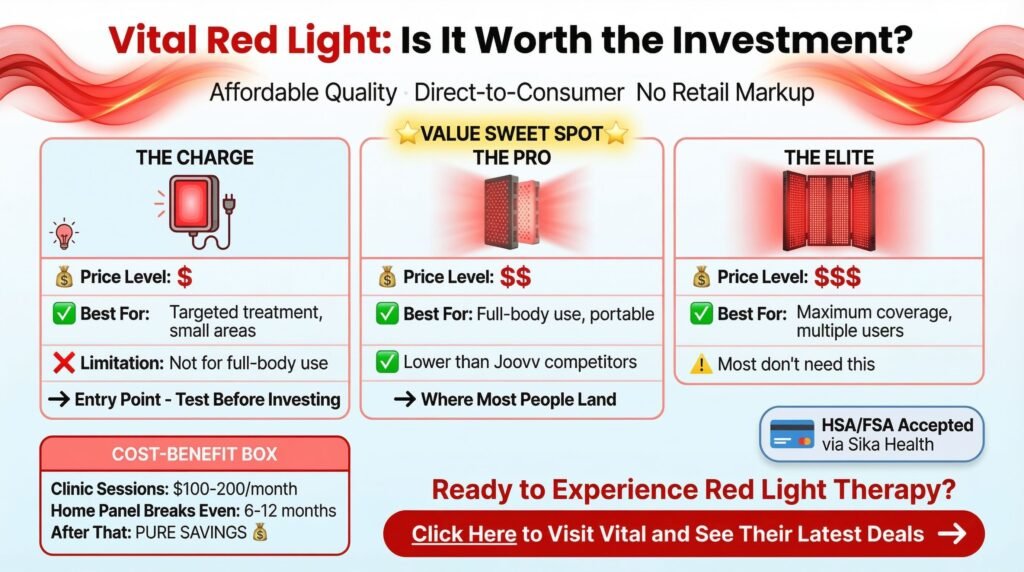
Vital Red Light devices provide effective, research-backed red light therapy for home use, focusing on skin health, recovery, inflammation reduction, and sleep improvement. Benefits emerge gradually with consistent 10-minute sessions over 3-4 weeks.
The lineup includes the entry-level Charge, value-packed Pro (recommended sweet spot), and premium Elite. Devices feature medical-grade LEDs, zero EMF at treatment distance, and long lifespan. Also, Vital’s devices are HSA/FSA eligible, which provides additional cost savings.
Pros outweigh cons for committed users; worth the investment if you’re seeking long-term wellness gains over pricey clinic sessions, but not for those wanting instant results.
Table of Contents
- Introduction
- Who Makes Vital Red Light and Why It Matters
- The Three Main Models (And Which One You Actually Need)
- Does It Actually Work? Performance Reality Check
- Customer Service and Real-World Experience
- Pricing: What You’re Actually Paying
- The Honest Pros and Cons
- Who Actually Benefits From This?
- Final Verdict
Introduction
Red light therapy used to be something you could only get at fancy clinics or sports medicine centers. Now companies like Vital Red Light are making it possible to do this stuff at home, which honestly changes the whole equation if you’ve been paying $100+ per session at a clinic.
This Vital red light review is based on actual testing, comparing their specs to competitors, and seeing what real users say after months of daily use.
The short version: Vital makes solid panels that cost less than the big names like Joovv, but you need to know which model makes sense for what you’re trying to do.
On the subject of cost-savings, Vital Red Light has partnered with Flex so qualified customers can use their Health Savings Account (HSA) or Flexible Spending Account (FSA). This means you may be able to purchase eligible red light therapy devices using pre-tax dollars, which can save you around 30–40% overall.
Let me break it down.
Who Makes Vital Red Light and Why It Matters
Vital Red Light is a direct-to-consumer brand, which means they sell straight to you instead of through retailers. That’s how they keep prices lower than competitors.
They just got recognized as a 2025 Tech Innovator of the Year, which is neat, but honestly, the specs matter more than awards.
What actually matters is that they use medical-grade LEDs. Not all red light panels are built the same… cheaper ones use lower-quality diodes that burn out faster or don’t produce consistent wavelengths.
Medical-grade means the LEDs maintain their output over time (they rate them at 50,000 hours).
The company offers a 30-day trial period, so you can actually test whether this stuff works for you before you’re locked in. They also say their panels produce zero EMF at treatment distance, which is good because some cheaper panels leak electromagnetic fields that can cause headaches.
One thing I noticed in their marketing is that they focus on power output as opposed to just brightness. That’s actually a more honest way to measure effectiveness, because brightness can be misleading.
A panel can look super bright but not actually deliver much energy to your tissues.
The Three Main Models (And Which One You Actually Need)
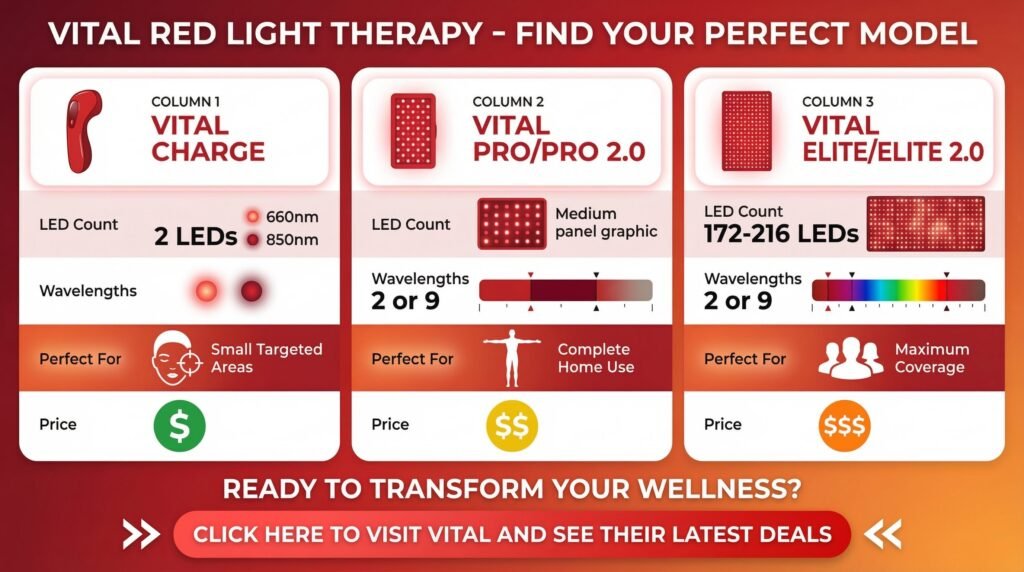
Vital sells three core devices. I’m going to be real with you about what each one does and doesn’t do well.
Vital Charge (The Starter)
This is a handheld device. It’s the cheapest option, and it works fine for treating small areas like your face, a sore elbow, or your hands.
If you’re skeptical about whether red light therapy even works, this is where you start. You’re not dropping a grand to find out it does nothing for you.
The problem is it’s too small for full-body treatment… you’d be standing there for an hour trying to cover your whole back or legs.
Vital Pro (The Sweet Spot)
This is the most popular model, and it’s what most people should probably get. It’s a medium-sized panel that you can set on a desk or nightstand.
You position it about 16-24 inches away from yourself, run it for 10 minutes, and you’re done.
The Pro has a built-in timer that shuts off automatically, which is nice because you don’t have to babysit it. One reviewer used it for a month and said their shoulder stiffness improved noticeably (they’d been dealing with it for years from grappling).
They also mentioned better sleep and less soreness after heavy workouts.
The Vital Pro costs less than comparable Joovv or Mito Red panels while delivering similar wavelengths and power output. That’s the main reason it shows up in so many vital red light review articles… it hits the value sweet spot.
Vital Elite (The Heavy Hitter)
This is the biggest panel with 172-216 LEDs, depending on which generation you get. It puts out 960 watts and covers way more surface area for full-body treatment.
The Elite makes sense if you’re treating many people in your household or you want maximum coverage in one session. It’s also the most expensive, which is why most people stick with the Pro unless they have a specific reason to go bigger.
The 2025 Upgrades (Pro 2.0 and Elite 2.0)
The newer 2.0 models add seven more wavelengths beyond the standard red and near-infrared. They now include blue light (480nm) for acne, yellow light (590nm) for skin brightness, and 1060nm for metabolism and cognitive support.
The original wavelengths (660nm red and 850nm near-infrared) are still the main workhorses backed by research. The extra wavelengths give you more options if you want to target specific things like acne or skin tone, but they’re not necessary for basic recovery and wellness stuff.
Does It Actually Work? Performance Reality Check
Here’s the thing… red light therapy isn’t some secret cure. It’s more like a recovery tool that adds up over time if you use it consistently.
The two main wavelengths that matter are 660nm (red) and 850nm (near-infrared). The red light works on your skin surface and helps with collagen production, skin tone, and surface blood flow.
The near-infrared penetrates deeper into muscle tissue and joints, where it affects recovery, inflammation, and cellular energy.
There’s actual research backing this stuff up. It’s not just marketing hype.
One person who tested the Vital Pro for a month reported that after about three weeks of near-daily use, they noticed real improvements. Shoulder stiffness from years of grappling got better; they felt less sore after heavy lifting sessions, and they slept better.
These weren’t overnight transformations… they were gradual improvements that stacked up over time.
That matches what the research says. Red light therapy works through consistent exposure, not one magic session. So, understand that this is a long-term investment in your health.
Build Quality Details That Matter
Vital uses anti-flicker LEDs, which is more important than it sounds. Cheaper panels have flicker (even if you don’t consciously see it) that can cause headaches and eye strain over time.
The anti-flicker tech prevents that.
The zero EMF claim is legit at treatment distance. They achieve this through proper insulation and component selection.
Some cheaper panels leak electromagnetic fields that you really don’t want exposure to.
The Elite models have five cooling fans to prevent overheating. The panels are designed to run for extended periods without burning out.
The 50,000-hour LED lifespan means these aren’t disposable devices. If you use it 10 minutes daily, that’s over 130 years of use (obviously, the electronics will fail before then, but the LEDs themselves should outlast everything else).
This adds up especially when you consider that professional red light therapy sessions average $100 per session. Crunch the real numbers with the cost-savings calculator below.
Red Light Therapy Savings Calculator
Professional red light therapy sessions typically cost $100 – $150 each. With a Vital Red Light device priced at $899, you can enjoy unlimited sessions at home and save thousands of dollars.
💡 Smart Investment: Most users break even within the first month. After that, every session is completely free, giving you unlimited access to red light therapy from the comfort of your home.
Customer Service and Real-World Experience
This is where things get mixed. Some aspects of the Vital customer experience are solid; others have friction points you should know about.
The good stuff:
The devices are durable. People who’ve owned them for years report they keep working reliably.
The auto shutoff timer and touchscreen interface (on newer models) make daily use easy.
You don’t have to think about it much… just turn it on, stand in front of it for 10 minutes, and you’re done.
The annoying stuff:
International shipping is where complaints show up. Several buyers mentioned unexpected import fees and customs delays that weren’t clear at checkout.
If you’re outside the US, you need to factor in potential surprise costs and clarify what “free shipping” actually means before you order.
Customer support is hit or miss. Some users say the company is responsive, others report slow response times during busy periods.
That’s pretty typical for direct-to-consumer brands… they don’t have the infrastructure of bigger companies.
The devices are straightforward enough that you probably won’t need much support, though. There’s no complicated protocol.
Position yourself 16-24 inches away, run for 10 minutes, and done.
Pricing: What You’re Actually Paying
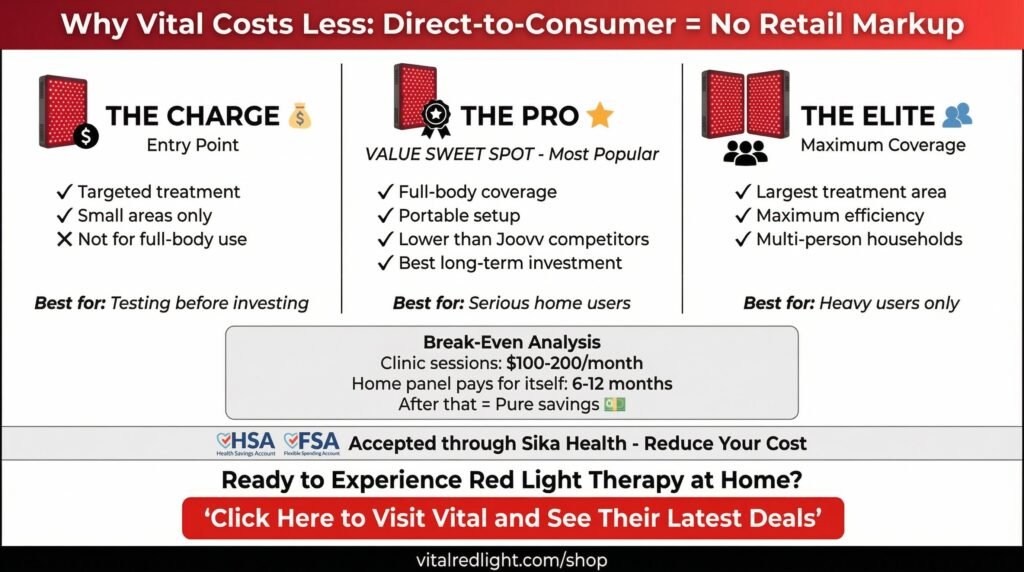
Vital positions itself as the most affordable option without cutting quality. That’s possible because they sell direct-to-consumer and skip the retail markup.
The Charge is the cheapest entry point. It works for targeted treatment of small areas, but it’s not enough for full-body benefits.
The Pro is where most people land. It’s large enough for full-body use, portable enough to set up anywhere, and priced lower than Joovv alternatives with comparable performance.
This is the value sweet spot.
The Elite maximizes coverage but needs a bigger budget. Most people don’t need this unless they’re treating many people or want maximum efficiency.
Again, they also accept HSA and FSA payments through Sika Health, which effectively reduces cost if you have those accounts.
Here’s the real cost-benefit calculation: If you’re spending $100-200 monthly on clinic sessions, a home panel breaks even within 6-12 months and then becomes pure savings. For someone just curious about red light therapy, the Charge lets you test without a major financial commitment.
You can grab the Vital Charge here if you want to start small and see if this stuff actually works for you before dropping serious money.
For most people, the Pro is the better long-term investment. Check out the Vital Pro models here to compare the standard version vs the 2.0 upgrade. Click Here.
The Honest Pros and Cons
Let me lay out the real strengths and limitations based on actual use and user reports.
What’s genuinely good:
The wavelengths (660nm and 850nm) have extensive clinical research supporting them. These aren’t random numbers… they’re the specific wavelengths that show benefits in studies.
Medical-grade LEDs provide consistent quality over time. Cheaper devices use LEDs that degrade faster.
Zero EMF at treatment distance removes a legit concern with cheaper panels.
No flicker means better comfort during use.
The operation is dead simple. No learning curve.
The 50,000-hour lifespan and multi-year warranties suggest durability.
Pricing is competitive against established brands like Joovv and Platinum LED.
The newer 2.0 models expand wavelength options for broader applications.
30-day trial removes purchase risk. You can test it and return if it doesn’t work for you.
What’s not so great:
Less convenient than wearable devices if you want treatment while doing other stuff. You need to position yourself in front of it for 10 minutes.
Pricing still climbs quickly on larger models. The Elite isn’t cheap.
Fewer independent third-party reviews than legacy brands, which limits external validation.
The 2.0 models are genuinely new, so long-term durability data doesn’t exist yet.
International shipping can carry unexpected costs.
Customer support responsiveness varies depending on when you contact them.
Who Actually Benefits From This?
Red light therapy isn’t for everyone. It works best for specific situations.
Heavy lifters and athletes see the most obvious benefits. Reduced muscle soreness, faster recovery between intense training sessions, and improved training capacity over weeks.
If you’re training 4-6 days weekly, you’ll probably notice the difference.
People with chronic joint stiffness (like shoulder issues from sports or repetitive strain) report measurable improvement in morning stiffness and pain levels. It doesn’t make pain disappear completely, but it takes the edge off and improves mobility.
Aging adults concerned with skin health benefit from the collagen-supporting effects of 660nm red light. Combined with proper skincare and sun protection, red light therapy contributes to better skin tone and potentially fewer fine lines over months of consistent use.
People optimizing sleep report that 10 minutes of red light exposure in the evening has a calming effect. It helps transition from work stress into genuine relaxation.
This effect is subtle but consistent across user reports.
People with acne or skin conditions benefit specifically from the blue light in the 2.0 models. Research supports blue light for reducing acne-causing bacteria, offering a choice to antibiotics or harsh topicals.
Click the button below to visit Vital Red Light’s official site to find the right device for your specific needs.
Final Verdict
After looking at many Vital Red Light review sources, testing claims against research, and seeing what actual long-term users report, here’s my honest assessment.
Vital Red Light makes well-built devices that deliver real but gradual benefits if you use them consistently. This isn’t some secret biohacking tool that replaces proper training, nutrition, and sleep.
It’s a legitimate recovery and wellness tool that fits into a sensible health routine.
The investment makes sense if you’re already doing the fundamentals (training, eating right, sleeping enough) and want to improve recovery one step further. It also makes sense if you’ve tried professional red light therapy, liked the results, and want to reduce ongoing clinic costs.
You need to commit to consistent daily or near-daily use for at least 3-4 weeks to see the benefits compound. Red light therapy only works through habit, not occasional use.
The investment doesn’t make sense if you expect overnight transformations or a substitute for proper fundamentals. It also doesn’t make sense if you’re unwilling to use it consistently, or if you need hands-free treatment throughout the day (wearables might serve you better in that case).
For most people reading this vital red light review, I’d say start with the Pro if you’re serious about full-body benefits, or start with the Charge if you want to test the approach on specific areas first.
If you’re ready to test this without major risk, the Vital Charge is a solid starting point for targeted treatment. You can check current pricing here and use code VITAL25 for their 30% discount.
For full-body treatment, the Pro gives you the best value. Compare the standard Pro vs the Pro 2.0 upgrade here to see which wavelength options make sense for your situation.
If you want maximum coverage and the expanded wavelength options, the Elite 2.0 offers nine therapeutic wavelengths for whole-body treatment. See the Elite options here.
The bottom line is that Vital Red Light delivers what it promises. The devices are well-built, the wavelengths are backed by research, and users consistently report real improvements in recovery, skin health, sleep, and joint comfort.
If those benefits match your goals and you can commit to using it regularly, the investment pays off over time. Start with the lower-cost options to test the approach, then expand if results justify it.
Read our full list of red light therapy device reviews here.
FAQ’s
What is red light therapy, and does Vital Red Light actually work?
Red light therapy uses specific wavelengths (primarily 660nm red for skin/collagen and 850nm near-infrared for deeper tissue recovery) to reduce inflammation, improve skin tone, aid muscle recovery, and enhance sleep. Yes, it works gradually with consistent use (3-4 weeks minimum), backed by research; expect subtle improvements rather than overnight miracles.
What are the main Vital Red Light models, and which should I choose?
Charge: Handheld starter for targeted small areas.
Pro: Mid-size panel (most popular, great value for full-body use).
Elite: Large premium panel for maximum coverage. Start with the Charge to test the waters or go for the Pro for the best balance of features and price. Newer 2.0 models add extra wavelengths (blue for acne, yellow for brightness, 1060nm for metabolism).
Are there concerns about EMF or flicker?
No, devices emit zero EMF at recommended treatment distance (16-24 inches) and use anti-flicker LEDs to prevent eye strain or headaches.
How much do Vital Red Light devices cost, and is it worth it?
Pricing varies by model (Pro is competitively priced below equivalents like Joovv/Mito Red); devices are HSA/FSA-eligible for potential 30-40% savings. They pay for themselves quickly (often in weeks to months) compared to $100+ professional sessions, especially with 3-5 uses per week.
What is the trial period and warranty like?
All devices come with a 30-day risk-free trial. They also feature multi-year warranties and a 50,000-hour LED lifespan for durability.
Who benefits most from Vital Red Light?
Athletes for faster recovery, people with joint pain or stiffness, those concerned with aging skin, sleep issues, or acne (via 2.0 blue light). Best for committed users with wellness basics already in place, not ideal for inconsistent use.
Any drawbacks or common complaints?
Not fully hands-free, international shipping may incur fees/delays, customer support can be variable, and there are fewer independent long-term reviews for the newer multi-wavelength models.
How long and how often should I use it?
10-minute sessions, 3-5 times per week, at a 16- 24-inch distance. Consistency is key to results.
This article includes affiliate links. If you click through and make a purchase, I may receive a small commission. This helps support the site and allows me to keep creating helpful content at no extra cost to you.