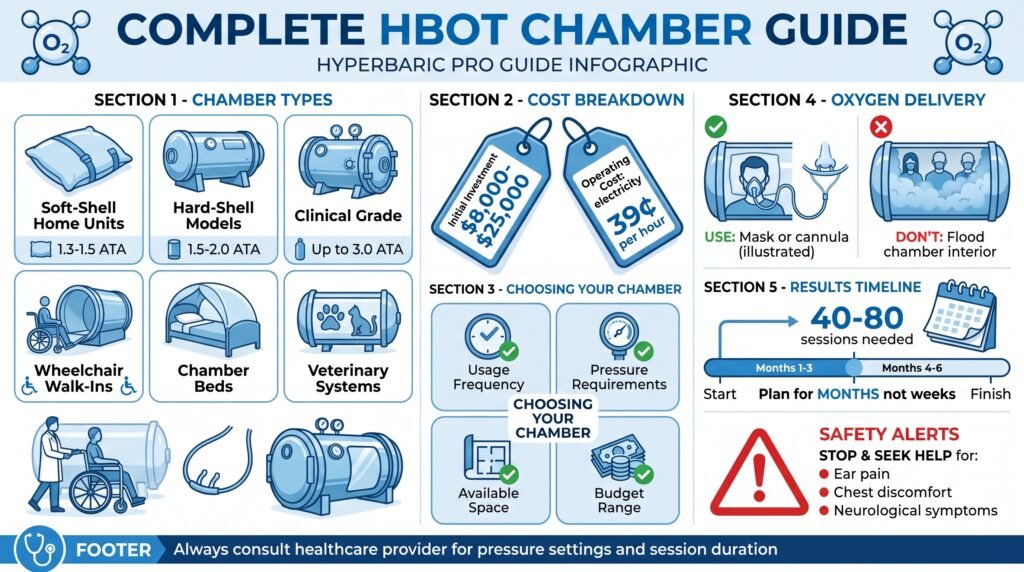
Quick Summary
Hyperbaric Pro sells a wide range of HBOT chambers: soft-shell home units (1.3-1.5 ATA), hard-shell models (1.5-2.0 ATA, up to 3.0 ATA clinical), multiplace chambers for 2-4 people, wheelchair-accessible walk-ins, chamber beds, and veterinary systems. Home and wellness-center units generally cost $8,000-$25,000, and electricity runs about 39 cents per hour.
Choose based on how often you’ll use it, how much pressure you need, and your space and budget. Deliver oxygen through the supplied mask or cannula, not by flooding the chamber. Home users report that real results can take 40-80 sessions, so plan in months rather than weeks. Always set pressure and session length with your healthcare provider, and stop and seek help for ear pain, chest discomfort, or unusual neurological symptoms.
Table of Contents
- Quick Summary
- Introduction to Hyperbaric Pro
- Product Categories Overview
- How to Choose the Right Product
- Setup and Getting Started
- Troubleshooting Common Issues
- Conclusion and Next Steps
- Frequently Asked Questions
Introduction to Hyperbaric Pro
Hyperbaric Pro makes a ton of different chambers.
This Hyperbaric Pro guide walks through what they actually offer, how to pick something that fits your situation, and the setup/usage stuff that people tend to mess up or get confused about.
The brand covers everything from basic 1.3 ATA soft chambers you can fold up and stick in a spare room, all the way to 3.0 ATA hard-shell units that clinics use. They also do multiplace chambers (where 2-4 people can sit together), wheelchair-accessible walk-in models, and even veterinary systems.
Most of their home chambers sit in the 1.3-1.5 ATA range with soft shells, while the hard-shell options go higher (1.5-2.0 ATA and up to 3.0 for clinical setups).
Hyperbaric Pro focuses on HBOT systems for home users, wellness centers, clinics, and vet practices. Their catalog is pretty broad compared to some other brands that only do one or two types of chambers.
You’ll find soft-shell home chambers, hard-shell hospital-grade units, multi-user systems, chamber beds, and specialty models with things like wheelchair ramps and walk-in doors.
One of their main home models is a 36-inch soft oxygen therapy chamber running at 1.4 ATA. It uses medical-grade TPU and Dacron materials, includes dual pressure release valves, an emergency depressurization button, a CO₂ reduction system, and a negative ion unit.
That chamber ships with a 10 LPM oxygen concentrator (95%+ purity) plus masks, headsets, and nasal cannulas. The oxygen gets delivered directly to you through the mask instead of just filling up the whole chamber air, which makes a big difference in what you actually breathe.
On the hard-shell side, they have a 36-inch stainless steel chamber with selectable pressure from 1.3 ATA up to 1.5-1.6 ATA. The body is 304-grade steel with interior lighting, alarms, and controls for pressurization and depressurization speed.
Electricity cost for that system runs around 39 cents per hour, which matters if you’re planning daily use for months or years.
Across the board, Hyperbaric Pro emphasizes durability with multi-year warranties and long-term testing at higher ATA levels.
Product Categories Overview
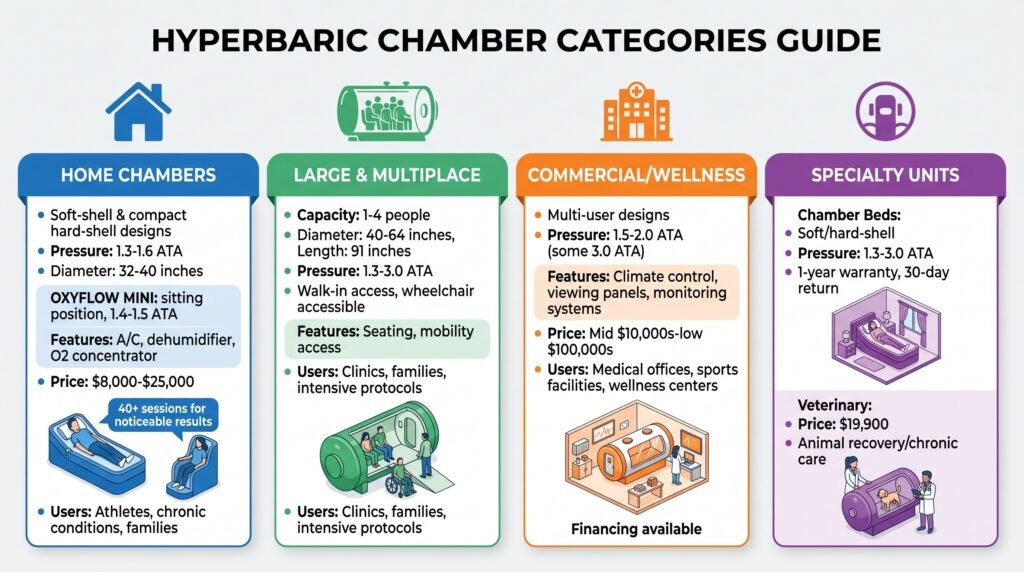
Home Hyperbaric Chambers
The home category is built for people who want regular HBOT without driving to a clinic every time. These units are mostly soft-shell or compact hard-shell designs.
Pressure ranges sit around 1.3 ATA for most soft chambers, with some reaching 1.4-1.6 ATA.
Key examples:
OXYFLOW MINI sitting chambers come with external frames and run at 1.4-1.5 ATA. These are for people who prefer sitting upright instead of lying down flat.
Soft chambers come in 32-40-inch diameters with integrated air conditioning, dehumidifiers, and oxygen concentrators for longer, more comfortable sessions.
Pricing for home units typically runs from around $8,000 to $25,000 depending on size, pressure level, and whether you go soft-shell or hard-shell.
These home systems target people dealing with chronic stuff, athletes wanting consistent recovery access, and families who need long-term therapy without paying clinic rates every single time.
I’ve seen posts from home users saying they noticed life-changing benefits after doing sessions consistently over months, especially for things like post-concussion syndrome or many TBIs. But those same people mention it took 40+ sessions before they saw real changes.
If you’re tired of clinic fees eating your budget, you can check current Hyperbaric Pro home models and see what fits your space and budget by clicking the button below.


Large and Multiplace Chambers
Large chambers work for clinics, wellness centers, and families where one person at a time doesn’t cut it.
Hyperbaric Pro’s large and multiplace units start around 40 inches in diameter and go up to 64 inches, with lengths near 91 inches. Some hold up to four people at once.
Specs and use cases:
The four-person hard-shell chamber measures 64″ x 91″ and supports selectable pressures from 1.3 ATA to 2.0 ATA, with seating and walk-in access.
Wheelchair-accessible models like the XLT MC4400 are designed for users with mobility issues.
Pressure ranges span from 1.3 ATA (mild wellness) up to 3.0 ATA for more aggressive clinical protocols.
These systems suit clinics treating many clients per hour, families running shared sessions, and professionals who need higher ATA for intensive protocols.
Commercial and Wellness Center Chambers
Commercial chambers target wellness centers, medical offices, sports recovery facilities, and health businesses adding HBOT services.
They focus on multi-user capacity, solid construction, and easy operation for staff.
Common traits:
Multi-user designs let you treat several clients at once, which improves throughput and session availability.
Pressure ranges run from about 1.5 ATA to 2.0 ATA for most wellness and medical programs, with some 3.0 ATA options for specialized work.
Climate-controlled interiors, clear viewing panels, ergonomic seating, and integrated monitoring systems keep clients comfortable and safe.
Most commercial setups sit in the mid-four to low-five figure range, with financing options to spread the cost.
If you run a clinic or wellness center, you can compare Hyperbaric Pro commercial chamber packages and financing options to see what makes sense for your space, ATA pressure level, and chamber style, from portable hyperbaric chambers to hard shell hyperbaric chamber systems. Visit their official site by clicking the button below.
Specialty Chambers: Beds and Veterinary Units
Hyperbaric Pro also makes chamber beds and veterinary systems for more specific needs.
Hyperbaric chamber beds:
These include soft and hard-shell bed-style units with pressures from 1.3 ATA up to 3.0 ATA.
Models like the Lux-Air 40-inch 1.3 ATA are lightweight and portable, while the hard-shell 31.5-inch 3.0 ATA chamber handles higher pressure with heavier construction.
Beds generally ship with at least a one-year warranty and a 30-day return window. Soft beds cost less than hard-shell options.
Veterinary chambers:
Dedicated vet units run in the high four to low five figures, with one example listed around $19,900 after discount.
These help veterinary clinics offer HBOT for animals recovering from injury, surgery, or dealing with chronic conditions.
How to Choose the Right Product
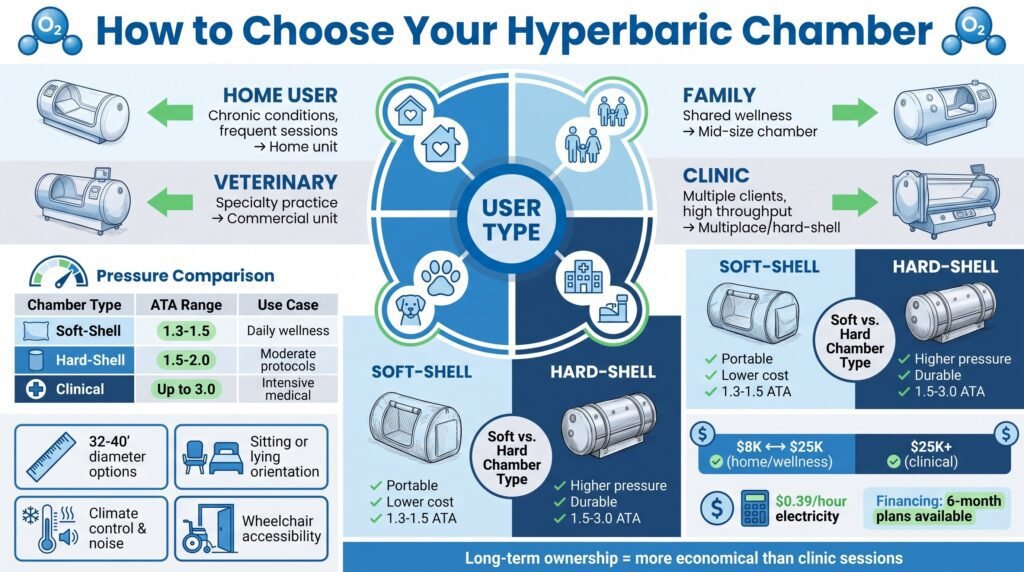
Start with Your Use Case
The choice starts with how often you plan to use the chamber and who will be inside it.
Someone with a chronic neurological condition or long-standing inflammation usually wants many sessions per week for months. That makes a home unit way more practical than paying per session at a clinic.
A clinic or wellness center cares more about client throughput, staff workflow, and ROI per square foot. That pushes the decision toward multiplace or large hard-shell options.
Hyperbaric Pro’s catalog supports person home users needing mild to moderate pressure, families wanting shared sessions, clinics needing 2-4 person systems for heavy daily use, and veterinary practices building specialty offerings.
Pressure (ATA) and Oxygen Delivery
People on Reddit often mention that mild 1.3 ATA systems offer benefits but feel limited for serious issues, while hard-shell chambers reaching 2.5 ATA or more deliver stronger effects at a higher cost.
Another key point from experienced home users is that oxygen should be delivered via a mask or cannula connected to an oxygen concentrator. That’s where the concentrated oxygen actually enters your body.
Hyperbaric Pro systems include 10 LPM oxygen concentrators at 95%+ purity plus masks, headsets, and cannulas. Pressure and oxygen delivery decide how strong your HBOT program can be.
Soft-Shell vs Hard-Shell
Soft-shell:
Typically, lower ATA (around 1.3-1.5 ATA).
Lighter, more portable, easier to fit into spare rooms or offices.
Lower upfront cost but limited pressure ceiling.
Hard-shell:
Higher ATA (often 1.5-2.0 ATA for wellness and up to 3.0 ATA for clinical setups).
Heavier construction, stronger safety margins, better suited for intensive protocols and multi-user operation.
Higher upfront cost but more flexibility and durability under daily use.
Forum discussions usually favor soft-shell for budget-conscious home users and hard-shell for people chasing stronger therapeutic effects and running serious, structured programs.
Space, Access, and Comfort
You’re going to spend a lot of time inside the chamber, so comfort and layout matter just as much as specs.
Things to consider:
Diameter and length: small home chambers around 32 inches fit tight spaces, while 36-40-inch designs give more room to move.
Orientation: sitting OXYFLOW MINI models work for users who struggle with lying flat, while bed-style chambers are better for people who want to nap or rest fully.
Accessibility: walk-in and wheelchair-accessible designs are necessary for users with mobility challenges.
Climate and noise: integrated air conditioning, dehumidification, and quiet compressors make sessions more tolerable, especially when you’re doing them several times a week.
Budget and Financing
Hyperbaric Pro pricing for home and wellness-center chambers generally runs between $8,000 and $25,000, depending on pressure, size, and soft vs. hard shell.
Commercial multiplace units and high-ATA clinical systems reach higher price points, often in the mid-five-figure range.
Financing options:
Hyperbaric Pro advertises flexible financing, like six-month plans and tailored options for businesses.
Electricity cost for a typical hard-shell 36-inch chamber is around 39 cents per hour.
That’s minor compared with clinic session fees when you run daily sessions.
One independent review pointed out that while the initial cost for a Hyperbaric Pro chamber is substantial, owning a unit becomes more economical than paying for repeated clinical sessions over time if you plan frequent, long-term use.
If cost is holding you back, check current financing offers and long-term cost breakdowns before making a final decision. Visit their easy-to-navigate site to see their various financing options by clicking the button below.
Home Sessions vs. Clinical Sessions
If you’re now paying $200 per clinic session, a single five-day protocol runs $1,000. Several protocols per year quickly match or exceed those hidden costs.
The real value of Hyperbaric Pro is time and consistency. Once the chamber is in your home, you’re not fighting for appointment slots, driving across town, or trying to line up your energy levels with clinic availability.
People with chronic illness, fatigue, pain, or kids at home regularly mention that scheduling sessions on their own timetable feels just as important as the money saved.
When you’re ready to calculate your personal break-even point, confirm current Hyperbaric Pro pricing through the link below and plug the numbers into a simple spreadsheet. Treat this like a serious investment, not an impulse buy.
Bookmark this page and come back to it whenever you are calculating the cost of professional sessions in your area vs. unlimited home use.
Hyperbaric Oxygen Chamber Cost Calculator
Compare the long-term costs of clinical hyperbaric sessions versus investing in an at-home chamber. See your break-even point and potential savings.
Clinical Sessions
Home Chamber
Break-Even Point
58 sessions (4.8 months)
Why Choose an At-Home Chamber?
Convenience: No travel time, scheduling hassles, or waiting rooms. Use your chamber whenever you want.
Cost Savings: Most users break even within 3-5 months with regular use (3 sessions/week).
Long-Term Value: After the first year, your effective cost per session drops dramatically – often to just $38-50 per session.
Privacy & Comfort: Enjoy treatments in the comfort of your own home with complete privacy.
Setup and Getting Started
Delivery, Assembly, and Installation
Hyperbaric Pro's home chambers are marketed as compact and easy to assemble, with detailed instructions and customer support.
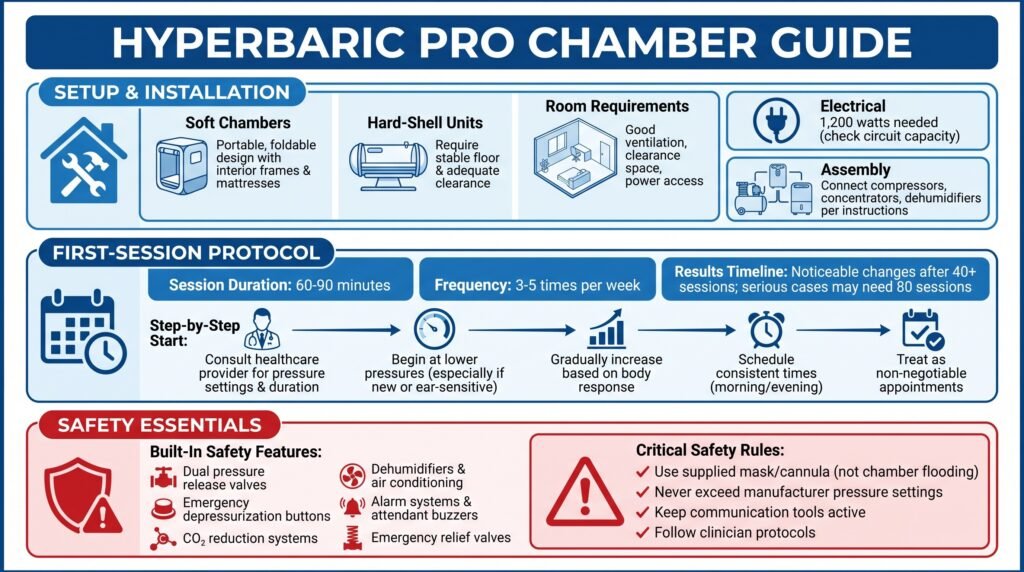
Soft chambers are portable and foldable with interior frames and mattresses included. Hard-shell units arrive as more substantial installations requiring a stable floor and enough clearance.
First-Session Protocol
Hyperbaric Pro's FAQ suggests that most people benefit from sessions lasting 60-90 minutes, three to five times per week, with adjustments based on medical guidance.
Reddit home users mention that progress can take time, with noticeable changes sometimes appearing after 40 or more sessions. Serious cases might need up to 80 sessions.
Practical starting plan:
Work with your healthcare provider to define an initial pressure setting and session length that respects your condition and medication list.
Start at lower pressures, especially if you're new to HBOT or prone to ear pressure issues. Gradually increase once you know how your body responds.
Block time for consistent use, like early morning or evening schedules. Treat sessions like standing appointments instead of something optional.
Safety Basics
Hyperbaric Pro chambers combine many layers of safety, but how you use the system matters just as much.
Core safety elements:
Dual pressure release valves and emergency depressurization buttons on the 36-inch soft chamber reduce risk if pressure ever needs to be relieved quickly.
CO₂ reduction systems, dehumidifiers, and air conditioning help maintain a healthy environment inside the chamber.
Alarm systems, attendant buzzers, and emergency relief valves on hard-shell units give both users and staff clear signals and options during operation.
Best practices:
Always use the supplied mask or cannula connected to the oxygen concentrator instead of trying to flood the entire chamber with oxygen, which lowers the actual concentration you breathe.
Never change pressure settings beyond manufacturer guidance or any protocol set by your clinician.
Keep communication tools (buzzers, intercoms) active when someone is inside the chamber, especially for long sessions.
Troubleshooting Common Issues
Pressure Not Building Properly
If pressure is slow to rise or stalls, check a few things.
Verify compressor connections and that all valves are in the correct operating positions.
Inspect seals around doors and zippers on soft chambers for any gaps or damage.
Check for error lights or alarms on the control panels and follow the manufacturer's troubleshooting steps.
Regular inspection of seals and valves is part of the recommended maintenance for commercial chambers. The same logic applies to home units.
Oxygen Concentrator Alarms or Low Purity Readings
If the concentrator shows warnings or oxygen feels lower than expected, try these steps.
Check inlet and outlet filters for blockage and replace any that are due.
Confirm that the unit is receiving adequate power and that cords and plugs are secure.
Verify the flow setting (like 10 LPM) matches your protocol and mask type.
Hyperbaric Pro's concentrators use PSA molecular sieve technology and many filtration stages, which perform best when maintained according to schedule.
Condensation, Heat, and Noise
Long sessions at higher ATA can create more heat and moisture inside the chamber.
Solutions:
Use integrated dehumidifiers and air coolers, particularly in compact rooms or warmer climates.
Keep the compressor unit on a stable surface to reduce vibration and noise.
If noise is still distracting, simple earplugs or noise-cancelling headphones can help without interfering with safety.
Claustrophobia or Discomfort
Claustrophobia is a common issue, especially for new users.
Ways to help:
Choose larger diameter chambers (36-40 inches) or walk-in designs with clear windows so the space feels less confined.
Keep lighting inside the chamber on and use transparent panels to stay visually connected to the outside.
Start with shorter sessions and build up, focusing on breathing rhythm and relaxation techniques.
When to Stop and Seek Help
Certain situations call for an immediate pause.
Sharp ear pain, chest discomfort, or unusual neurological symptoms during a session need attention.
Unexplained alarms or pressure fluctuations that don't resolve with basic troubleshooting also need professional help.
In these cases, depressurize according to manufacturer instructions, exit the chamber, and contact both Hyperbaric Pro support and your healthcare provider before continuing.
Conclusion and Next Steps
Hyperbaric Pro gives people, families, clinics, and wellness centers a broad set of hyperbaric options, spanning mild home chambers to multi-user 3.0 ATA systems.
This Hyperbaric Pro guide covered the brand's main categories, how to choose the right pressure and shell type, what real users report about session counts and oxygen delivery, and practical steps for setup, safety, and troubleshooting.
If you're tired of paying clinic rates for every HBOT appointment and want a consistent long-term program at home, a properly chosen Hyperbaric Pro chamber can reduce cost per session, cut travel time, and give you back control over scheduling.
Clinic and wellness-center owners can use the same lineup to build scalable HBOT services with multi-user chambers and professional-grade safety features.
When you're ready, compare current Hyperbaric Pro models, pricing, and financing options to lock in a system that matches your pressure needs, space, and long-term health plan. Visit their official site by clicking the button below:
Frequently Asked Questions
What is the difference between soft-shell and hard-shell hyperbaric chambers?
Soft-shell chambers typically run at 1.3-1.5 ATA, are lighter and more portable, and cost less upfront. Hard-shell chambers reach higher pressures (1.5-2.0 ATA for wellness use, up to 3.0 ATA for clinical setups) and offer sturdier construction, but they cost more and need a more permanent installation.
How much does a Hyperbaric Pro chamber cost?
Home and wellness-center units generally run from about $8,000 to $25,000, depending on size, pressure level, and shell type. Commercial multiplace and high-ATA clinical systems can reach the mid-five figures. Financing options, including six-month plans, are advertised.
How much does it cost to run a chamber?
Electricity for a typical 36-inch hard-shell chamber is around 39 cents per hour, which is small compared with per-session clinic fees if you use it often.
How many sessions before I notice results?
Some home users report that noticeable changes took 40 or more sessions, and more serious cases may need up to 80. Plan in terms of months rather than weeks, and keep a simple log of symptoms, sleep, and energy.
What do I need to set up a home chamber?
Choose a well-ventilated room with enough clearance and easy access to outlets. The combined oxygen concentrator and compressor units draw around 1,200 watts, so confirm your circuit can handle the load. Hard-shell units also need a stable floor.
This article includes affiliate links. If you click through and make a purchase, I may receive a small commission. This helps support the site and allows me to keep creating helpful content at no extra cost to you.