Quick Summary
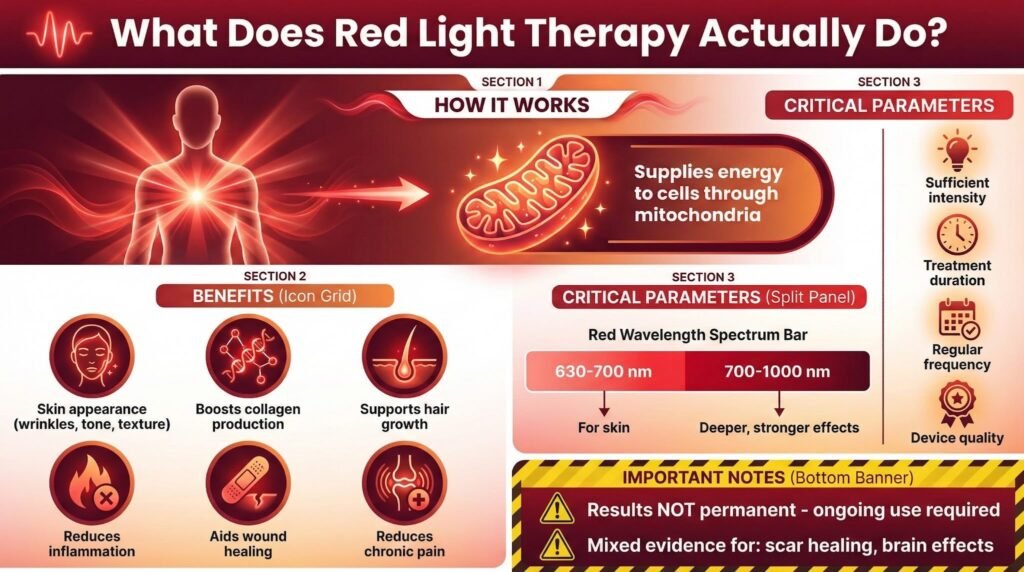
Red Light Therapy (RLT), using red/near-infrared light on the body, works by supplying energy to cells (via mitochondria), which can help skin, hair, pain, and tissue health.
Red light therapy benefits include improving skin appearance (wrinkles, tone, texture), boosting collagen production, supporting hair growth, reducing inflammation and chronic pain, and aiding wound healing.
But outcomes depend heavily on proper parameters; correct wavelengths (~630-700 nm for skin, ~700-1000 nm for stronger effects), sufficient light intensity, treatment duration and frequency, and quality of the device. Results aren’t permanent; ongoing use is needed to sustain benefits, and evidence for some uses (like scar healing or brain effects) remains mixed or preliminary.
📑 Table of Contents
- Introduction: From niche therapy to at-home devices.
- How It Works at the Cellular Level
- What It Does for Skin and Aging
- Hair Growth Applications
- Pain Relief and Inflammation Reduction
- Other Claimed Effects (More Speculative)
- Practical Use: What Matters in a Device & Treatment Plan
- Limitations, Caveats & When to Be Skeptical
Introduction
Red light therapy has transformed from something you could only get at specialized clinics to a treatment you can buy on Amazon and use while scrolling through your phone.
Athletes rely on red light therapy for recovery, skincare enthusiasts document their results on social media, and wellness optimizers have added it to their routines alongside everything from meditation apps to supplement stacks.
But when you strip away the marketing hype and Instagram testimonials, what actually happens when you shine red light on your body?
The idea sounds almost too simple to be real. A light that supposedly smooths wrinkles, thickens hair, reduces chronic pain, and might even improve how your brain functions.
When I first heard about it, I thought it belonged in the same category as those magnetic bracelets your uncle swears cured his arthritis. Maybe on the level of ‘woo-woo’ science of placing magnets under your mattress for better circulation…But I digress.
The science supporting red light therapy is surprisingly solid, even though most of what you read about it online is buried under layers of exaggeration and misunderstood mechanisms.
The basic concept is actually quite straightforward. Red and near-infrared light operate in specific wavelength ranges that your cells can absorb and use to generate energy.
This has nothing to do with mystical energy fields or quantum healing buzzwords.
What happens is basic photochemistry occurring inside your mitochondria, the microscopic power generators that keep every cell in your body running.
Also, if the sticker shock of red light therapy may have scared you away in the past. We will cover more economically sensible ways of obtaining the benefits of this groundbreaking therapy towards the end.
Feel free to skip ahead if you’d like to skip the more technical and scientific portions of this article.
How It Works at the Cellular Level
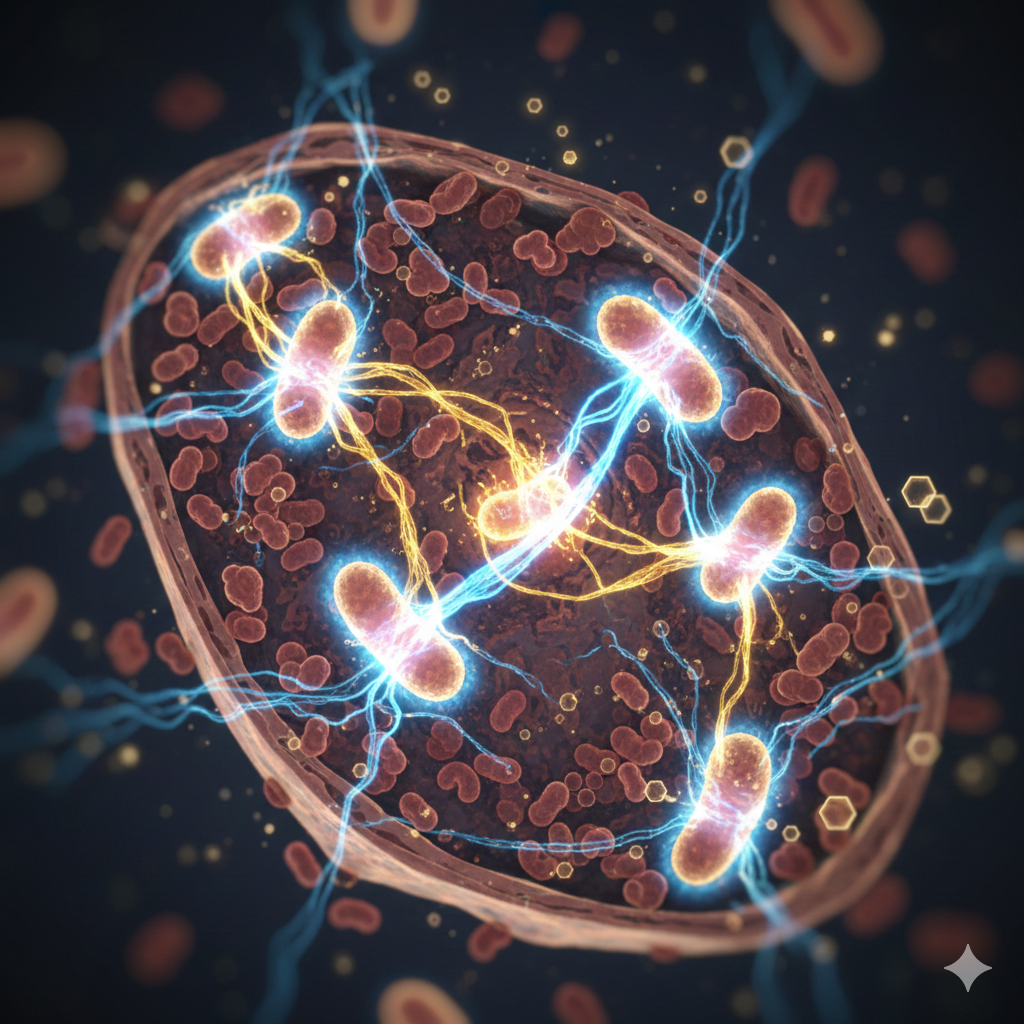
When red or near-infrared light hits your skin, something measurable happens at the molecular level. The light penetrates through the outer layers of your skin and reaches the cells underneath.
Inside these cells, within the mitochondria, there’s a protein complex called cytochrome c oxidase. This protein plays a central role in the electron transport chain, which is the biological assembly line that produces ATP. ATP functions as the energy currency your cells spend on everything from muscle contractions to protein synthesis to repairing daily cellular damage.
Under typical conditions, nitric oxide can attach to cytochrome c oxidase and temporarily reduce its efficiency, which slows down ATP production. When photons at the right wavelength strike this protein complex, they cause nitric oxide to detach and release from its binding site.
This frees up the enzyme to function more efficiently, allowing oxygen to bind correctly and the electron transport chain to operate at higher capacity.
The outcome is a substantial boost in ATP production. Some studies have documented increases as high as sixteen times the baseline level in certain cell types under optimal conditions.
This mechanism was discovered somewhat by accident in the 1960s. Hungarian physician Endre Mester wanted to test whether low-level laser light could cause cancer in mice.
He shaved patches of fur from the test subjects, applied laser light, and waited to see if tumors would develop. They didn’t. Instead, the fur grew back faster and thicker on the treated areas compared to the untreated control patches.
This unexpected observation launched decades of research into what scientists now call photobiomodulation.
The specific wavelength you use matters enormously. Red light, typically defined as wavelengths between 630 and 700 nanometers, penetrates relatively shallow depths of about three to five millimeters into tissue. This makes it effective for treating skin conditions, stimulating hair follicles, and affecting surface-level inflammation.
Near-infrared light, ranging from 700 to 1000 nanometers or beyond, penetrates much deeper. It can potentially reach muscle tissue, joints, and, according to some research, even affect brain tissue when applied to the scalp or through specialized intranasal devices.
What It Does for Skin and Aging

The most commercially successful use of red light therapy has been in aesthetic applications, particularly for addressing visible signs of aging. The FDA has cleared many devices for treating wrinkles, fine lines, and overall skin texture.
This regulatory clearance represents a meaningful threshold that separates legitimate therapeutic claims from pure marketing fiction. The mechanism involves several biological pathways working simultaneously.
First, red light exposure causes vasodilation, which means the blood vessels in the treated area widen. This increases blood flow, delivering more oxygen and nutrients to skin cells while removing metabolic waste products more efficiently.
Second, and probably more significantly, the increased ATP production stimulates fibroblasts. These are the cells responsible for producing collagen and elastin, the structural proteins that give skin its firmness and bounce-back quality.
Clinical trials have documented these effects quite thoroughly. One important study followed ninety participants who received eight LED red light treatments over four weeks. More than ninety percent reported visible improvements, including smoother skin texture, reduced fine lines, diminished dark spots, and improved overall tone.
These weren’t just subjective assessments where people looked in the mirror and thought they saw improvement. Researchers used standardized photography and independent evaluators to confirm the changes objectively.
A longer-term study examining red light therapy masks over three months showed that improvements in skin quality persisted for about one month after treatment stopped.
This temporal relationship reveals something crucial about how red light therapy works. You’re not creating permanent structural changes the way a surgical facelift would. Instead, you’re temporarily boosting cellular processes that maintain skin quality.
When you stop the treatment, those processes gradually return to baseline, and the benefits fade accordingly. This means red light therapy functions more like exercise for your skin. You maintain results by continuing the practice, not by doing it once and expecting permanent changes.
However, there’s an interesting contradiction in the dermatological research. While red light therapy shows consistent benefits for general skin aging, its effectiveness for post-surgical scar healing presents mixed results.
Some studies demonstrated that scars on the treated side healed in about half the time compared to untreated control sites. Other studies showed only marginal improvements that didn’t reach statistical significance, essentially performing slightly better than random chance but not reliably enough to recommend as a standard intervention.
This inconsistency likely relates to treatment parameters. The dosage measured in joules per square centimeter, the specific wavelength used, the distance from the device to the skin, and the timing relative to the surgical procedure all influence outcomes.
This variability highlights a broader challenge with red light therapy.
Unlike pharmaceutical interventions, where dosing is standardized, light therapy involves many variables that can dramatically affect whether you get results or just waste your time and money.
As many practitioners agree, seeing improvements in body composition is an inside as well as outside process. Therefore, using collagen boosters can be a great adjunct to red light therapy in accelerating results. Try Golden Collagen’s 2-minute quiz to find the right collagen formula match for your specific needs here.
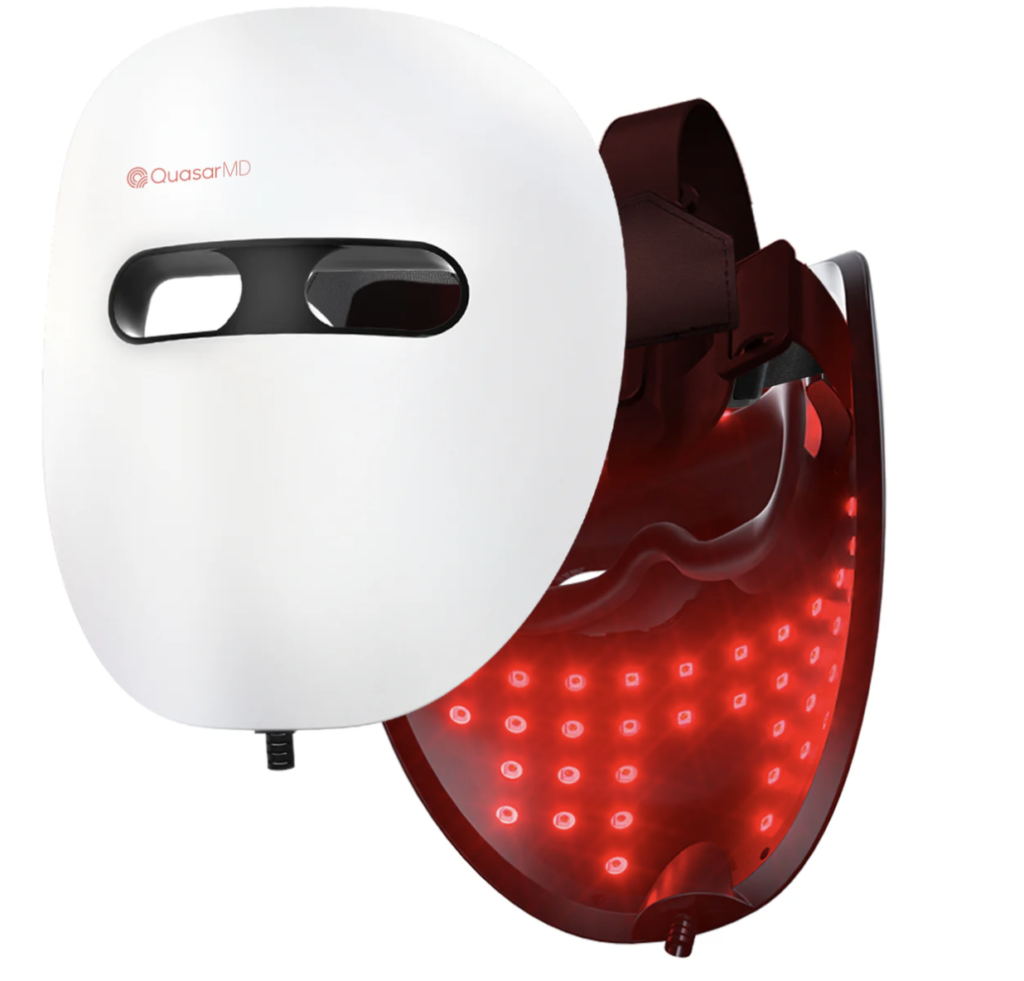
Some of the most effective red light therapy devices for targeting your face are masks. Click below to visit Quasar MD to access a wide array of affordable and effective red light therapy masks and mats that won’t break the bank.
Hair Growth Applications
The FDA has cleared several at-home red light devices specifically for treating pattern hair loss, including combs, caps, and helmet-style devices. This regulatory clearance came after clinical trials demonstrated that red light therapy produces hair regrowth results comparable to minoxidil, which has been the gold standard treatment for androgenic alopecia for decades.
The mechanism parallels what happens in skin tissue. Increased blood flow to hair follicles delivers more nutrients and oxygen to the cells responsible for producing hair shafts.
The enhanced ATP production provides more energy for the metabolically demanding process of growing hair.
Studies on both hereditary and hormonal hair loss patterns show that repeated red light treatments increase hair shaft thickness and length over time while reducing the rate of hair loss.
What you really need to understand here is that red light therapy doesn’t cure pattern baldness. It doesn’t address the underlying hormonal mechanisms that cause follicles to shrink and eventually stop producing terminal hairs.
Instead, it provides a supportive environment that helps struggling follicles maintain function longer than they otherwise would.
This means that when you stop treatment, the benefits stop too. The hair you’ve maintained or regrown will gradually revert to the trajectory it was on before you began therapy.
I find this aspect particularly significant because it sets realistic expectations. You’re not reversing the genetic or hormonal programming that causes hair loss. You’re providing supplemental support that helps follicles perform better despite those underlying factors.
Think of it like using fertilizer on a lawn. The grass grows better while you’re applying it, but if you stop, the lawn returns to its baseline condition, determined by soil quality, genetics, and environmental factors.
Pain Relief and Inflammation Reduction
The anti-inflammatory effects of red light therapy are among the most consistently reproducible findings across the research literature.
Comprehensive reviews analyzing dozens of studies have found significant improvements in chronic pain conditions, including fibromyalgia, knee osteoarthritis, non-specific lower back pain, and post-surgical pain.
The mechanism involves several pathways working simultaneously. Enhanced mitochondrial function reduces oxidative stress, which is a primary driver of inflammation.
Increased ATP production provides cells with more energy to repair damage and maintain normal function.
Red light exposure also stimulates the release of endorphins, your body’s natural pain-relieving compounds, and appears to modulate pro-inflammatory cytokines, the signaling molecules that coordinate inflammatory responses.
What makes this particularly compelling is that the pain relief occurs without the side effect profile associated with pharmaceutical interventions. NSAIDs can cause gastrointestinal problems and cardiovascular risks with long-term use.
Opioid pain medications carry addiction potential and many adverse effects.
Red light therapy produces minimal side effects. The most commonly reported issue is temporary mild skin redness or slight irritation, which typically resolves within minutes to hours.
However, there’s a significant practical limitation you should know about. In many chronic pain conditions, the relief is temporary. Studies documenting improvements in pain scores often show that benefits reduce within weeks of stopping treatment. This doesn’t necessarily represent a flaw. That’s simply the nature of how the intervention works.
You’re not correcting the underlying structural or inflammatory problems causing pain. You’re temporarily improving cellular function in ways that reduce pain signaling and promote healing, but those improvements need ongoing treatment to maintain.
For targeted red light therapy, options such as the Flexbeam portable wrap-around red light or the Kineon MOVE+ Pro are great choices. Click the buttons below to compare the two. Both are HSA/FSA Eligible and have generous warranties.
Brain Function and Cognitive Applications
This is where red light therapy research becomes genuinely fascinating and somewhat speculative. Early studies on patients with mild to moderate dementia using transcranial and intranasal red light devices have shown measurable cognitive improvements.
A 2021 study exposed participants to just six minutes of daily red light therapy over eight weeks, resulting in statistically significant improvements in cognitive function tests with no reported adverse effects.
The theoretical mechanism makes biological sense. Brain tissue is exceptionally metabolically active, consuming roughly twenty percent of your body’s total energy despite representing only about two percent of body mass.
Neurons rely heavily on mitochondrial function, and anything that enhances ATP production should theoretically support cognitive performance. Near-infrared wavelengths can penetrate the skull, though the exact percentage that reaches brain tissue remains debated in the literature.
Animal studies and cell culture research have demonstrated improvements in markers associated with Alzheimer’s disease, Parkinson’s disease, metabolic syndrome, and diabetes. Laboratory mice exposed to near-infrared light show reduced amyloid plaque formation, decreased neuroinflammation, and improved performance on cognitive tests compared to control groups.
However, I need to emphasize that human clinical trials in this domain remain limited. The studies that do exist typically involve small sample sizes, and we don’t yet have the large, multi-year trials needed to establish red light therapy as a standard intervention for neurodegenerative conditions.
The preliminary results are encouraging enough to warrant continued research, but not robust enough to recommend red light therapy as a treatment for conditions like dementia or cognitive decline without substantial extra evidence.
Athletic Recovery and Performance

Many athletes use red light therapy with the belief that it speeds up muscle recovery and enhances performance. The theoretical mechanism is sound.
Increased cellular energy production should support faster repair of exercise-induced muscle damage, and reduced inflammation should minimize soreness and speed recovery between training sessions.
However, the clinical evidence specifically supporting performance enhancement is surprisingly thin. While studies have documented reduced markers of oxidative stress and inflammation following intense exercise in subjects using red light therapy, translating those biochemical changes into measurable performance improvements has proven more difficult.
Some studies show modest improvements in time to exhaustion or reduced muscle soreness, but others show no significant difference compared to placebo interventions.
This doesn’t mean athletes are wrong to use red light therapy. It means the benefits might be more subtle than dramatic, or that current research hasn’t yet identified the optimal protocols for maximizing performance effects.
Professional sports teams and Olympic training centers increasingly incorporate red light therapy into recovery protocols, suggesting that practitioners observing athletes daily believe they see benefits, even if those benefits haven’t been definitively captured in controlled research settings.
How to Actually Use Red Light Therapy
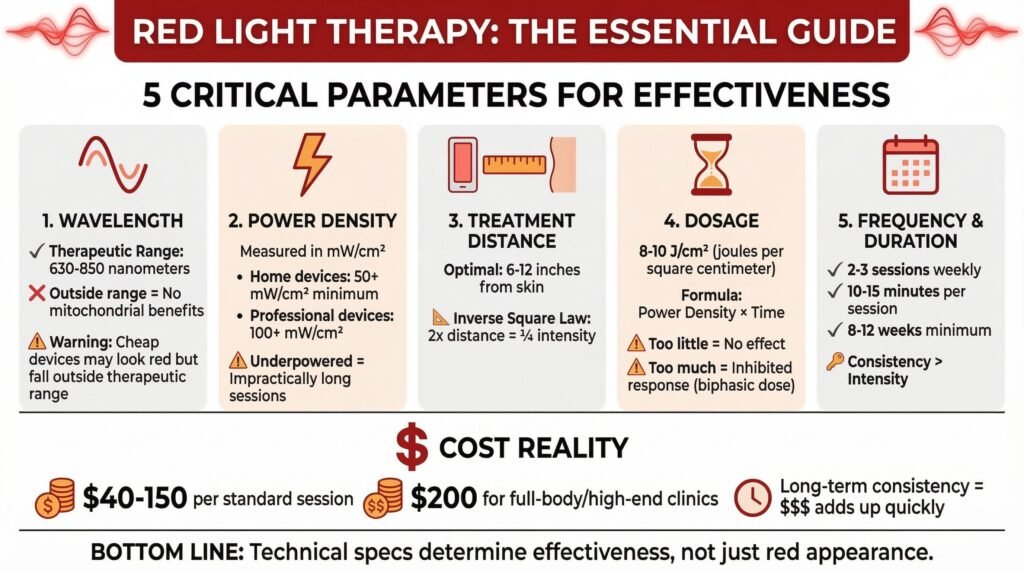
If you’re considering trying red light therapy, understanding the parameters that determine effectiveness is really important. Not all devices are created equal, and the difference between an effective device and an expensive placebo often comes down to technical specifications most consumers don’t know to look for.
Wavelength is the first critical factor. Therapeutic effects occur primarily in the 630 to 850 nanometer range.
Devices outside this range might produce visible red light, but they won’t trigger the photochemical reactions in your mitochondria that create the biological effects you’re seeking.
Many cheap devices emit wavelengths that look red to the human eye but fall outside the therapeutic range.
Power density, measured in milliwatts per square centimeter, decides how much light energy actually reaches your tissue. Underpowered devices need impractically long treatment sessions to deliver effective doses.
Most researchers consider fifty milliwatts per square centimeter as the minimum for home devices, with professional devices often delivering one hundred milliwatts or more.
Treatment distance matters because light intensity follows the inverse square law. Double the distance from the device, and you receive only one-quarter of the light intensity.
Most devices specify an optimal treatment distance, typically between six and twelve inches from the skin, where the balance between coverage area and intensity is optimized.
Dosage, measured in joules per square centimeter, represents the total amount of light energy delivered during a treatment session. This is calculated by multiplying power density by treatment time.
For skin applications, most research suggests eight to ten joules per square centimeter as an effective range.
Too little produces no effect; too much can paradoxically inhibit the useful responses through a phenomenon researchers call a biphasic dose response.
Treatment frequency and duration follow from the research literature. Most studies showing positive outcomes used two to three sessions weekly for eight to twelve weeks minimum.
Consistency matters more than intensity. Using red light therapy once for an hour provides less benefit than using it for ten to fifteen minutes three times weekly for several months.
To this point, the average cost of red light therapy (RLT) sessions typically costs $40 to $150 per session, with full-body treatments or sessions in high-end clinics reaching $200. Ouch! This can make consistency quite costly if one wants to maintain the benefits of red light therapy.
Hence, finding reliable home red light therapy products that fit all the standards and measurements that we have covered is key.
Click below to visit Quasar MD to access a wide array of affordable and effective red light therapy products that won’t break the bank.
Device Selection and Cost
The pricing landscape for red light therapy devices is genuinely confusing. You can find devices ranging from fifty dollars to several thousand dollars, and the relationship between price and effectiveness is not linear.
Some expensive devices include unnecessary features or simply charge premium prices for brand recognition. Some cheap devices lack the power output or proper wavelengths to produce therapeutic effects.
Mid-range devices in the two hundred to six hundred dollar range often represent the sweet spot for home users. These typically include proper wavelengths, adequate power density, and enough treatment area for facial or targeted body applications.
Full-body panels, which allow you to treat larger areas efficiently, typically cost between four hundred and two thousand dollars, depending on size and power output.
Professional clinic treatments offer another option, typically ranging from fifty to three hundred dollars per session, depending on location and device sophistication.
For someone wanting to try red light therapy before investing in home equipment, or for those seeking higher power densities than home devices provide, professional treatments make sense.
However, as mentioned before, given that effective protocols need many sessions weekly for months, the cumulative cost of professional treatments often exceeds the purchase price of quality home equipment within the first few months.
Red Light Therapy Cost Savings Calculator
Discover how much you can save by investing in a Quasar device versus paying for professional red light therapy sessions. Calculate your savings over time and make an informed decision.
Start your red light therapy journey at home with professional-grade Quasar devices. Lifetime savings with one-time investment.
Setting Realistic Expectations
I think the most important thing to understand about red light therapy is what it cannot do. It won’t eliminate deep wrinkles that took decades to form.
It won’t regrow hair on completely bald scalp areas where follicles have been dormant for years.
It won’t cure chronic diseases or replace established medical treatments. Marketing claims suggesting otherwise are overreaching beyond what the evidence actually supports.
What red light therapy does offer is a legitimate biological mechanism with documented effects in specific applications. For skin aging, the evidence is strong. For hair loss, results are comparable to standard treatments.
For pain management, it provides meaningful but temporary relief. For other applications, particularly neurological conditions and athletic performance, the evidence is promising but preliminary.
The temporal nature of benefits is crucial to understand. This doesn’t work like getting a surgical procedure, where results are immediate and relatively permanent.
It functions more like exercise or dietary changes. Hence, it is not a panacea.
You get benefits while maintaining the intervention, but those benefits need ongoing commitment to be sustained. For some people, incorporating fifteen to twenty minutes of red light therapy into their daily or every-other-day routine is perfectly manageable. For others, that consistency proves difficult to maintain long-term.
Side effects are genuinely minimal compared to most therapeutic interventions. Red light therapy doesn’t cause the skin damage associated with UV exposure. It doesn’t produce the burns possible with high-intensity lasers.
The most commonly reported adverse effect is mild, temporary skin redness. Some users report experiencing initial headaches, possibly from vasodilation effects, but these typically resolve as the body adapts to treatment.
The lack of serious side effects means that trying red light therapy carries relatively low risk for most people. The worst-case scenario for most users is that they spend money on a device that doesn’t produce noticeable benefits for their particular situation.
This differs substantially from pharmaceutical interventions, where side effects might be more serious than the condition being treated.
If you are looking for targeted red light therapy devices that focus exclusively on the scalp, iRESTORE and CurrentBody have designed FDA-Cleared devices that focus on effective red light wavelength to the scalp to help in this process. Click the buttons below to see the latest prices on Amazon.
Key Takeaways
Red light therapy works through well-established photochemistry involving mitochondrial stimulation and increased ATP production. The strongest evidence supports its use for skin aging and pattern hair loss, with FDA clearance validating these applications.
Pain management benefits are real but temporary, requiring ongoing treatment to maintain. Treatment parameters, including wavelength, power density, and dosage, critically decide effectiveness, making device selection important.
Side effects are minimal, but benefits need consistent long-term use and gradually reduce after stopping treatment.
Get started on your red light therapy health journey today. Quasar MD provides affordable and groundbreaking products that fit any budget and lifestyle. Click here to visit their official site.
People Also Asked – FAQ’s
Does red light therapy help with acne?
Red light therapy has shown some effectiveness for acne treatment by reducing inflammation and potentially killing acne-causing bacteria. The wavelengths used for acne typically differ slightly from those used for anti-aging, and some devices mix red light with blue light for enhanced antibacterial effects.
Results vary considerably between people, and red light therapy works best for inflammatory acne as opposed to cystic or severe forms.
How long does it take to see results from red light therapy?
Most clinical studies document visible improvements after eight to twelve weeks of consistent use, typically involving two to three sessions per week.
Some people report noticing subtle changes like reduced pain or improved sleep quality within the first few weeks, while aesthetic improvements like skin texture and wrinkle reduction generally need longer periods to become obvious.
Can you use red light therapy every day?
Yes, daily red light therapy sessions are generally considered safe for most applications. However, the optimal frequency depends on your specific goals and the power output of your device.
Some protocols recommend daily sessions for initial treatment phases, followed by maintenance schedules of three to four times weekly.
More frequent use doesn’t necessarily produce better results because of the biphasic dose response.
What wavelength is best for red light therapy?
The optimal wavelength depends on your treatment goals. For skin-level applications like anti-aging and hair growth, wavelengths between 630 and 680 nanometers work well.
For deeper tissue penetration targeting muscles, joints, or potentially brain tissue, near-infrared wavelengths between 810 and 850 nanometers penetrate deeper.
Many devices mix both ranges for broader therapeutic effects.
Does red light therapy work through clothes?
No, red light therapy requires direct exposure to bare skin. Clothing, even thin fabrics, blocks and scatters the light photons, significantly reducing the dose reaching your tissue. Similarly, you should remove makeup, lotions, and other topical products before treatment as these can interfere with light penetration.
Can red light therapy help with joint pain?
Research supports red light therapy as an effective intervention for certain types of joint pain, particularly knee osteoarthritis. The anti-inflammatory effects and enhanced cellular energy production can reduce pain and improve joint function.
However, results are typically temporary, requiring ongoing treatment to maintain benefits.
Is near-infrared light the same as red light therapy?
Near-infrared light represents one component of the broader category called red light therapy or photobiomodulation. Red light typically refers to visible wavelengths between 630 and 700 nanometers, while near-infrared extends from 700 to 1000 nanometers or beyond.
Both produce therapeutic effects through similar mechanisms but at different tissue depths.
See our full list of red light therapy device reviews here to find the right product for your needs.
This article includes affiliate links. If you click through and make a purchase, I may receive a small commission. This helps support the site and allows me to keep creating helpful content at no extra cost to you.